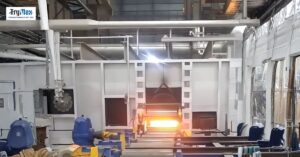

Industrial growth depends heavily on precision, efficiency, and reliability—and one of the most critical systems supporting these factors is the industrial furnace. From steel production to aerospace components, industrial furnaces play a central role in heating, processing, and transforming materials to meet exact performance requirements.
This blog explores what an industrial furnace is, how it works, its major types, applications, and why choosing the right furnace system is essential for long-term productivity.
What is an Industrial Furnace?
An industrial furnace is a high-temperature heating system used in manufacturing and processing industries to heat materials—primarily metals—to a specific temperature under controlled conditions. These furnaces are designed to perform various thermal processes such as melting, reheating, drying, and heat treatment.
Unlike domestic heating systems, industrial furnaces are engineered for continuous operation, high efficiency, and precise temperature control. They are built using advanced materials and technologies to withstand extreme temperatures and demanding industrial environments.
How Does an Industrial Furnace Work?
The working principle of an industrial furnace depends on its type and application, but the basic process involves:
1. Heat Generation
Heat is generated using fuel sources such as natural gas, oil, coal, or electricity. Modern furnaces may also use induction or resistance heating methods.
2. Heat Transfer
The generated heat is transferred to the material through conduction, convection, or radiation. Proper heat distribution is crucial for uniform results.
3. Temperature Control
Advanced control systems maintain precise temperature levels throughout the process, ensuring consistent product quality.
4. Exhaust and Heat Recovery
Exhaust gases are released, and in many modern systems, waste heat is recovered to improve energy efficiency.
Types of Industrial Furnaces
Industrial furnaces are available in various designs depending on the application and production requirements.
🔹 Reheating Furnaces
Used in rolling mills to heat billets, blooms, and slabs before processing. These furnaces ensure uniform heating and improved metal workability.
🔹 Heat Treatment Furnaces
Used for processes like annealing, hardening, tempering, and stress relieving to enhance the mechanical properties of metals.
🔹 Melting Furnaces
Designed to melt metals for casting and molding applications.
🔹 Induction Furnaces
Use electromagnetic induction to heat metals quickly and efficiently without direct flame.
🔹 Electric Furnaces
Operate using electrical resistance or arc heating, offering precise temperature control and cleaner operation.
🔹 Bogie Hearth Furnaces
Ideal for heavy components requiring controlled heat treatment.
Each type serves a specific purpose, and selecting the right one depends on the industrial process and material requirements.
Key Features of Modern Industrial Furnaces
Modern industrial furnaces are designed with advanced features to enhance performance and efficiency:
- Precise temperature control systems
- Uniform heat distribution
- Energy-efficient combustion or electric heating
- High-quality refractory insulation
- Automated control and monitoring systems
- Low emissions and eco-friendly operation
These features help industries achieve consistent results while reducing operational costs.
Applications of Industrial Furnaces
Industrial furnaces are widely used across multiple industries:
🔸 Steel Industry
Heating, reheating, and heat treatment of steel products.
🔸 Automotive Industry
Manufacturing of gears, shafts, and engine components.
🔸 Aerospace Industry
Production of high-strength and heat-resistant components.
🔸 Foundries
Melting and casting of metals.
🔸 Aluminium Industry
Heating and processing of aluminium billets and components.
🔸 Heavy Engineering
Fabrication and heat treatment of large structures.
These applications highlight the importance of industrial furnaces in maintaining quality and efficiency in production processes.
Importance of Energy Efficiency
Energy consumption is a major concern in industrial operations. Modern industrial furnaces focus on improving energy efficiency through:
- Heat recovery systems (recuperators)
- Advanced burner technology
- Improved insulation materials
- Automated energy management systems
By reducing fuel consumption and heat loss, industries can significantly lower operating costs and environmental impact.
Factors to Consider When Choosing an Industrial Furnace
Selecting the right industrial furnace requires careful evaluation of several factors:
- Type of material to be processed
- Required temperature range
- Production capacity
- Fuel availability
- Space and installation requirements
- Automation and control features
Choosing the right furnace ensures better performance, cost efficiency, and long-term reliability.
Maintenance and Safety
Proper maintenance is essential for the efficient operation of industrial furnaces:
- Regular inspection of refractory lining
- Monitoring temperature control systems
- Cleaning burners and heating elements
- Checking insulation and heat loss areas
Safety measures such as emergency shutdown systems, temperature alarms, and proper ventilation are also critical to prevent accidents.
Future Trends in Industrial Furnace Technology
The future of industrial furnaces is driven by innovation and sustainability. Key trends include:
- Smart furnace systems with IoT integration
- AI-based temperature control
- Low-emission and eco-friendly designs
- Increased use of electric and induction heating
- Predictive maintenance technologies
These advancements aim to improve efficiency, reduce environmental impact, and enhance operational control.
Conclusion
An industrial furnace is a vital component in modern manufacturing, enabling industries to process materials with precision and efficiency. From heating and melting to heat treatment, these systems play a crucial role in ensuring product quality and performance.
With advancements in technology, industrial furnaces are becoming more energy-efficient, automated, and environmentally friendly. Investing in the right furnace system can significantly improve productivity, reduce costs, and ensure long-term success in competitive industries.