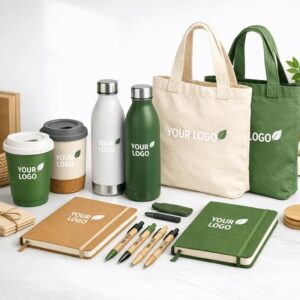

Ordering corporate gifts in bulk can help businesses prepare for employee recognition, client appreciation, exhibitions, conferences, and seasonal campaigns. However, managing a large order involves more than selecting products and confirming a quantity. Businesses also need to consider budgets, recipient preferences, branding, delivery schedules, packaging, and quality checks.
In Dubai, where companies regularly organise business events and employee engagement activities, careful planning can help prevent last-minute delays and unnecessary expenses. A clear process also makes it easier to ensure that every recipient receives the correct item, with consistent branding and suitable presentation.
Whether an organisation needs 50 employee welcome kits or 1,000 promotional giveaways, the same principle applies: confirm the details before approving production.
1. Define the Purpose of the Gift Order
Start by identifying why the gifts are being purchased. The purpose determines which products are appropriate, how they should be packaged, and how much the business should spend per recipient.
Common corporate gifting purposes include:
- Employee appreciation: Practical items such as notebooks, drinkware, bags, or desk accessories.
- Client relationships: Carefully selected gift sets that reflect the professional relationship.
- Exhibitions and trade shows: Lightweight promotional products that are easy for visitors to carry.
- Employee onboarding: Welcome kits containing useful workplace essentials.
- Corporate celebrations: Gifts prepared for anniversaries, annual meetings, or seasonal occasions.
For example, a company preparing gifts for an exhibition may prioritise affordable, portable items that can be distributed quickly. An organisation recognising long-serving employees may prefer personalised gifts with more thoughtful packaging.
Defining the purpose early prevents the team from choosing products simply because they are popular or inexpensive.
2. Establish a Realistic Budget
Bulk orders can become expensive when additional costs are overlooked. The unit price is only one part of the total budget.
Before requesting quotations, establish a spending limit and account for:
- Product costs
- Logo printing or engraving
- Individual packaging and gift boxes
- Design or artwork preparation, where applicable
- Delivery and distribution
- Samples and quality checks
- Taxes and other applicable charges
It is also sensible to reserve a small contingency for unexpected changes, replacement items, or additional recipients.
When comparing suppliers, request a complete quotation that clearly separates product costs from branding, packaging, and delivery charges. This makes comparisons more meaningful than looking at the unit price alone.
Businesses planning bulk corporate gifts in Dubai should confirm the final quantity, branding requirements, packaging preferences, and delivery arrangements before approving the order. These details can affect both the final cost and the production schedule.
3. Choose Products That Suit the Recipients
A gift is more useful when it matches the recipient’s needs. The right choice depends on the audience, occasion, workplace environment, and expected use.
For employees, reusable bottles, notebooks, tote bags, stationery, and useful desk accessories may be appropriate. For exhibition visitors, compact promotional products can be easier to distribute and transport. For important business clients, a coordinated gift set may be more suitable than several unrelated items.
Consider these questions before making a selection:
- Will recipients find the item useful?
- Is it suitable for the occasion?
- Does it fit the available budget?
- Is the product practical to store and distribute?
- Does it suit the organisation’s brand and professional image?
Avoid selecting products based solely on appearance. An attractive item may not be practical for the intended audience, particularly if recipients have different roles, preferences, or working environments.
When ordering gifts for a diverse group, neutral designs and broadly useful products can reduce the risk of choosing something unsuitable.
4. Confirm Quantities and Recipient Details
Quantity errors are among the easiest problems to prevent with a proper checklist.
Before placing an order, prepare a recipient list or distribution plan. Confirm how many gifts are required for each department, office, event, or recipient category. If gifts will be distributed across multiple locations, separate the quantities by destination.
It can also be useful to order a small number of additional items when the budget allows. This provides flexibility if the guest list changes or a product arrives damaged.
For personalised gifts, verify every name, job title, department, or other variable detail before production begins. A spreadsheet can help organise the information and reduce manual errors.
Assign one person to approve the final recipient list. Having multiple people make untracked changes can result in duplicate entries, missing recipients, or inconsistent personalisation.
5. Review Branding and Artwork Before Production
Corporate gifts often include a logo, company name, campaign message, or event identity. Small artwork mistakes can affect hundreds of products if they are discovered after production.
Before approving the design, check:
- Logo accuracy and proportions
- Correct brand colours
- Spelling and punctuation
- Text size and readability
- Placement on the product
- Print or engraving method
- Consistency across different gift items
The design should suit the product rather than being copied identically onto every surface. A logo that looks clear on a notebook cover may need a different size or placement on a pen or bottle.
Ask for a digital proof before production. For large or high-value orders, a physical sample can help confirm the material, colour, finish, branding position, and overall appearance.
Keep the approved artwork and proof in a shared folder so the team can refer to the same version throughout the process.
6. Select a Supplier and Confirm the Specifications
A supplier should be able to explain what is included in the quotation, how the products will be branded, and what information is needed before production.
For instance, Zahrat Al Madina Printing (https://zamadina.com/) is one business reference that organisations can review when exploring printed promotional products and corporate gifting requirements in Dubai.
When comparing potential suppliers, ask for clear information about product specifications, minimum order quantities, branding methods, sample availability, production timelines, and delivery arrangements.
Do not assume that two similar-looking products have the same material, dimensions, or durability. Request specifications for the exact item being quoted.
It is also useful to confirm how changes will be handled after approval. If the recipient count increases or the artwork needs correction, the supplier should explain whether this affects the price or delivery date.
Written confirmation helps prevent misunderstandings and provides a clear record of the agreed requirements.
7. Build a Production and Delivery Timeline
Bulk gift orders often involve several stages, including product selection, artwork approval, sample review, production, quality inspection, packing, and delivery.
Start with the event or distribution date and work backwards. Allow time for internal approvals and possible corrections rather than scheduling production to finish immediately before the event.
For a campaign involving several offices in Dubai or other locations, confirm whether deliveries will be combined or sent separately. Each destination should have a verified address, contact person, and delivery window.
Before finalising the schedule, ask the supplier to distinguish between estimated production time and delivery time. These are separate stages and should both be included in the plan.
If the gifts are needed for a major exhibition or annual event, place the order early enough to allow reasonable flexibility for unexpected delays.
8. Inspect the Order Before Distribution
A delivery confirmation does not necessarily mean the order is complete and correct. Assign someone to inspect the items before they are distributed.
A practical quality checklist should cover:
- Total quantity received
- Product colour, size, and model
- Printing or engraving accuracy
- Packaging condition
- Missing or damaged items
- Correct personalisation
- Distribution labels and destination details
For large orders, inspect a representative sample and check the total quantity. If a problem is identified, document it with photographs and contact the supplier promptly.
Where gifts are packed into individual kits, check that each package contains the correct items. This is especially important for employee welcome packs and event gift bags containing several products.
Conclusion
Planning a bulk corporate gift order requires clear decisions about purpose, budget, product selection, quantities, branding, production, and delivery. Confirming these details early helps businesses reduce avoidable mistakes and manage the order more efficiently.
A written checklist, approved artwork, realistic timeline, and final quality inspection can make the entire process easier to control. Most importantly, choose gifts that suit the recipients and the occasion rather than focusing only on quantity or price. Thoughtful planning helps ensure that corporate gifts arrive on time, look consistent, and serve their intended purpose.