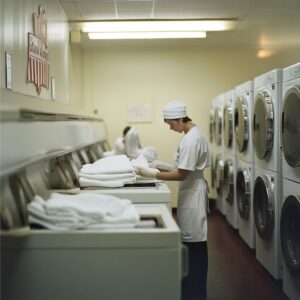

Choosing an industrial laundry washer is not simply a matter of selecting the largest machine available. For hotels, hospitals, universities, industrial laundries, garment manufacturers, pharmaceutical facilities and railway operators, the right washer must fit the actual laundry workflow, textile types, available utilities, expected workload and long-term operating requirements.
A machine that appears suitable on paper may not perform efficiently if it is consistently overloaded, underloaded, incorrectly programmed or installed without considering drainage, water supply and workflow. The better approach is to assess the complete laundry process before deciding on equipment.
For businesses planning a new laundry facility or replacing existing machinery, Supershine Laundry provides commercial and industrial laundry equipment solutions for professional laundry operations. Its support can help businesses evaluate equipment requirements according to their operational environment rather than choosing equipment based only on nominal capacity.
What Is an Industrial Laundry Washer?
An industrial laundry washer is designed for demanding laundry environments where washing is performed repeatedly and at a larger operational scale than typical domestic or small commercial laundry.
These machines are used in environments where consistent washing processes, appropriate loading capacity and reliable operation are important to daily productivity.
The requirements can differ considerably between industries. A hotel may process bed linen, towels and staff uniforms, while a hospital may handle healthcare textiles requiring carefully controlled washing procedures. An industrial laundry may process large volumes of workwear, while a garment manufacturer may need to consider different fabrics, dyes and finishing requirements.
The machine should therefore be selected around the laundry process—not simply around the number displayed as its capacity.
Start With Your Actual Laundry Volume
One of the first considerations when purchasing an industrial laundry washer is the amount of laundry your facility processes.
Look at:
-
Average daily laundry volume
-
Peak-day laundry volume
-
Number of washing cycles required
-
Available operating hours
-
Types of textiles processed
-
Required turnaround time
-
Number of machines already operating
-
Future expansion plans
For example, a hotel may have relatively predictable laundry requirements during normal occupancy but experience significantly higher demand during peak periods. A hospital may have different requirements because various textile categories need to be handled according to established operational procedures.
Capacity should therefore be considered alongside cycle duration and workflow.
A washer that can accommodate a substantial load may not automatically provide higher productivity if the laundry department cannot efficiently load, unload, dry and finish the processed textiles.
Choose Capacity Based on the Workload
Machine capacity is one of the most important purchasing decisions, but bigger is not always better.
If a washer is regularly operated far below its practical loading level, the investment may not be used efficiently. On the other hand, consistently overloading equipment can affect washing performance and place unnecessary stress on components.
A better approach is to understand the typical load size and the types of materials being processed.
Consider whether the laundry mainly consists of:
-
Towels and bed linen
-
Hospital linen
-
Uniforms and workwear
-
Restaurant textiles
-
Garments
-
Heavy industrial fabrics
-
Mixed textile loads
Different materials can have different washing requirements. The correct loading approach should follow the machine manufacturer’s operating instructions and the laundry process established by the facility.
Consider the Wash Cycle, Not Just the Machine
A professional laundry operation depends on repeatable washing processes.
A typical washing process may involve stages such as:
-
Loading
-
Pre-washing or pre-treatment
-
Main washing
-
Rinsing
-
Extraction
The actual sequence and parameters will depend on textile type, soil level, detergent system and the operating procedures used by the facility.
For decision-makers, the important question is not simply, “How fast can this machine wash?” Instead, ask whether the washer can support the required processes consistently.
Hospitals, hotels and industrial laundries may have very different washing requirements. A machine selected for one application may not be the best choice for another.
Extraction Speed Matters for the Entire Laundry Line
Washing is only one stage of the laundry process. Water remaining in textiles after washing directly affects what happens next.
Extraction removes water from the load before drying or further finishing. The appropriate extraction performance can therefore influence the workload placed on downstream equipment.
For example, if a facility processes large quantities of towels, linen or uniforms, the washer extractor’s performance needs to be considered together with the available drying and finishing equipment.
This is why equipment should be evaluated as part of a complete laundry line rather than as an isolated machine.
When comparing an industrial laundry washer, consider how its washing and extraction stages fit with:
-
Tumble dryers
-
Flatwork ironers
-
Finishing equipment
-
Sorting areas
-
Folding operations
-
Linen storage
-
Laundry transportation
A balanced workflow can be more valuable than simply choosing a machine with the largest capacity.
Think About Fabric Types Before Selecting Equipment
Textile type should influence equipment selection and washing procedures.
Cotton linen, synthetic fabrics, uniforms, towels, garments and specialised textiles may respond differently to temperature, mechanical action, detergent chemistry and extraction.
For example, a hotel laundry may have a high proportion of towels and bed linen, while a garment manufacturer may deal with products where colour, construction and fabric characteristics require greater attention.
The laundry team should identify the main textile categories before finalising equipment.
It is also important to avoid assuming that one standard wash programme is appropriate for every load. Programmes should be established according to the textile, soil level, cleaning requirements and manufacturer’s recommendations.
Water and Energy Consumption Should Be Part of the Buying Decision
The purchase price of a washer is only one part of its overall cost.
Water, electricity, heating, detergent, labour, maintenance and downtime can all contribute to the long-term operating cost of a laundry facility.
When evaluating equipment, ask suppliers about the operating requirements of the specific model and how those requirements relate to your facility.
Water consumption deserves particular attention because commercial laundry operations may run multiple cycles every day. Heating water can also contribute significantly to energy requirements, depending on the system and operating conditions.
Rather than choosing equipment solely on the lowest initial price, decision-makers should consider the expected total cost of ownership over the equipment’s working life.
Installation Requirements Must Be Checked Early
An industrial laundry washer requires more than floor space.
Before installation, the facility should assess relevant requirements such as:
-
Available electrical supply
-
Water inlet arrangements
-
Drainage capacity
-
Floor conditions
-
Machine access
-
Loading and unloading space
-
Ventilation requirements where applicable
-
Service access
-
Movement of laundry around the room
Drainage is particularly important in a commercial laundry because large volumes of water may need to be discharged within relatively short periods.
The machine should also be positioned to support a logical workflow. Poor placement can create unnecessary movement between sorting, washing, drying and finishing areas.
It is better to review these requirements before purchasing equipment rather than discovering infrastructure limitations during installation.
Maintenance Is Part of Equipment Selection
A commercial laundry cannot afford to treat maintenance as an afterthought.
Regular inspection, cleaning and servicing can help equipment remain suitable for continued operation. Maintenance requirements will vary according to the machine, workload and manufacturer recommendations.
When comparing an industrial laundry washer, ask:
-
What routine maintenance is required?
-
Which components need regular inspection?
-
How easily can service personnel access the machine?
-
What support is available after installation?
-
Are operating instructions and maintenance guidance provided?
-
How should common wear points be monitored?
The exact maintenance schedule should always follow the manufacturer’s documentation for the selected model.
For facilities operating long hours, service support can be an important part of the purchasing decision.
Durability Should Be Evaluated Against Real Workloads
Industrial laundry equipment is expected to operate in demanding environments. However, durability should not be judged only by marketing language.
Ask how the equipment is intended to be used and whether its operating requirements match your workload.
A hotel laundry, hospital laundry and industrial textile operation may all require professional washing equipment, but their operating patterns can differ significantly.
The right machine is one that fits the intended workload, textile categories, operating schedule and available infrastructure.
Consider the Total Cost of Ownership
A useful purchasing comparison should go beyond the equipment’s initial price.
Consider the relationship between:
-
Purchase cost
-
Installation requirements
-
Water usage
-
Energy consumption
-
Detergent consumption
-
Labour requirements
-
Maintenance
-
Downtime
-
Productivity
-
Expected operating life
For example, a lower-priced machine may not necessarily represent the better investment if it does not suit the required workload or creates workflow limitations.
Similarly, a larger machine is not automatically a better investment if the facility rarely processes loads that justify its capacity.
The objective is to select equipment that provides an appropriate balance between capacity, productivity and operating cost.
How an Industrial Laundry Washer Can Support Different Industries
Hotels
Hotels commonly process towels, bed linen, pillowcases, uniforms and other hospitality textiles. Equipment selection should consider occupancy patterns, peak laundry volumes and the relationship between washing, drying and finishing.
Hospitals
Healthcare facilities require carefully managed laundry workflows. Washer selection should be considered alongside textile segregation, established hygiene procedures, loading practices and downstream processing.
Universities
Universities and educational campuses may process accommodation linen, uniforms, sports textiles and other institutional laundry. Flexibility and practical workflow planning can be important where laundry volumes change throughout the year.
Industrial Laundries
Industrial laundries often handle laundry for multiple customers and may therefore require equipment capable of supporting varied textile categories and demanding schedules.
Garment Manufacturers
Garment manufacturers may process textiles where fabric characteristics, colour and finishing requirements influence washing procedures. Equipment should be selected according to the actual materials being handled.
Pharmaceutical Facilities
Pharmaceutical facilities may operate under specific internal procedures for handling textiles. Equipment selection should be integrated with the facility’s established laundry and contamination-control processes rather than treated as a standalone purchase.
Railway Operators
Railway operators may process large quantities of linen, uniforms and other textiles. Consistent throughput and an efficient movement of laundry through washing and finishing stages can be important considerations.
When Should You Replace an Existing Washer?
Replacement may become worth investigating when equipment is regularly experiencing breakdowns, maintenance becomes increasingly difficult, capacity no longer matches demand, or the machine no longer fits the facility’s workflow.
However, replacement should be based on operational evidence.
Review:
-
Repair frequency
-
Downtime
-
Current workload
-
Operating costs
-
Available spare parts and service support
-
Productivity
-
Changes in laundry volume
-
Future business requirements
A proper equipment assessment can help determine whether replacement, additional capacity or workflow improvement is the most practical solution.
Choosing the Right Supplier Matters Too
Selecting an industrial laundry washer is only one part of the purchasing process. The supplier’s understanding of commercial laundry operations can also influence the experience from equipment selection through installation and ongoing support.
Supershine Laundry specialises in commercial and industrial laundry equipment and can help businesses assess equipment requirements based on their operating environment.
For organisations in Qatar, support is available from:
Supershine Laundry
Barahat Msheireb Street, Msheireb Downtown Doha, Doha
P.O. Box 23643, Qatar
Email: sales2@supershine.in
You can explore Supershine Laundry’s commercial washing machine solutions through its commercial laundry washing machine page.
Final Thoughts
Choosing an industrial laundry washer should begin with the laundry operation, not the machine catalogue.
Understand your daily and peak workload, textile types, required wash cycles, extraction needs, utilities, installation conditions, maintenance requirements and long-term operating costs. Then compare equipment according to how well it fits the complete laundry workflow.
For hotels, hospitals, universities, industrial laundries, garment manufacturers, pharmaceutical facilities and railway operators, the right equipment can become an important part of a reliable laundry process.
If you are planning a new laundry facility, expanding an existing operation or replacing ageing equipment, speak with Supershine Laundry about your requirements. A practical assessment of workload, space, utilities and workflow can help you move towards equipment that is appropriate for your operation rather than simply buying the largest or lowest-priced machine.
Frequently Asked Questions
1. What is an industrial laundry washer used for?
An industrial laundry washer is designed for professional laundry operations that process larger and more frequent loads than typical domestic laundry. It can be used in hotels, hospitals, universities, industrial laundries, garment facilities and other commercial environments.
2. How do I choose the right capacity for an industrial laundry washer?
Start by assessing average and peak laundry volumes, textile types, available operating hours and required turnaround times. Capacity should also be considered alongside cycle duration, extraction and the capacity of downstream drying and finishing equipment.
3. Does extraction speed affect laundry productivity?
Extraction performance can affect how much moisture remains in textiles after washing. This can influence the workload placed on subsequent drying or finishing processes, so extraction should be considered as part of the complete laundry workflow.
4. What should I check before installing an industrial washer?
Review the available water supply, drainage, electrical requirements, floor conditions, machine access, ventilation where applicable, service access and space required for loading and unloading. The specific installation requirements should be confirmed for the selected model.
5. How can I reduce the operating cost of commercial laundry equipment?
Operating cost can be influenced by water, energy, detergent, labour, maintenance and downtime. Selecting suitable equipment, using appropriate wash programmes, following loading instructions and maintaining machines according to manufacturer guidance can support efficient operation.
6. Can Supershine Laundry help with industrial laundry equipment selection?
Supershine Laundry provides commercial and industrial laundry equipment solutions. Businesses can discuss their workload, textile types, facility requirements and operational objectives with the supplier before selecting suitable equipment.