
Calculating your average grade might seem like a simple arithmetic task, but it is much more than that. Understanding how your grades add up can empower you as a student to take control of your academic journey. For parents, knowing the method allows you to guide your children effectively, helping them set realistic goals and manage their workload. This guide goes beyond formulas and numbers to give you a clear, practical, and actionable understanding of how to calculate your average grade and what it means for your learning path.
Understanding What an Average Grade Really Means
When we talk about average grade, many think it is just the sum of marks divided by the number of subjects. While that is technically correct, the real purpose of calculating an average is to understand overall performance. It is a reflection of where your strengths lie and which areas might need more attention. Instead of viewing grades as just numbers, think of them as feedback on your learning habits, consistency, and understanding of the material.
For example, imagine a student who excels in science but struggles in math. If they only look at the total score without understanding the breakdown, they might miss the opportunity to focus on improving the weak area. Calculating an average helps you see patterns and make informed decisions on how to allocate your study time more efficiently.
The Basic Formula to Calculate Average Grade
The simplest method to calculate an average grade is to add up all your grades and divide by the total number of subjects or courses. Here is the formula:
Average Grade = Sum of All Grades / Number of Subjects
Let’s break this down with a practical example. Suppose a student has the following grades:
- English: 85
- Math: 90
- Science: 78
- History: 88
To calculate the average:
- Add the grades together: 85 + 90 + 78 + 88 = 341
- Divide by the number of subjects: 341 / 4 = 85.25
So, the student’s average grade is 85.25, which is a clear indicator of their overall academic performance.
Weighted Average: A Smarter Approach
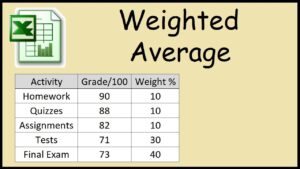
Not all subjects carry the same weight. Some courses might be more important or have more credit hours, and in such cases, a simple average may not reflect the true performance. Here, the concept of weighted average becomes essential.
The weighted average formula is:
Weighted Average = (Grade × Credit Hours) / Total Credit Hours
Consider this example:
- English: Grade 85, Credit Hours 3
- Math: Grade 90, Credit Hours 4
- Science: Grade 78, Credit Hours 2
- History: Grade 88, Credit Hours 3
Now, multiply each grade by its credit hours:
- English: 85 × 3 = 255
- Math: 90 × 4 = 360
- Science: 78 × 2 = 156
- History: 88 × 3 = 264
Next, sum these values: 255 + 360 + 156 + 264 = 1035
Then, sum the credit hours: 3 + 4 + 2 + 3 = 12
Finally, divide the total points by total credit hours: 1035 / 12 = 86.25
This student’s weighted average is 86.25, slightly higher than the simple average, reflecting the extra importance of subjects like Math with more credit hours.
Weighted averages are particularly useful in college and university settings where different courses have different impacts on your GPA or overall performance.
Converting Grades to Letter Grades
Many schools and colleges use letter grades instead of numerical scores. Understanding how to convert an average grade into a letter can help both students and parents interpret results better. A common scale looks like this:
- 90 to 100 = A
- 80 to 89 = B
- 70 to 79 = C
- 60 to 69 = D
- Below 60 = F
Using our previous example, the student’s weighted average of 86.25 corresponds to a B, providing a quick understanding of performance at a glance.
Remember, scales can vary across schools, so always check your institution’s grading policy.
Common Mistakes to Avoid
Calculating averages sounds easy, but many students and parents make mistakes that lead to confusion. Here are the most common pitfalls:
Ignoring the weight of subjects: Treating all grades equally when some carry more credit can give a misleading result.
Rounding too early: Always perform calculations first and round the final answer to avoid cumulative errors.
Mixing percentages and points: Ensure all grades are on the same scale before adding them together.
Being aware of these mistakes ensures accuracy and makes your calculated average a true reflection of performance.
Practical Tips for Students
Calculating your average grade should not be just an academic exercise. It can be a tool to help you improve your study habits. Here are some actionable tips:
Track your progress regularly: Don’t wait until the end of the semester. Calculating interim averages helps identify areas of improvement early.
Focus on weaker subjects: Use your average as feedback, not a judgment. Strengthen subjects where you score lower to raise your overall performance.
Set realistic goals: If your current average is below your target, break down your goals subject by subject to make them achievable.
Use online calculators smartly: Tools like EZ Grader can simplify the process and save time, but always double-check the inputs.
By approaching average calculation as a planning tool, students gain more control over their academic outcomes rather than passively receiving results.
How Parents Can Help
Parents play a crucial role in supporting their children academically, and understanding averages is key. Instead of focusing solely on the final number, engage in conversations about:
- How your child manages different subjects
- Which areas are challenging and why
- Setting goals that are ambitious but realistic
Encourage your child to calculate their own average to foster independence and responsibility. When students understand the process, they are more likely to take ownership of their learning journey.
Beyond Numbers: Understanding Learning Trends
Calculating an average grade is not just about numbers; it is about patterns. Look for trends over time. Are grades improving in subjects where the student initially struggled? Is performance declining in areas they previously excelled? These insights can reveal a lot about motivation, study techniques, and personal challenges.
For instance, a student who scores consistently high in science but low in math might benefit from tutoring, practice sessions, or new study strategies for math. By observing these trends alongside the average grade, parents and students can make informed decisions that have a real impact on learning.
Making the Average Work for You
The ultimate goal of calculating your average grade is to empower action. Use it to set realistic targets, improve study habits, and understand the broader picture of academic performance. Remember, averages are a tool for insight, not judgment.
Every student has strengths and areas that need improvement. By combining awareness of averages with actionable steps, you can turn numbers into meaningful progress. A student who knows their average and understands it can not only improve grades but also develop critical thinking, planning, and self-discipline skills that will last a lifetime.
Conclusion
Calculating an average grade may seem like a simple task, but when done thoughtfully, it becomes a powerful tool for growth. It is more than math; it is about understanding performance, recognizing patterns, and taking deliberate steps to improve. Whether you are a student seeking clarity or a parent guiding your child, knowing how to calculate and interpret averages equips you with the knowledge to make smarter decisions.
By looking beyond the numbers and using averages as a roadmap, students can turn grades into actionable insights and real academic progress. In the end, it is not just about the score, but about learning how to learn, which is the most valuable outcome of all.