

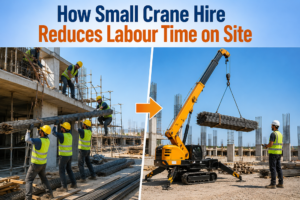

Ever wondered why some construction sites seem to run like clockwork while others drag on for weeks longer than planned? Have you noticed how the most efficient teams always seem to have the right equipment at the right time? What if the secret to slashing your project timeline wasn’t hiring more workers, but hiring smarter machinery?
When it comes to construction projects, time really is money. Every extra hour your team spends manually hauling materials or wrestling with awkward loads translates directly into higher labour costs. That’s where small crane hire comes into play. Whether you’re tackling a residential build, a commercial fit-out, or landscaping works, the right crane machinery can dramatically transform how quickly and safely your team completes the job.
In this article, we’ll explore how small crane hire can cut labour time on site, break down the real costs involved, and help you understand when it makes financial sense to bring in a crane lift. You’ll discover the different types of cranes and hoists available, learn what affects crane hire charges, and pick up practical tips for getting maximum value from your rental. Plus, if you’ve ever wondered how to become a crane operator, we’ve got that covered too. Let’s get stuck into it.
Understanding Small Crane Hire: The Basics
What Is Small Crane Hire and How Does It Work?
Small crane hire refers to renting compact lifting equipment for short-term construction needs. Unlike purchasing crane machinery outright, hiring allows you to access the exact equipment you need without the massive upfront investment. Most hire companies offer flexible rental periods, from a single day to several months.
The process is straightforward. You contact a crane hire provider, discuss your project requirements, and they’ll recommend suitable equipment. The crane hire cost typically includes delivery, setup, and often a qualified operator. This means you can focus on your project rather than worrying about logistics.
Types of Crane Machinery Available for Hire
The rental of crane market offers several options to suit different projects. Mini cranes and spider cranes work brilliantly in tight spaces, while pick-and-carry cranes offer excellent mobility around the site. Mobile cranes provide versatility for various lifting tasks, and truck-mounted cranes combine transport and lifting capabilities.
Each type has specific strengths. Spider cranes can navigate through doorways and work on delicate flooring, making them an excellent choice for small crane hire projects where access is limited. Pick-and-carry cranes can lift and transport loads simultaneously, saving considerable time and improving efficiency on site.
Understanding Crane Booms and Their Functions
The crane boom is essentially the arm that does the heavy lifting. Different boom configurations serve different purposes. A telescopic boom of a crane extends and retracts, offering variable reach without repositioning the whole machine. Lattice booms provide exceptional strength for heavier loads.
Understanding your crane with boom requirements helps you select the right equipment. A longer boom of the crane means greater reach but typically lower maximum lifting capacity. Your hiring company can help you balance these factors based on your specific project needs.
The True Cost of Manual Labour vs Crane Hire
Breaking Down Crane Hire Cost Per Day
So, what does crane hire cost per day actually look like? Prices vary significantly depending on the crane type, size, and your location. In Australia, small crane hire might range from $500 to $1,500 daily, while larger equipment commands higher crane rental rates.
However, consider what you’re getting. That daily rate often includes a skilled operator, insurance, and all safety equipment. Compare this to paying a four-person team for manual lifting over multiple days.
Crane Hire Charges: What Affects the Price?
Several factors influence crane hiring charges. The crane type and lifting capacity play major roles. Travel distance to your site affects delivery costs. Duration of hire matters too—longer rentals often attract better crane rental prices per day.
Additional factors include whether you need the crane during weekends or after hours, any special rigging requirements, and site accessibility. Some providers also charge differently based on the crane hire cost per hour for shorter jobs.
Comparing Crane Rental Rates Across Different Projects
Tower crane hire costs differ substantially from crawler crane rental rates. Tower cranes suit tall buildings and long-term projects, while crawler cranes offer excellent mobility on rough terrain. Smaller projects typically benefit from more compact equipment with lower hire crane cost.
When comparing tower crane rental rates with smaller options, consider your actual needs. Overspending on larger equipment than necessary is just as wasteful as struggling with undersized machinery.
Real-World Scenarios: Small Crane Hire in Action
Residential Construction Projects
On residential builds, small cranes excel at placing trusses, installing heavy windows, and positioning prefabricated bathroom pods. Tasks that once required entire crews working carefully for hours now take minutes.
A crane manual wouldn’t capture the relief homeowners feel when their build stays on schedule because contractors planned properly for lifting requirements.
Commercial Fit-Outs and Renovations
Commercial projects often involve installing heavy HVAC equipment, large glass panels, or kitchen fixtures in awkward locations. Manual crane techniques simply can’t match powered lifting for these applications.
Spider cranes prove particularly valuable here, navigating through existing doorways and working in finished spaces without causing damage.
Landscaping and Civil Works
Large trees, retaining wall blocks, and water features all benefit from crane assistance. What might take a landscaping crew all day becomes a morning’s work with appropriate lifting equipment.
Civil contractors use small cranes for placing drainage components, positioning concrete segments, and countless other applications where time savings translate directly to profitability.
Choosing the Right Crane for Your Project
Crawler Crane Rental Rates vs Tower Crane Hire Cost
Crawler crane rental rates typically fall between mobile crane and tower crane pricing. Crawlers offer excellent stability and can move with loads, making them versatile for medium-sized projects. Tower crane hire cost makes sense primarily for taller buildings requiring extended lift coverage.
Consider your project duration and complexity when comparing options. Short-term jobs rarely justify tower crane setup costs.
Understanding Crane Hire Rates in Sydney and Regional Areas
Crane hire rates in Sydney reflect the competitive urban market, while regional areas may have different pricing structures based on equipment availability and travel distances. Always get multiple quotes specific to your location, including crane hire Wangara if you’re in Western Australia.
Questions to Ask Before Hiring a Crane
Before committing, ask about all-inclusive pricing versus additional charges. Confirm operator experience with similar projects. Check insurance coverage and safety certifications. Understanding these details prevents surprise costs later.
How to Become a Crane Operator in Australia
Licensing Requirements and Training Pathways
Wondering how to become a crane operator qualified? In Australia, you’ll need a High Risk Work Licence from your state’s safety authority. This requires completing accredited training covering theory and practical assessments.
Different crane classes require different licences, so consider which equipment types interest you most. Training organisations across Australia offer courses ranging from several days to several weeks.
Working with Professional Crane Operators
When you hire a crane, you’re typically getting an experienced operator too. These professionals understand load calculations, site safety requirements, and efficient lifting techniques that maximise your investment.
Making Small Crane Hire Work for Your Business
Small crane hire isn’t just about lifting heavy things—it’s about transforming how efficiently your projects run. The crane hire costs you pay today can save multiples in reduced labour time, fewer injuries, and faster project completion.
The evidence is clear. From residential builds to commercial fit-outs and civil works, appropriate crane machinery pays for itself through time savings alone. When you factor in reduced worker fatigue, improved safety, and better site logistics, the value becomes undeniable.
Ready to see the difference for yourself? Reach out to local hire companies, get quotes for your next project, and experience firsthand how the right equipment can revolutionise your construction timeline. Your workers, your clients, and your bottom line will all thank you.