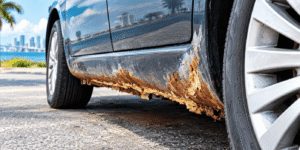

New Orleans’ warm, humid climate and proximity to the Gulf can expose vehicles to salt residue, moisture, strong sunlight, and road grime. Over time, these conditions may contribute to paint deterioration and corrosion, especially when salt remains on the surface or reaches chips, scratches, seams, and other vulnerable areas.
This guide explains how salt air and humidity affect car paint, which warning signs to watch for, and practical ways to reduce coastal wear. It also covers paint protection options, from regular washing and sealants to ceramic coatings.
How Salt Air Damages Car Paint
It starts with basic chemistry. Salt particles carried by coastal air can settle on a vehicle’s surface. When salt combines with moisture, it creates a conductive electrolyte that may accelerate corrosion, particularly around paint chips, scratches, seams, and other areas where the protective coating is weakened. Over time, repeated exposure may contribute to staining, coating deterioration, or rust on exposed metal.
Does Humidity Damage Car Paint on Its Own?
Humidity alone is not usually as corrosive as salt contamination, but it still deserves attention. Moisture helps dissolve salt deposits and can keep a conductive film present on the surface for longer. This creates conditions that may accelerate corrosion when exposed metal or damaged coating is present.
High humidity can also slow drying after rain or washing, keeping moisture and contaminants on the surface longer. If the paint is chipped or scratched, those areas may be more vulnerable to corrosion. In a climate like New Orleans, humidity can increase the corrosion risk from salt deposits, making these two conditions important to consider together.
Warning Signs of Coastal Paint Damage
Catching the early signals of coastal wear saves a lot of trouble later. These are the most common indicators to watch for during a routine wash.
· Dull or Hazy Clear Coat
A clear coat that once reflected light sharply may begin to look flat, cloudy, or less glossy. Salt residue, contamination, UV exposure, oxidation, and general weathering can all contribute to this change.
· Small White or Chalky Spots
White or chalky spots may result from dried salt residue, mineral deposits, or other contaminants. Some disappear with careful washing, while more stubborn deposits may require specialist cleaning or paint treatment.
· Bubbling or Blistering Paint
Bubbling or blistering can occur when corrosion develops beneath damaged paint. Chips, scratches, and areas where moisture becomes trapped may allow corrosion to spread under the coating and cause the paint to lift.
· Rust Around Panel Seams and Wheel Wells
Edges, seams, and wheel wells can retain moisture, dirt, and salt residue, making them important areas to inspect for early signs of corrosion.
· Fading Color on Horizontal Surfaces
Hoods, roofs, and trunk lids often receive strong exposure to sunlight and weather. Over time, UV exposure, heat, contamination, and general weathering may make fading or loss of gloss more noticeable on these horizontal surfaces.
· Water Spots That Will Not Buff Out
Mineral or salt deposits left behind after rain can leave visible water spots. Some wash away easily, while more stubborn or etched marks may require polishing or other paint correction.
Protecting Car Paint Near the Coast
Consistency matters more than any single product when protecting car paint near the coast. Rinse the vehicle regularly, paying particular attention to the lower body, wheel wells, and undercarriage when safe and appropriate. This helps remove salt and grime before buildup becomes more difficult to manage.
Parking in a garage or under cover reduces direct exposure, and addressing chips and scratches quickly keeps bare metal from meeting the air. None of these steps require special skill, only a routine that matches the environment.
For drivers who want expert care without adding another weekend task, schedule an auto detail in New Orleans with Shameez Car Detailing New Orleans to keep salt, grime, and surface contamination under control.
Smart Car Care Tips for Gulf Coast Residents
A few tips make a noticeable difference over time.
- Wash the car regularly, often every one to two weeks for frequently driven vehicles.
- Wash it sooner after exposure to salt spray, significant rainfall, or substantial road grime.
- Pay particular attention to the lower body, wheel wells, and undercarriage after driving near open water.
- Reapply wax or sealant on the product’s recommended schedule, and follow the maintenance instructions for any coating.
- Check door seams and wheel wells during each wash for early signs of corrosion, and have paint chips and scratches cleaned, assessed, and repaired promptly instead of waiting for the next full detail appointment.
Best Paint Protection for a Coastal Climate
Choosing the best paint protection for coastal climate conditions depends on how much upkeep an owner wants to take on. Wax provides a relatively simple and affordable layer of protection, although its durability varies by product, weather, washing routine, and exposure. Paint sealants generally offer longer-lasting protection than many traditional waxes, but they still need periodic maintenance.
Ceramic coating can provide durable paint protection and a hydrophobic surface that may make water, dirt, and some contaminants easier to remove. However, it does not make paint immune to salt exposure, scratches, or corrosion. Proper preparation and regular washing are still important, especially for vehicles parked outdoors in coastal areas. Ceramic coating may be worth considering when the owner wants durable protection and easier maintenance, but its value depends on the product, application quality, vehicle condition, and maintenance routine.
|
Protection Type |
General Benefit |
Maintenance Level |
|
Wax |
Simple surface protection and added gloss. |
Regular reapplication. |
|
Paint Sealant |
Longer-lasting protection than many traditional waxes. |
Periodic maintenance. |
|
Ceramic Coating |
Durable protection and hydrophobic behavior when properly applied. |
Regular washing and occasional maintenance. |
Actual durability depends on the product, surface preparation, application quality, weather exposure, and maintenance routine.
FAQs
1. Does washing my car more often actually help near the coast?
Yes. Regular washing helps limit salt buildup by removing residue before it stays on the vehicle for long periods. Pay particular attention to the lower body, wheel wells, and undercarriage when safe and appropriate.
2. Can salt air damage parts of the car besides the paint?
Salt and moisture can also contribute to corrosion on exposed or vulnerable metal components, including some brake parts, underbody components, fasteners, and electrical connections. Risk depends on the vehicle, exposure, and the condition of the protective materials.
3. Is ceramic coating necessary for every Gulf Coast vehicle?
It is not necessary for every vehicle. It may be worthwhile for owners who want durable paint protection and easier maintenance, but it does not replace regular washing or repair of chips and scratches.
4. How quickly can salt damage become visible?
Corrosion can begin around a paint chip before it becomes easy to see. Salt, humidity, temperature, exposure time, and the condition of the damaged area all affect how quickly visible corrosion develops.
5. Does parking in a garage fully prevent salt air damage?
Covered parking reduces direct exposure to rain, sunlight, and airborne contaminants, but it may not eliminate salt exposure completely. Regular washing and inspection are still useful, especially if you drive near the coast.
Final Thoughts
Salt air and humidity work slowly, which is exactly what makes them easy to overlook until damage becomes visible. A consistent washing routine, quick attention to chips and scratches, and the right protective coating go a long way toward keeping paint intact near the Gulf. Vehicles maintained with this climate in mind may retain a cleaner appearance and better overall condition over time. Good paint care can also support a stronger presentation when the vehicle is eventually sold, although it cannot guarantee a higher resale price.
Keep your vehicle looking its best in New Orleans’ coastal climate. Schedule a visit with Shameez Car Detailing in New Orleans for professional cleaning and paint-care services suited to your vehicle’s condition!