
Did you know? Most of the business owners and workers how they use POS Billing Software for Business. If you don’t know, have a look here!
POS (Point of Sale) billing software is a digital system that helps businesses manage billing, sales, inventory, customer data, payments, GST invoices, reports, and business operations from a single platform.
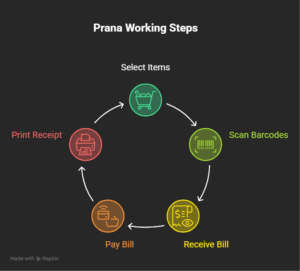
When a customer purchases a product, the POS system scans the item, retrieves product information from the database, calculates taxes and discounts, processes payment, updates inventory automatically, generates an invoice, and records the transaction in real time.
Modern POS software in India also integrates with barcode scanners, QR payments, UPI, inventory management, CRM, accounting systems, and cloud reporting dashboards.
What Is POS Billing Software?
POS Billing Software is a technology platform used by retail stores, supermarkets, restaurants, pharmacies, apparel stores, electronics shops, and many other businesses to manage sales and daily operations efficiently.
Unlike traditional manual billing methods, modern POS software automates:
-
Billing and invoicing
-
GST calculations
-
Inventory management
-
Customer management
-
Payment processing
-
Sales reporting
-
Employee tracking
-
Multi-store operations
As businesses grow, POS software becomes essential for improving accuracy, reducing billing time, and gaining better control over operations.
How POS Billing Software Works Step By Step
Understanding how POS software works helps business owners choose the right solution for their operations.
Step 1: Product Information Is Stored in the Database
Before sales begin, all products are added to the POS software.
The database stores:
-
Product name
-
SKU or barcode
-
Selling price
-
Tax details
-
Category
-
Stock quantity
-
Supplier information
This information allows the software to identify products instantly during billing.
Step 2: Products Are Scanned or Selected
When a customer purchases an item, the cashier scans the barcode or selects the product manually.
The system instantly retrieves:
-
Product details
-
Price
-
Tax information
-
Available stock
This eliminates manual entry errors and speeds up the checkout process.
Step 3: Discounts and Offers Are Applied
Modern POS systems automatically apply:
-
Product discounts
-
Seasonal offers
-
Membership benefits
-
Coupon codes
-
Promotional pricing
The software calculates the final amount automatically.
Step 4: GST and Tax Calculation
One of the most important functions of POS software in India is GST compliance.
The system automatically calculates:
-
CGST
-
SGST
-
IGST
-
Taxable value
-
Final invoice amount
This reduces accounting errors and ensures regulatory compliance.
Step 5: Payment Processing
Customers can pay through:
-
Cash
-
UPI
-
Credit Cards
-
Debit Cards
-
Wallets
-
QR Code Payments
-
Net Banking
The POS system records the payment method and updates the transaction status instantly.
Step 6: Invoice Generation
After payment confirmation, the software generates:
-
GST invoice
-
Printed receipt
-
Digital receipt
-
SMS invoice
-
Email invoice
This improves customer convenience and business professionalism.
Step 7: Inventory Updates Automatically
Once a sale is completed, inventory is adjusted automatically.
For example:
If a store sells 5 units of a product, the POS system reduces stock by 5 units immediately.
This helps businesses:
-
Prevent stock-outs
-
Avoid overstocking
-
Maintain inventory accuracy
Step 8: Sales Reports Are Generated
The software records every transaction and creates reports such as:
-
Daily sales reports
-
Monthly sales reports
-
Product performance reports
-
Employee reports
-
Profitability reports
Business owners can access these insights to make informed decisions.
Technologies Behind Modern POS Billing Software
Today’s POS systems use advanced technologies to improve efficiency.
Cloud Technology
Cloud POS systems store data securely online, allowing access from anywhere.
Benefits:
-
Real-time monitoring
-
Data backup
-
Multi-location access
Artificial Intelligence (AI)
AI-powered POS systems help businesses:
-
Forecast demand
-
Analyze customer behavior
-
Recommend inventory purchases
-
Predict sales trends
Barcode Technology
Barcode scanners improve billing speed and accuracy while reducing human errors.
QR and UPI Integration
With India’s rapid adoption of digital payments, POS systems integrate directly with UPI and QR-based payment platforms.
Industries Using POS Software in India
POS software is used across multiple industries.
Retail Stores
-
Grocery Stores
-
Kirana Shops
-
Electronics Stores
-
Mobile Shops
Supermarkets
Manage thousands of products efficiently.
Restaurants
Handle billing, table management, and kitchen orders.
Pharmacies
Track medicines, expiry dates, and compliance requirements.
Apparel Stores
Manage sizes, colors, and product variants.
Benefits of POS Billing Software
Faster Billing
Reduces customer waiting time.
Better Inventory Control
Tracks stock automatically.
Accurate GST Billing
Ensures tax compliance.
Business Insights
Provides detailed analytics.
Improved Customer Experience
Creates a smooth checkout process.
POS Billing Software Pricing in India
Pricing depends on:
-
Features
-
Industry requirements
-
Number of users
-
Number of outlets
-
Cloud or on-premise deployment
Typical Pricing Models
-
Monthly Subscription
-
Annual Subscription
-
One-Time License
-
Enterprise Custom Plans
Businesses should evaluate features and scalability rather than focusing solely on price.
Cloud POS vs Traditional POS
| Feature | Cloud POS | Traditional POS |
|---|---|---|
| Remote Access | Yes | No |
| Automatic Updates | Yes | Limited |
| Real-Time Data | Yes | Limited |
| Multi-Store Support | Yes | Complex |
| Scalability | High | Moderate |
Cloud POS systems are increasingly preferred by growing businesses in India.
Future of POS Billing Software in India
The POS industry is evolving rapidly.
Emerging trends include:
-
AI-powered analytics
-
Contactless payments
-
Mobile POS systems
-
Voice-enabled billing
-
Advanced inventory forecasting
-
Omnichannel commerce integration
Businesses adopting modern POS solutions today will be better positioned for future growth.
Frequently Asked Questions
How does POS billing software work?
POS software scans products, calculates taxes and discounts, processes payments, updates inventory, and generates invoices automatically.
Is POS software mandatory for retail businesses?
While not mandatory for all businesses, POS software significantly improves efficiency, accuracy, and compliance.
Can POS software manage inventory?
Yes. Modern POS systems automatically track stock levels and inventory movements.
Does POS software support GST billing?
Most POS solutions in India support GST-compliant invoicing and tax calculations.
What industries use POS software?
Retail stores, supermarkets, restaurants, pharmacies, apparel stores, and many other businesses use POS systems.
Is cloud POS better than traditional POS?
Cloud POS offers remote access, real-time reporting, scalability, and automatic updates, making it a preferred option for many businesses.
Final Thoughts
POS billing software has become a critical technology for modern businesses in India. From billing and inventory management to analytics and digital payments, POS systems streamline operations and improve customer experiences.
By understanding how POS software works step by step, business owners can make informed decisions when selecting the right solution for their industry, size, and growth objectives.