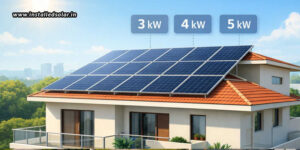

Installing solar panels on your home is a significant step towards generating your own electricity and reducing dependence on conventional power sources. But before choosing panels, one important question needs to be answered: how much solar power does your home actually need? The answer is different for every household. A small home with limited electricity consumption will have different requirements from a large villa with multiple air conditioners, water heaters, and other high-consumption appliances. Simply choosing a larger solar system does not always mean better results. The system needs to be appropriately sized according to electricity consumption, available rooftop space, sunlight conditions, and future energy requirements. Understanding these factors can help homeowners select a solar system that makes practical and financial sense.
Start with your electricity bill
Your electricity bill is one of the most useful sources of information when determining your solar requirement. It shows how much electricity your household consumes during a billing period. Instead of looking only at the latest bill, review your consumption over several months, as usage can change considerably with the seasons. Electricity consumption may increase during summer because of air conditioners, coolers, refrigerators, and other appliances. Household routines can also affect usage when family members spend more time at home. Calculating your average monthly consumption provides a better starting point for estimating solar capacity, although factors such as roof space, sunlight, and future electricity requirements also influence the final system size.
Calculate your average energy requirement
Once you know your monthly electricity consumption, you can estimate your average daily requirement. For example, a household using approximately 450 units of electricity per month consumes around 15 units per day on average. However, this does not mean the solar system needs to produce exactly 15 units every day. Solar generation naturally varies depending on sunlight, weather, season, and other conditions. Clear days may provide stronger generation, while cloudy or rainy days can produce less electricity. Therefore, solar sizing should consider your overall consumption pattern rather than matching daily usage exactly. A professional solar assessment can combine your electricity consumption with local solar conditions to estimate an appropriate system capacity.
Consider your peak electricity usage
Average electricity consumption is important, but it is not the only factor to consider when planning a solar system. Homeowners should identify appliances that consume significant amounts of electricity, such as air conditioners, electric water heaters, refrigerators, pumps, induction cooktops, washing machines, and dryers. If several high-power appliances operate simultaneously, the home’s electrical load can be considerably higher than its average consumption suggests. This is particularly important when selecting an inverter and, for hybrid or off-grid systems, battery storage. The system needs to account for both overall energy consumption and the electrical loads that may operate at the same time, helping ensure reliable performance during periods of higher demand.
Make a list of your major appliances
Creating a simple appliance list can provide a clearer picture of your home’s energy requirements. Consider the number of air conditioners, fans, lights, refrigerators, televisions, computers, water heaters, pumps, kitchen appliances, and other significant electrical loads used regularly. However, simply counting appliances is not enough. You should also consider how frequently each appliance operates and approximately how long it runs each day. An appliance that consumes considerable power but operates briefly may affect your electricity usage differently from one that runs continuously or for several hours. Understanding these usage patterns provides a more realistic picture of household energy consumption and can support more accurate solar system planning.
Account for air conditioning
Air conditioning deserves special attention when sizing a residential solar system because it can represent a substantial share of household electricity consumption, particularly during warmer months. A home with one occasionally used air conditioner may have very different solar requirements from a household where multiple air conditioners operate for several hours every day. Homeowners should consider how frequently their cooling systems are used and whether additional units may be installed in the future. If cooling requirements are expected to increase, accounting for this demand during solar planning can be beneficial. Ignoring future air-conditioning usage could result in a system that meets today’s needs but becomes less suitable as household electricity consumption increases.
Think about future electricity consumption
Solar system sizing should not be based entirely on your current electricity bill. Consider how your household may use electricity in the coming years. You may add new appliances, increase air-conditioning usage, install an electric water heater, purchase an electric vehicle, or make other changes that increase your electricity demand. For example, an electric vehicle will require additional electricity for regular charging, while a home renovation may introduce additional lighting, appliances, or cooling requirements. Considering foreseeable changes during the planning stage can help create a solar system that remains useful for longer. This approach can also reduce the likelihood of needing major changes if household electricity consumption increases in the future.
Evaluate your rooftop space and sunlight conditions
Your electricity requirement may indicate a particular solar capacity, but your rooftop must have enough usable space to accommodate the required panels. The total roof area is not necessarily the area available for installation, as water tanks, staircases, parapet walls, satellite dishes, and existing equipment can restrict panel placement. Access pathways may also need to remain clear for maintenance. Shading from trees, nearby buildings, walls, or other structures can further affect solar generation throughout the day. Roof orientation, installation angle, local weather, and seasonal sunlight also influence output. A professional site assessment can evaluate these factors and determine a suitable panel layout and system capacity.
Get a professional solar assessment
Estimating your solar requirement using your electricity bill can provide a useful starting point, but a professional assessment can make the final calculation much more reliable. A site assessment can evaluate electricity consumption, rooftop dimensions, orientation, shading, installation conditions, equipment requirements, and the desired system configuration. This allows the proposed solar capacity to be based on the specific characteristics of your property rather than a generic recommendation. It can also help identify practical installation considerations before the system is purchased. For homeowners considering residential solar in Banashankari, iNSTALLED offers professionally assessed and installed solar systems, helping you select the right capacity based on your energy consumption, rooftop conditions, and future requirements.
Choosing the right solar capacity for your home
There is no universal solar capacity suitable for every home. The right system depends on electricity consumption, rooftop space, sunlight exposure, shading, orientation, and future energy needs. Start by reviewing several months of electricity bills and identifying major appliances and expected changes in consumption. Assess the available roof area and determine whether an on-grid, off-grid, or hybrid system is appropriate. If backup power is required, identify essential appliances and consider the necessary battery storage. Finally, evaluate the complete system, including panels, inverter, batteries, mounting, electrical components, installation, and monitoring. Proper assessment helps avoid under-sizing and unnecessary oversizing.
Choosing the right solar system for your home requires more than simply matching your electricity bill with a panel capacity. Your monthly consumption, peak electricity usage, major appliances, rooftop space, sunlight exposure, shading, and future energy requirements all play an important role. The choice between an on-grid, off-grid, or hybrid system should also reflect your backup power needs and household usage patterns. A professional assessment can bring these factors together and help determine a practical system design. By evaluating your requirements carefully, you can avoid unnecessary oversizing or under-sizing and invest in a residential solar system that supports your home’s energy needs effectively.