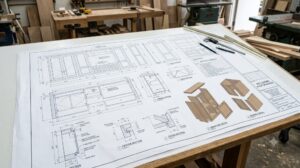

Millwork drafting services help contractors translate architectural designs into detailed technical drawings for fabrication and installation. These drawings include dimensions, material specifications, cabinet configurations, hardware locations, and construction details.
Accurate millwork documentation helps fabricators understand how each component should be manufactured and assembled. It also helps project teams identify missing information and potential coordination issues before production begins.
For US contractors managing commercial interiors, professional millwork drafting can support smoother communication between architects, fabricators, and installation teams.
Commercial office interiors often include reception desks, storage cabinets, conference room millwork, and custom wall panels. Each component requires detailed documentation to communicate dimensions, materials, finishes, and installation requirements.
Millwork shop drawings provide plans, elevations, sections, and enlarged details that help fabricators understand the intended construction. They also support coordination with electrical outlets, wall conditions, and adjacent architectural elements.
Clear documentation helps contractors manage fabrication requirements and address design questions before installation.
Contractors often manage multiple projects with overlapping documentation deadlines. When internal drafting teams face heavy workloads, outsourcing can provide additional production capacity without requiring permanent staffing increases.
Outsourced millwork drafting services can support cabinet drawings, commercial casework details, custom fixtures, and architectural woodwork documentation.
By establishing clear deliverables, revision procedures, and communication standards, contractors can integrate external drafting support into their existing workflows while retaining control over project decisions and quality reviews.
Millwork drafting is the process of creating technical drawings for cabinetry, casework, and custom architectural woodwork. Millwork shop drawings are the specific documents produced to communicate fabrication, assembly, and installation requirements.
Drafting may include preparing plans, elevations, sections, dimensions, and construction details. Shop drawings organize this information into a project-specific package for review and use by the relevant teams.
Understanding the distinction helps contractors define their documentation requirements and select the appropriate drafting support for each project.
Millwork drafting services play an important role in commercial construction by translating architectural designs into detailed technical drawings for fabrication and installation. From custom cabinetry and reception desks to retail fixtures and decorative wall panels, millwork components require accurate dimensions, material specifications, and construction details before production begins.
For millwork contractors, general contractors, architects, and interior designers in the United States, detailed drafting helps communicate design requirements clearly and coordinate work between project stakeholders.
What Are Millwork Drafting Services?
Millwork drafting services involve preparing technical drawings for custom woodwork, cabinetry, commercial casework, and architectural woodwork. These drawings communicate how individual components should be sized, constructed, assembled, and installed.
Depending on project requirements, millwork drafting may include floor plans, elevations, sections, enlarged details, cabinet layouts, hardware locations, and material references. Drafting teams use architectural drawings, design specifications, approved details, and field measurements to develop documentation for the project.
The goal is to provide clear information that supports fabrication, review, and installation.
Why Are Accurate Millwork Drawings Important?
Accurate drawings help fabricators understand the intended construction before manufacturing begins. Missing dimensions, unclear hardware requirements, and inconsistent material specifications can lead to questions, revisions, and installation difficulties.
Detailed millwork drawings help address these issues by documenting important construction information.
For example, a custom reception desk may require specific countertop dimensions, internal storage configurations, cable management provisions, and finish details. A coordinated drawing package communicates these requirements to the fabrication team and identifies interfaces that may need confirmation from other trades.
Clear documentation also gives contractors a consistent reference during project reviews and installation planning.
Key Benefits of Professional Millwork Drafting
1. Better fabrication accuracy
Detailed plans, elevations, and sections help fabricators understand component sizes, assembly methods, and construction requirements. Contractors should verify critical dimensions and specifications before approving drawings for production.
2. Improved project coordination
Millwork components often interact with electrical outlets, plumbing connections, wall assemblies, and adjacent finishes. Coordinated drawings help identify potential conflicts before they affect installation.
3. More organized revisions
Construction projects frequently involve design changes. A structured drafting process helps teams track revisions, update affected details, and distribute current drawing versions.
4. Consistent documentation
Standardized CAD layers, dimensioning conventions, annotations, and file naming procedures make drawing packages easier to review and interpret.
5. Flexible drafting support
Outsourced millwork drafting services allow contractors to obtain additional documentation capacity when internal teams face tight deadlines or multiple concurrent projects.
Common Applications of Millwork Drafting
Millwork drafting supports a wide range of commercial and residential applications, including:
-
Commercial cabinetry and casework for offices.
-
Custom reception counters and workstations.
-
Retail display fixtures and product shelving.
-
Hospitality millwork for hotels and restaurants.
-
Kitchen cabinets, vanities, and built-in storage.
-
Decorative wall panels and architectural woodwork.
Each application requires documentation suited to its dimensions, materials, fabrication methods, and installation conditions.
How to Choose the Right Millwork Drafting Partner
Selecting a drafting partner requires evaluating technical capability, communication, and quality-control procedures. Contractors should review sample drawings, confirm experience with similar projects, and ensure the provider can follow the required CAD standards and file formats.
It is also important to define the scope of work, expected deliverables, revision allowances, and submission schedule before drafting begins. For US projects, confirm that the team can work with Imperial dimensions and follow applicable standards identified in the contract documents.
Providing complete architectural backgrounds, specifications, hardware information, and field measurements where available can also help reduce unnecessary clarification cycles.
Millwork Drafting Support From Infallible Studio
Infallible Studio provides outsourced drafting and documentation support for AEC professionals. Our millwork drafting services can support commercial casework, cabinetry, custom fixtures, and architectural woodwork projects based on supplied drawings and project requirements.
Depending on the agreed scope, deliverables may include millwork plans, elevations, sections, construction details, and drawing revisions.
Need millwork drafting support for your next project? Contact Infallible Studio to discuss your documentation requirements and project timeline.