
Google Search is no longer limited to a simple list of ten blue links. Today, search results pages contain multiple interactive elements designed to provide users with faster, more accurate answers. These elements, commonly known as SERP (Search Engine Results Page) features, have changed how websites attract visitors from Google.
For businesses, bloggers, and SEO professionals, understanding Google Search Result Elements is essential because these features create new opportunities to increase visibility, improve click-through rates, and drive more organic traffic. Instead of focusing only on ranking position, modern SEO requires optimizing content so it can appear in different areas of the search results.
What Are Google Search Result Elements?
Google Search Result Elements, also known as google serp features that improve search visibility, are special sections or formats displayed on search pages beyond traditional organic listings. These enhanced search result formats help users find information quickly, compare options, and interact with search results in more useful ways. Understanding these search result enhancements can help businesses improve their online presence and attract more targeted organic traffic.
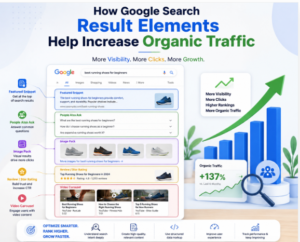
Some common SERP elements include:
- Featured Snippets
- People Also Ask (PAA) boxes
- Knowledge Panels
- Image Results
- Video Results
- Local Packs
- Rich Results
- Sitelinks
- AI-generated search features
Each element provides an additional opportunity for websites to gain attention. A webpage that appears in multiple SERP sections can receive more visibility than a page ranking only in standard organic results.
Why SERP Features Matter for Organic Traffic
Organic traffic depends heavily on visibility. Even if a website ranks on the first page, users are more likely to click results that stand out and provide immediate value.
SERP features help businesses achieve this by:
1. Increasing Search Visibility
A traditional search result usually contains a title, URL, and description. However, enhanced results can occupy more screen space and attract more attention.
For example, a page appearing in a Featured Snippet may appear above regular search results, giving it premium visibility. When users see a clear answer connected to a trusted website, they are more likely to visit that source for additional information.
This means businesses can compete for valuable traffic without always needing the number-one organic ranking.
2. Improving Click-Through Rates
Click-through rate (CTR) measures how often users click a search result after seeing it. SERP features can improve CTR by making listings more informative and attractive.
Rich results may display additional details such as:
- Ratings
- Product information
- Images
- FAQs
- Event details
- Pricing information
These extra details help users understand what a page offers before clicking. A more informative search result can create stronger interest and encourage more visits.
3. Capturing Featured Snippet Opportunities
Featured Snippets are among the most valuable Google Search features. They display a short answer extracted from a webpage and often appear at the top of search results.
To improve chances of earning a Featured Snippet, websites should:
- Answer questions directly
- Use clear headings
- Create short and useful explanations
- Organize information with lists and tables
- Match content with search intent
For example, instead of writing a long introduction before answering a question, provide a direct explanation immediately after a relevant heading. This makes content easier for Google to understand.
4. Reaching Users Through People Also Ask Results
The People Also Ask section shows related questions that users frequently search. This feature helps websites discover additional content opportunities.
By creating content that answers related questions, businesses can increase their chances of appearing in multiple search areas.
A single article can target several related queries by including:
- Frequently asked questions
- Detailed explanations
- Step-by-step instructions
- Supporting examples
This approach increases keyword coverage and creates more opportunities for organic traffic.
5. Building Trust Through Rich Results
Users often trust search results that provide detailed information. Rich Results help websites communicate credibility before users even visit the page.
For example, a recipe website can show ratings, preparation time, and images. A product page can display important details that help customers make decisions.
Using structured data markup helps search engines better understand page information and may make content eligible for enhanced search appearances.
6. Driving Traffic Through Visual Search Elements
Images and videos have become important parts of Google Search. Many users prefer visual information because it is easier to understand and consume.
Optimizing visual content can help websites appear in:
- Image packs
- Video sections
- Thumbnail results
Businesses can improve image visibility by using descriptive file names, relevant alt text, and high-quality visuals. Video content should include optimized titles, descriptions, and relevant keywords.
Visual SERP features are especially useful for industries such as travel, education, eCommerce, technology, and entertainment.
7. Increasing Local Website Visits
For local businesses, Google Search Result Elements can significantly impact customer discovery.
The Local Pack displays nearby businesses when users search for location-based services. Optimizing a business profile, collecting reviews, and maintaining accurate information can improve local search visibility.
For example, searches like “best coffee shop near me” or “SEO agency in my city” often trigger local search features. Appearing in these sections can generate valuable visitors who are ready to take action.
How to Optimize Content for Google Search Elements
Winning SERP features requires a strategic SEO approach. Businesses should focus on creating content that satisfies user needs rather than only targeting keywords.
Effective optimization methods include:
Create Helpful and Complete Content
Google prioritizes content that provides accurate and useful information. Pages should answer user questions clearly and cover topics in depth.
Understand Search Intent
Before creating content, analyze what users actually want. Some searches require explanations, while others require comparisons, tutorials, or product information.
Matching content with search intent increases the possibility of appearing in relevant SERP features.
Use Proper Content Structure
Well-organized content is easier for both users and search engines to understand.
Use:
- Clear headings
- Short paragraphs
- Bullet points
- Tables
- Question-based sections
A strong structure improves readability and helps Google identify important information.
Monitor SERP Performance
SEO success requires continuous tracking. Businesses should analyze which search features appear for their target keywords and identify opportunities to improve visibility.
Tools that analyze SERP layouts can help marketers understand competitor rankings, keyword opportunities, and feature placements.
The Future of Organic Traffic and SERP Features
Google Search continues to evolve. Users now expect faster answers, richer information, and more interactive experiences.
Because of this, SEO success is no longer only about achieving a high ranking. It is about becoming visible wherever users interact with search results.
Websites that optimize for Featured Snippets, rich results, visual search, local features, and other SERP elements can create more opportunities to attract organic visitors.
Final Thoughts
Google Search Result Elements provide powerful opportunities for increasing organic traffic. They allow websites to gain visibility beyond traditional rankings and connect with users in more meaningful ways.
A successful SEO strategy should focus on creating valuable content, understanding search intent, using structured information, and optimizing for different SERP opportunities.
The future of search belongs to websites that provide clear answers, useful experiences, and content that deserves attention. By understanding and optimizing Google Search Result Elements, businesses can improve their online presence and attract more organic traffic over time.