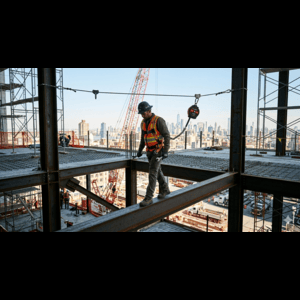

A fall arrest system is a worker protection solution designed to safely stop a fall before a person strikes a lower level. It typically includes an anchorage point, connecting device, harness, and lifeline. These systems are critical for OSHA compliance, rooftop safety, construction safety, and reducing injuries in elevated work environments.
Why Fall Arrest Systems Matter More Than Ever
Falls remain one of the leading causes of serious workplace injuries and fatalities across construction, industrial maintenance, warehousing, utilities, and commercial roofing sectors. Whenever employees work at heights, employers have a responsibility to implement effective worker fall protection measures that reduce risk and comply with safety regulations.
A properly designed fall arrest system provides a final layer of protection when other controls cannot eliminate fall hazards. While guardrails and administrative controls help prevent incidents, fall arrest equipment protects workers if a fall actually occurs.
As workplaces continue to evolve with more rooftop installations, solar projects, maintenance activities, and infrastructure development, the demand for reliable fall protection systems has become increasingly important.
Understanding Fall Arrest Systems
A fall arrest system is designed to stop a worker’s descent after a fall begins, minimizing injury and preventing contact with lower surfaces.
The system functions by distributing fall forces across the body while connecting the worker to a secure anchorage point. This controlled arrest helps reduce the risk of severe injury or death.
Core Components of a Fall Arrest System
Most systems include the following components:
-
Anchorage System – A secure attachment point capable of supporting required loads.
-
Body Harness – A full-body harness that distributes arrest forces safely.
-
Connecting Device – Shock-absorbing lanyards, self-retracting lifelines, or connectors.
-
Lifeline System – Horizontal or vertical systems that allow mobility while maintaining protection.
-
Rescue Planning Equipment – Procedures and equipment for prompt worker recovery after a fall.
Each component must work together as part of a complete and properly engineered safety solution.
Fall Arrest vs. Fall Restraint: Understanding the Difference
Many organizations confuse fall arrest systems with fall restraint systems. While both contribute to workplace safety, they serve different purposes.
| Feature | Fall Arrest System | Fall Restraint System |
|---|---|---|
| Purpose | Stops a fall after it occurs | Prevents reaching a fall hazard |
| Worker Mobility | Greater movement flexibility | Restricted movement |
| Fall Potential | Fall may occur and be arrested | Fall is prevented entirely |
| Typical Applications | Construction, maintenance, roofing | Controlled access zones |
| Required Rescue Planning | Essential | Often less complex |
| Risk Exposure | Higher | Lower |
The best safety programs often combine multiple fall protection systems to create layered protection strategies.
Key Industries That Rely on Fall Arrest Systems
Construction Safety
Construction workers routinely operate on scaffolding, steel structures, rooftops, and elevated platforms. Personal fall arrest systems help protect workers from sudden falls while supporting productivity on dynamic job sites.
Commercial Roofing
Roofing contractors face constant exposure to edge hazards and skylights. Properly installed rooftop safety systems allow teams to work efficiently while maintaining compliance with safety standards.
Industrial Facilities
Manufacturing plants, warehouses, and processing facilities frequently require maintenance work at height. Fall arrest equipment supports inspections, repairs, and equipment servicing.
Utilities and Telecommunications
Technicians working on towers, poles, and elevated structures depend on reliable worker fall protection systems to safely perform critical infrastructure work.
Essential Benefits of Modern Fall Arrest Systems
Organizations investing in professionally designed systems gain numerous advantages:
-
Reduced workplace injuries and fatalities
-
Improved OSHA compliance
-
Enhanced worker confidence and productivity
-
Lower workers’ compensation costs
-
Better risk management outcomes
-
Reduced project downtime
-
Improved safety culture
-
Stronger regulatory compliance documentation
Beyond compliance, these benefits contribute to long-term operational efficiency and workforce retention.
OSHA Compliance and Regulatory Considerations
Compliance with OSHA requirements is one of the primary drivers behind fall protection implementation.
OSHA requires employers to provide fall protection when employees are exposed to specific height-related hazards. While requirements vary by industry and application, organizations must evaluate risks and implement appropriate protective measures.
Important considerations include:
-
Hazard assessment documentation
-
Proper equipment selection
-
Employee training
-
System inspections
-
Maintenance procedures
-
Rescue planning
-
Qualified person oversight
Employers should view OSHA compliance as the minimum standard rather than the ultimate safety goal. Effective programs focus on preventing incidents while exceeding baseline regulatory expectations.
The Role of Anchorage Systems in Worker Safety
An anchorage system forms the foundation of any effective fall arrest solution. Even the highest-quality harness or lifeline cannot provide protection if attached to an inadequate anchor point.
Engineered anchorage systems are designed to withstand significant loads generated during a fall event. Depending on the environment, anchorages may be:
-
Permanent rooftop anchors
-
Structural steel attachment points
-
Mobile anchor devices
-
Horizontal lifeline supports
-
Specialty engineered systems
Because anchorage performance directly impacts worker safety, professional design and installation are critical.
Why Lifeline Systems Are Becoming Industry Standards
As organizations seek safer and more efficient ways to manage rooftop access, horizontal lifeline systems have become increasingly popular.
These systems allow workers to move across large areas while remaining continuously connected to fall protection equipment. Compared to relying solely on individual anchor points, lifeline systems often improve mobility and reduce operational inefficiencies.
For organizations evaluating advanced rooftop safety solutions, learning about a professionally engineered roof horizontal lifeline system can provide valuable insight into how continuous fall protection improves worker safety and operational flexibility.
Best Practices for Selecting a Fall Arrest System
Choosing the right system requires more than purchasing equipment. Employers should evaluate the entire work environment and operational requirements.
Consider the following factors:
1. Identify Workplace Hazards
Conduct a comprehensive fall hazard assessment to identify:
-
Roof edges
-
Skylights
-
Elevated platforms
-
Access ladders
-
Structural openings
-
Maintenance areas
2. Assess Worker Movement
Understand how employees move throughout the work area. Mobility requirements influence anchorage placement and lifeline design.
3. Evaluate Structural Capacity
Anchorage systems must connect to structures capable of supporting required loads.
4. Consider Rescue Requirements
A fall arrest event is not complete when the fall stops. Workers must be rescued promptly to reduce suspension trauma risks.
5. Prioritize Training
Even the most advanced equipment can fail if workers are not properly trained.
Common Mistakes Organizations Make
Many workplace incidents occur due to preventable errors.
Common mistakes include:
-
Using improper anchor points
-
Inadequate employee training
-
Failure to inspect equipment
-
Lack of rescue planning
-
Poor documentation practices
-
Using incompatible system components
-
Delaying maintenance or replacement
Addressing these issues proactively can significantly improve safety performance.
Emerging Trends in Fall Protection Technology
The fall protection industry continues to evolve through innovation and improved engineering.
Several trends are shaping the future of worker safety:
Smart Safety Monitoring
Connected devices can track equipment usage and inspection schedules.
Advanced Energy Absorption
Modern lanyards and lifelines increasingly incorporate enhanced force-reduction technologies.
Integrated Rooftop Safety Systems
Organizations are adopting comprehensive rooftop safety solutions that combine:
-
Guardrails
-
Walkways
-
Lifeline systems
-
Anchorage systems
-
Access controls
Digital Compliance Management
Cloud-based inspection and documentation platforms help organizations maintain compliance records more efficiently.
These developments support safer workplaces while simplifying regulatory management.
Building a Comprehensive Worker Fall Protection Program
A fall arrest system is most effective when integrated into a broader safety strategy.
Successful programs typically include:
-
Hazard identification
-
Risk assessment
-
Engineering controls
-
Fall protection equipment
-
Employee training
-
Inspection procedures
-
Emergency response planning
-
Continuous improvement initiatives
Organizations that take a holistic approach often experience stronger safety outcomes and lower incident rates.
Frequently Asked Questions
What is a fall arrest system?
A fall arrest system is a safety solution designed to stop a worker’s fall before contact with a lower level. It typically includes an anchorage point, full-body harness, connecting device, and lifeline.
When is a personal fall arrest system required?
A personal fall arrest system is generally required when workers are exposed to fall hazards and other protective measures cannot adequately eliminate the risk. Requirements depend on applicable safety regulations and work conditions.
What is the difference between a lifeline and a lanyard?
A lifeline is the primary line that provides worker attachment over a larger area, while a lanyard is the connecting component between the harness and anchorage or lifeline system.
How often should fall arrest equipment be inspected?
Equipment should be inspected before each use and undergo periodic formal inspections according to manufacturer recommendations and workplace safety procedures.
Are horizontal lifeline systems suitable for rooftops?
Yes. Horizontal lifeline systems are commonly used for rooftop safety because they allow workers to move across large areas while remaining connected to fall protection.
What are anchorage systems?
Anchorage systems are engineered attachment points that secure fall protection equipment to a structure capable of supporting fall arrest loads.
Why is rescue planning important?
After a fall is arrested, workers may remain suspended. Prompt rescue procedures help reduce the risk of suspension trauma and additional injury.
Can fall arrest systems improve OSHA compliance?
Yes. Properly designed, installed, maintained, and documented fall arrest systems help organizations meet OSHA requirements and strengthen overall workplace safety programs.
Conclusion
Falls continue to be one of the most significant workplace hazards across construction, roofing, industrial maintenance, and other elevated work environments. A properly engineered fall arrest system serves as a critical safeguard that protects workers, supports OSHA compliance, and strengthens organizational safety culture.
By combining high-quality anchorage systems, lifeline systems, worker training, and comprehensive rescue planning, organizations can significantly reduce risk while improving operational efficiency. As safety regulations evolve and workplaces become more complex, investing in effective worker fall protection remains one of the most important decisions employers can make.