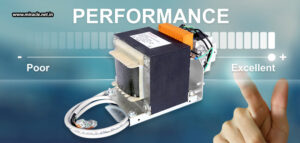

In the design and selection of EI transformers, the core material is frequently addressed using technical terminology – flux density, hysteresis curves, and magnetic permeability. Although these concepts hold importance, they can sometimes overshadow a more practical inquiry for buyers and engineers: how does core material genuinely impact performance in real-world scenarios? The answer is crucial. Core material has a direct effect on efficiency, heat generation, noise levels, and long-term reliability. Even when two transformers possess identical electrical ratings, variations in the quality and consistency of core material can result in noticeably different operational results. This article emphasizes the practical consequences of core material selections in EI transformers, assisting buyers and engineers in grasping what is truly significant without becoming entangled in unnecessary technical intricacies.
The role of core material in EI transformer performance
The core within an EI transformer is a path for magnetic flux, which allows energy to transfer efficiently from the primary winding to the secondary. However, the effectiveness of this energy transfer depends significantly on the material of the core. A well-designed and a well-chosen material minimizes energy loss, while supporting stable magnetic performance and maintaining consistency under varying load conditions. A wrong material choice or inconsistent core material will only increase the losses and generate heat, which can impact the efficiency and lifespan of the transformer.
How core losses impact efficiency of EI transformers
The core material determines how much energy is lost during operation, even when the transformer is not under load. These losses can occur primarily due to circulating currents within the core material that causes eddy current loss, and the energy lost during the magnetization cycles that causes hysteresis loss. Higher core losses mean increased electricity consumption over time, continuous heat generation, and reduced overall efficiency. For applications where transformers operate for long hours, even small differences in core losses can result in significant energy costs over the life of the equipment.
How core materials affect heat generation in EI transformers
Heat is one of the most critical factors that affect transformer longevity. The core material plays a direct role here too, by determining how much heat is generated during operation. Lower quality or poorly processed core materials result in higher losses, which translate into higher operating temperatures. Over time, this heat accelerates insulation aging and increases the risk of premature failure. On the other hand, high-quality core materials help maintain lower operating temperatures, which results in longer insulation life, reduced risk of thermal stress, and improved overall reliability. This means that core material is not just about efficiency; it is also a key determinant of lifespan.
Energy efficiency and operating cost of EI transformers
Efficiency is often evaluated during initial specification, but its real impact is seen during operation. The core material affects efficiency as well, in a continuous and cumulative way. A transformer with lower core losses consumes lesser power even when idle. Over months and years, this translates into measurable energy savings, especially in systems where transformers are energized round the clock. With better core material, there are lower losses, which means reduced energy bills. Also, the heat generated is reduced, meaning lower cooling requirements. These factors contribute directly to lower lifecycle costs.
Noise and vibration in EI transformers
Core material and its manufacturing quality also influence the acoustic performance of an EI transformer. Transformers produce a characteristic hum due to magnetostriction – the slight expansion and contraction of core material under magnetic flux. Poor-quality core materials or inconsistent lamination can amplify this effect, resulting in increased vibration, higher audible noise levels, and potential mechanical wear over time. In environments like offices, hospitals, audio systems, or control panels, excessive noise can be a serious concern. This is where selecting the right core material is important to ensure quieter and more stable operation.
Why lamination quality matters in EI transformer cores
EI transformer cores are made from laminated sheets of electrical steel. The quality of these laminations plays a major role in performance. Well-manufactured laminations have uniform thickness, are cut and stacked with precision, and are properly insulated from each other. These properties result in reduced eddy current losses and improved magnetic efficiency. Poor lamination quality, on the other hand, can lead to increased losses, higher heat generation, and inconsistent performance across units. The core lamination quality thus impacts the performance of the transformer.
Balancing cost and performance in EI transformer core selection
If you think that the highest-quality materials for a core are the best choice, you’re wrong! Sometimes, even higher quality materials used, when not actually needed, can increase costs without delivering proportional benefits. The point here is to match the core material to the application. For continuous-duty or energy-sensitive systems, higher-grade materials provide clear advantages. But, for intermittent or low-power applications, standard-grade materials may be sufficient. This balanced approach helps avoid unnecessary costs, while still ensuring reliable performance.
How to choose the right EI transformer core material
When assessing EI transformers, the core material should not be overlooked as a minor or secondary factor. Instead, purchasers ought to contemplate several practical inquiries, which can help connect technical specifications with real-world performance.
- What type and grade of electrical steel is utilized?
- Are core losses explicitly defined and tested?
- How uniform is the material across different production batches?
- Does the choice of material correspond with the intended duty cycle?
Partnering with a trusted EI transformer manufacturer in India like Miracle Electronics can help ensure that these critical factors are properly addressed during design and production.
Core materials are crucial in determining the performance of an EI transformer – not merely in theory, but in practical use. They affect efficiency, heat generation, noise levels, and long-term reliability. For buyers and engineers, the objective is not to pursue the most advanced material available, but to choose one that meets the actual requirements of the application. By focusing on practical results – energy consumption, operating temperature, and consistency – rather than abstract technical specifications, it becomes easier to make well-informed choices. Ultimately, a properly selected core material guarantees that an EI transformer provides stable, efficient, and dependable performance throughout its operational lifespan.