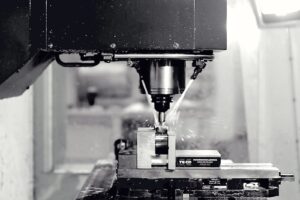

In modern manufacturing, precision and speed are two of the most important factors that determine success. Companies need to create high-quality products quickly and consistently to stay competitive. This is where CNC machining plays a vital role. CNC, or Computer Numerical Control, allows machines to perform cutting, drilling, and shaping operations with computer-guided accuracy — far beyond what human hands can achieve.
In this article, we’ll explore how CNC machining improves both accuracy and efficiency, why it has become an essential part of metal fabrication, and how industries benefit from this advanced technology in 2025 and beyond.
What Is CNC Machining?
CNC machining is a process that uses computer-controlled tools to shape and cut materials like metal, plastic, and wood into specific designs. The instructions for the machine are programmed using a computer file (known as G-code), which tells the machine where to move, how fast to cut, and how deep to go.
This process removes the need for manual adjustments, reducing errors and ensuring that every piece produced matches the exact design specifications. The most common CNC machines include CNC mills, lathes, routers, and laser cutters, each designed for different types of materials and production needs.
Accuracy in CNC Machining
One of the biggest advantages of CNC machining is accuracy. These machines can consistently produce parts within tight tolerances — often within a few microns — which is essential for industries like aerospace, automotive, and medical equipment manufacturing.
1. Computer-Controlled Movements
Because CNC machines follow programmed digital instructions, they can perform complex cutting operations repeatedly without deviation. The computer eliminates the natural inconsistencies of manual work, ensuring that every component is identical to the digital model.
2. Advanced Sensors and Feedback Systems
Modern CNC machines come with smart sensors that monitor temperature, vibration, and tool wear in real time. These sensors send feedback to the system, allowing it to make small adjustments automatically. This ensures that accuracy is maintained even after long production runs.
3. Precision Tooling
CNC machines use high-quality cutting tools that are designed for specific materials. The software ensures the right tool path and speed, which prevents over-cutting or tool slipping. This combination of control and precision delivers a perfect finish every time.
4. Repeatability
Once a program is created, it can be saved and reused at any time. That means a company can reproduce identical parts months or even years later, without variation. This repeatability is critical for maintaining product quality and brand reliability.
Efficiency in CNC Machining
CNC machining doesn’t just improve accuracy — it also dramatically increases efficiency. The entire process, from design to production, becomes faster and more streamlined.
1. Automated Production
CNC machines can run continuously without human intervention. Once the setup is complete, the machine can produce hundreds or thousands of parts automatically. Operators only need to supervise or load new material when required, reducing downtime and increasing productivity.
2. Reduced Waste
Because CNC machines follow exact digital instructions, material waste is minimal. Each cut, hole, or groove is placed precisely where it should be, reducing scrap pieces and optimising raw material use — which is both cost-effective and environmentally friendly.
3. Faster Prototyping
When developing a new product, time is often lost making and testing prototypes. CNC machining speeds up this process because designs can be adjusted quickly in CAD (Computer-Aided Design) software and sent directly to the machine for production. Engineers can test, refine, and produce new versions within hours instead of days.
4. Multitasking Capabilities
Many CNC machines are capable of performing multiple operations — such as milling, drilling, and tapping — in a single setup. This reduces the need to transfer the workpiece between different machines, saving both time and labour.
5. Lower Labour Costs
Because CNC machines can work automatically, fewer operators are needed to manage multiple machines at once. This reduces human fatigue, errors, and costs while improving the overall output of a manufacturing facility.
The Role of Software in Accuracy and Efficiency
CNC machining relies heavily on software for both design and control. Modern CAD/CAM software simplifies the process by linking the design directly to the machine’s operating system.
-
CAD (Computer-Aided Design) helps engineers create accurate 2D or 3D models of parts.
-
CAM (Computer-Aided Manufacturing) converts those designs into tool paths that guide the CNC machine.
Advanced software in 2025 now includes AI-driven optimisation, which automatically adjusts feeds, speeds, and cutting strategies for the best performance. This reduces tool wear, shortens cycle times, and ensures high-precision results.
Examples of CNC Machining in Action
Aerospace Manufacturing
Aircraft components must meet extreme precision standards to ensure safety and performance. CNC machines create parts such as turbine blades and engine mounts with micron-level accuracy, ensuring perfect fit and reliability under pressure.
Automotive Industry
CNC machining is used for everything from engine blocks to interior fittings. Automation allows car manufacturers to produce consistent, high-quality parts faster — a key factor in mass production.
Medical Equipment Production
Surgical instruments and implants require smooth surfaces and precise dimensions. CNC machines ensure that each component is safe, functional, and identical to the approved design.
Metal Fabrication and Welding Support
In metal fabrication workshops, CNC-cut parts are often used in welding or assembly projects. Because of the accuracy of CNC cutting, pieces fit together perfectly, reducing rework and improving structural strength.
The Future of CNC Machining Efficiency
The CNC industry is evolving rapidly with new technologies that further improve speed and precision.
-
AI and Machine Learning – Machines can now analyse their performance data, predict tool wear, and adjust automatically for the next cycle.
-
Internet of Things (IoT) – CNC systems can connect to central dashboards, allowing managers to monitor production remotely and fix issues before they cause downtime.
-
Automation and Robotics – Robotic arms can load and unload CNC machines, enabling 24/7 lights-out manufacturing.
-
Hybrid Manufacturing – Combining CNC machining with 3D printing creates new possibilities for complex, lightweight components.
-
Sustainable Operations – Energy-efficient drives, coolant recycling, and smart power management are helping manufacturers reduce their environmental footprint.
These advancements are pushing factories toward “smart manufacturing”, where efficiency, precision, and sustainability go hand in hand.
Why Accuracy and Efficiency Matter
For any manufacturing business, accuracy ensures that parts fit and function as intended. Even a small error can cause costly failures, especially in fields like aerospace or medical engineering. Efficiency, on the other hand, determines how quickly and affordably products can be made.
By combining these two strengths, CNC machining allows companies to:
-
Meet strict quality standards
-
Produce more parts in less time
-
Reduce waste and operating costs
-
Improve profitability and sustainability
In short, CNC machining forms the backbone of modern industrial production.
Conclusion
CNC machining has completely transformed the way manufacturers produce parts and components. Through computer-controlled precision, automated processes, and smart software, it delivers unmatched accuracy and efficiency.
In 2025, the technology continues to advance with AI, robotics, and sustainable practices, making it even more powerful. Whether it’s a small workshop or a large factory, CNC machining ensures that every product is made faster, better, and with exceptional precision.
For industries striving to stay ahead in a competitive world, investing in CNC machining is not just an upgrade — it’s a necessity for long-term success.