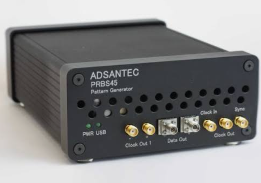

Modern communication systems require accurate testing to ensure reliable signal transmission, data integrity, and stable performance. Engineers working with high-speed electronic and optical communication equipment need dependable test patterns that can reproduce realistic data conditions. A PRBS Pattern Generator provides an effective way to create controlled pseudo-random binary sequences for evaluating transmitters, receivers, cables, optical components, and other high-speed systems.
Understanding PRBS Pattern Generation
A Pseudo-Random Binary Sequence (PRBS) is a deterministic digital sequence designed to resemble random data while following a repeatable mathematical pattern. Because the sequence can be generated and reproduced consistently, engineers can use it to perform repeatable measurements under controlled laboratory conditions.
A PRBS Pattern Generator produces these sequences at selected data rates and pattern lengths. The generated signal can then be connected to a device under test to evaluate how effectively it handles high-speed data transmission. This approach is particularly useful when testing components where normal repetitive patterns may not adequately expose signal integrity problems.
Why PRBS Testing Matters
High-speed communication equipment can experience problems that are difficult to identify using simple alternating or repetitive signals. A pseudo-random sequence creates frequent transitions and varying combinations of logical ones and zeros, providing a more demanding test environment.
Using a PRBS Pattern Generator allows engineers to investigate characteristics such as bit errors, timing performance, jitter, signal quality, and receiver sensitivity. These measurements can help reveal weaknesses in system design and support more reliable development and validation processes.
Applications Across High-Speed Technologies
PRBS testing is widely applicable to digital communication and electronic testing environments. Engineers can use generated patterns for evaluating:
- High-speed serial communication links
- Optical transceivers and optical modules
- Fiber-optic communication systems
- Data cables and interconnects
- Network equipment
- Semiconductor devices
- Receivers and transmitters
- Clock and data recovery circuits
- Signal integrity performance
- Research and development prototypes
The flexibility of programmable test patterns makes this type of equipment useful across different development stages, from component characterization to system-level validation.
Evaluating Bit Error Performance
One of the important applications of PRBS testing is bit error measurement. A communication link may appear to operate correctly under ordinary conditions while still producing occasional transmission errors. Testing with a controlled pseudo-random sequence can create a consistent stream of data that helps engineers identify these issues.
The transmitted sequence can be compared with the received data to determine whether bits have been lost, changed, or incorrectly interpreted. This provides valuable information about the reliability of a communication channel and helps engineers investigate possible causes of transmission errors.
Supporting Signal Integrity Analysis
Signal integrity becomes increasingly important as data rates increase. Small imperfections in a transmission path can become significant when signals operate at very high speeds. Reflections, attenuation, crosstalk, impedance mismatches, and timing uncertainty may affect the quality of the received signal.
A PRBS Pattern Generator can provide a controlled high-speed stimulus for examining these effects. Engineers can observe the resulting waveform and use measurements such as eye diagrams, jitter analysis, and error rates to understand how a system behaves under demanding operating conditions.
Pattern Length and Testing Requirements
Different PRBS patterns can provide different levels of testing complexity. Shorter patterns may be useful for basic functional verification, while longer sequences can provide a greater variety of bit combinations and transition behavior.
Selecting the appropriate pattern depends on the device, interface, data rate, and testing objective. Engineers should consider the characteristics of the system being evaluated and choose a pattern that provides meaningful stress without introducing unnecessary complexity.
Importance of Data Rate Flexibility
Modern systems operate across a wide range of communication speeds. A test instrument therefore needs to accommodate the requirements of the specific application. Data-rate flexibility allows engineers to evaluate components at different operating conditions and determine how performance changes as transmission speed increases.
BitWise Laboratories develops measurement solutions designed for demanding high-speed testing environments. Its equipment can support engineers who need precise, repeatable signal-generation and measurement capabilities during development and validation.
Benefits for Research and Development
In research and development laboratories, repeatability is essential. Engineers may need to perform the same experiment multiple times while changing one variable at a time. A programmable PRBS source provides a consistent test stimulus, making it easier to compare results across devices, configurations, and operating conditions.
This can improve troubleshooting efficiency and help development teams identify performance limitations earlier in the design cycle. Reliable testing also supports documentation and validation when products move from prototypes toward production.
Choosing the Right Testing Solution
When selecting a PRBS generation solution, engineers should consider several technical factors. These may include supported data rates, available PRBS patterns, output characteristics, timing accuracy, synchronization capabilities, interface requirements, and compatibility with other laboratory instruments.
The intended application should guide the selection process. A laboratory developing optical communication equipment may have different requirements from a team testing semiconductor interfaces or high-speed electrical links.
BitWise Laboratories for High-Speed Testing
BitWise Laboratories focuses on test and measurement solutions for high-speed electronic and optical communication applications. Its products are designed to help engineers generate, measure, and analyze signals with accuracy and consistency.
For laboratories working on demanding communication technologies, dependable pattern generation can simplify testing and provide meaningful performance data. Combining controlled signal generation with appropriate measurement techniques allows engineering teams to evaluate devices more thoroughly and make informed design decisions.
Conclusion
Accurate signal testing is essential for developing dependable high-speed communication systems. A PRBS Pattern Generator provides engineers with a repeatable and demanding stimulus for evaluating transmission performance, bit errors, timing behavior, and signal integrity. With suitable testing equipment from BitWise Laboratories, development teams can conduct controlled measurements and better understand how their devices perform under realistic high-speed operating conditions.
FAQ
What is a PRBS Pattern Generator?
It is a test instrument that produces deterministic pseudo-random binary sequences used to evaluate digital and communication systems.
Why are PRBS patterns used in testing?
They provide varied, repeatable data patterns that can expose transmission errors and signal integrity problems that simpler patterns may not reveal.
Where can PRBS testing be used?
It can be used with high-speed electrical links, optical systems, transceivers, cables, network equipment, and semiconductor devices.
What should engineers consider when selecting one?
Important factors include data-rate range, supported patterns, output specifications, timing performance, synchronization, and compatibility with the testing environment.