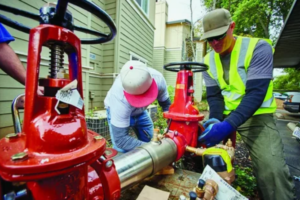

Clean drinking water is something most people take for granted until contamination occurs. Backflow incidents can introduce harmful substances into public water supplies, creating health emergencies that affect entire communities. Regular backflow testing prevents these dangerous events by verifying that protective devices function correctly.
Backflow
Backflow occurs when water flows opposite its intended direction within a plumbing system. Instead of moving from the public water main to your property, contaminated water reverses course and enters the clean water supply.
Backpressure Backflow
This occurs when pressure in a private system exceeds pressure in the public main. Pumps, boilers, and heightened tanks can create pressure that pushes water backward if protective devices fail.
Backsiphonage
When pressure in the public main drops suddenly, it creates suction that pulls water from connected properties back into the main. Water main breaks, firefighting operations, and emergency repairs can all cause pressure drops that trigger backsiphonage.
Real-World Contamination Risks
Backflow is not a theoretical concern. Documented incidents have introduced serious contaminants into water supplies.
Chemical Contamination
Businesses using chemicals in their operations can contaminate water supplies if backflow occurs. Dry cleaners, car washes, photo processors, and industrial facilities all handle substances dangerous to human health.
Biological Contamination
Medical facilities, mortuaries, and laboratories handle biological materials that could enter water supplies through backflow. Agricultural operations may introduce pesticides, fertilizers, or animal waste.
Cross-Connection Hazards
Properties with irrigation systems, swimming pools, fire suppression systems, and other non-potable water connections create cross-connection risks. Without proper protection, these systems can introduce contaminants during backflow events.
Backflow Prevention Devices
Several types of devices protect against backflow, with selection depending on the hazard level and application.
Reduced Pressure Zone (RPZ) Assemblies
RPZ devices provide the highest level of protection for serious hazard applications. They contain two check valves and a relief valve that opens to discharge water if either check valve fails. Florida requires RPZ assemblies for many commercial and industrial applications.
Double Check Valve Assemblies
Double check assemblies use two check valves in series. They protect against backpressure and backsiphonage in low to moderate hazard situations. These devices are common on fire sprinkler connections and irrigation systems.
Pressure Vacuum Breakers
These devices protect against backsiphonage but not backpressure. They are appropriate for applications like irrigation systems where backsiphonage is the primary concern.
Atmospheric Vacuum Breakers
The simplest backflow preventers, these devices work only against backsiphonage and must be installed downstream of all valves and at least six inches above the highest outlet. They are suitable for isolated fixtures with low hazard levels.
Florida’s Backflow Testing Requirements
Florida law requires backflow prevention on cross-connections that could contaminate public water supplies. Testing requirements ensure these devices continue functioning properly.
Who Must Test
Commercial properties, industrial facilities, and residential properties with irrigation systems connected to public water typically require backflow prevention. Properties with fire suppression systems, pools, and other cross-connections also fall under testing requirements.
Testing Frequency
Most Florida water utilities require annual backflow testing. Some high-hazard applications require more frequent testing. Check with your local water utility for specific requirements.
Certified Testers
Only certified backflow prevention assembly testers can perform required testing. These individuals have completed training and passed examinations demonstrating competency. Plumbing companies like A to Z Statewide Plumbing employ certified testers who can perform required testing and any necessary repairs.
What Happens During Backflow Testing
Knowing the testing process helps property owners prepare and ensures testing is performed correctly.
Visual Inspection
Testers begin by examining the device for visible damage, corrosion, or improper installation. They verify the device is accessible for testing and maintenance.
Functional Testing
Using specialized gauges, testers measure pressure differentials across check valves and verify relief valves open at correct pressures. Each component must meet performance standards established by device manufacturers and regulatory authorities.
Documentation
Testers complete detailed reports documenting test results for each component. Passing devices receive certification. Failed devices must be repaired or replaced and retested.
Submission to Utilities
Test reports go to the local water utility for compliance tracking. Property owners should retain copies for their records.
When Devices Fail Testing
Failed backflow testing requires prompt action to maintain compliance and protect water quality.
Common Failure Causes
Check valves fail when seals wear, debris prevents complete closure, or corrosion damages seating surfaces. Relief valves may fail from fouling or spring fatigue. Florida’s hard water and mineral content accelerates wear on backflow device components.
Repair vs. Replacement
Minor failures often can be repaired by replacing internal components. Severely corroded devices or those with repeated failures may need complete replacement. Testers can advise on the most cost-effective approach.
Retesting Requirements
After repair or replacement, devices must be retested to verify proper function. Only passing test results satisfy regulatory requirements.
Maintaining Compliance
Property owners bear responsibility for backflow prevention compliance. Several practices help maintain compliance and protect water quality.
Track Testing Schedules
Know when your devices are due for testing and schedule service in advance. Utilities may assess penalties for overdue testing.
Choose Qualified Service Providers
Work with certified testers employed by reputable plumbing companies. Proper testing requires training, equipment, and attention to detail.
Address Failures Promptly
When devices fail testing, arrange repairs quickly. Extended periods with non-functional backflow prevention put water quality at risk and may violate regulations.
Backflow testing protects everyone who depends on clean water. For Florida property owners, compliance with testing requirements fulfills both legal obligations and civic responsibility to protect shared water resources.