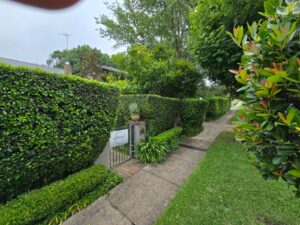

Most Sydney homeowners think hedging and pruning in Sydney is about keeping things tidy. It is not. Timing your cuts incorrectly can stress your plants, thin out your hedges, and undo months of growth in a single afternoon. Getting the timing right is the difference between a garden that looks sharp all year and one that always seems to be catching up.
Why Timing Matters More Than Technique
Sydney’s climate is not like other Australian cities. Your hedges and shrubs grow almost year-round here. There is no real winter dormancy to rely on. That means the window for a good cut is smaller than most people expect. Cut too early in summer and you risk scorching new growth. Cut too late in autumn and your plants barely recover before things slow down. The season you choose to trim shapes how your garden responds for the next several months.
A plant that gets cut at the right time will push strong, dense new shoots. One that gets cut at the wrong time will struggle to seal its wound before heat or cold moves in.
The Best Seasons for Hedge Trimming and Shrub Care
Spring is your most powerful window. From September through to November, your plants are waking up and pushing growth hard. A cut during this period encourages branching, which is what makes a hedge grow thick and full instead of tall and thin. If your hedge looks sparse, a spring trim addresses that.
Early autumn is your second chance. March and April bring mild temperatures and stable conditions. Plants still carry enough warmth to respond before growth slows. An early autumn cut sets your garden up for a stronger spring. Think of it as preparation, not maintenance alone.
Summer requires restraint. Light, tidy trims are fine through December to February. Avoid going heavy during hot spells. Freshly cut stems lose moisture fast in Sydney’s heat. If you trim in summer, do it early in the morning and water the day before. Never cut when a heatwave is forecast.
Winter is for structure, not density. June to August is the time to remove dead or damaged branches and do light shaping on evergreens. Do not expect fast recovery from a heavy winter cut. Save the big work for spring.
How Often Should You Actually Trim?
This depends on what you are growing. Fast-growing plants like Lilly Pilly can need attention every six to eight weeks through the warmer months. Slower species like Buxus do well with two or three visits a year. A rhythm that works for most Sydney gardens includes one main cut in spring, one shaping cut in early autumn, and light summer tidying as needed.
Frequency is what keeps a hedge thick. Waiting too long and then cutting hard is what makes hedges go sparse and woody at the base.
Common Mistakes That Set Your Garden Back
Cutting into old wood on conifers is a mistake you cannot undo. Most conifers will not push new growth from bare, brown stems. Always stay within the green growth.
Trimming in direct sunlight causes problems too. Heat stress on freshly cut stems causes scorching, especially on Buxus and Camellias. Pick an overcast day or an early morning slot whenever you can.
Only shaving the outer surface of a hedge creates a dense outer shell with a bare, shaded interior. Cutting slightly deeper in sections encourages branching from inside the plant and keeps the lower growth from thinning out over time.
Letting the top of a hedge grow wider than the base is one of the most common causes of bare, woody bottoms. Keep the base slightly wider so sunlight reaches the lower foliage. That single habit protects your hedge across every season.
Garden Maintenance Services Across Sydney’s North Shore and Ryde
For homeowners in Wahroonga, St Ives, Turramurra, Killara, Eastwood, Denistone, and Marsfield, garden maintenance services across Sydney’s North Shore and Ryde need to match the specific conditions these suburbs bring. Leafy, established gardens here often feature larger hedges, sloping lawns, and mature shrubs that need more than a quick pass with a trimmer.
Garden maintenance services across Sydney’s North Shore and Ryde also need to account for the region’s humid periods. Buxus blight spreads quickly in warm, damp conditions. Regular pruning improves airflow through the plant and reduces the risk of disease taking hold.
These suburbs also carry older hedging plants that need restorative pruning. That involves staged cutting to bring an overgrown or uneven hedge back into shape without stressing the plant further.
What to Do After You Trim
After a cut, your plants need support to recover well. Water consistently for the following few weeks. Avoid shallow, frequent watering. Deep, steady watering encourages stronger roots. Add a layer of mulch around the base of hedges if the soil is exposed. Keep it a few centimetres away from the stems.
If you plan to feed your plants, wait until you see new growth starting. Feeding a stressed plant does more harm than good.
Hedging and Pruning in Sydney: Get Your Garden Back on Track
If your hedges look overgrown or patchy, or you are not sure when the last proper cut happened, now is the right time to act. Waiting another season makes the job harder. Hedging and pruning in Sydney requires the right timing, the right tools, and a clear understanding of what your plants need to recover and grow well. The team at Dad Mows Best provides hedging and pruning in Sydney for homeowners across Ryde, Ku-ring-gai, and the surrounding suburbs. We handle every job with care and close attention to plant health. Visit us at dad mows best to book your free quote today.
FAQs
How often should I trim my hedges in Sydney?
Most hedges do well with a main cut in spring, a shaping cut in early autumn, and light trims in summer if needed. Fast growers may need attention every six to eight weeks.
Is it okay to prune hedges in summer in Sydney?
Light trims are fine. Avoid heavy cutting during hot spells or heatwaves. Always trim in the morning and make sure plants are well-watered beforehand.
Why is my hedge bare and thin at the bottom?
The top is likely too wide and blocking sunlight from reaching lower growth. Keep the base slightly wider than the top and cut a little deeper into sections occasionally to encourage inner branching.
What is the difference between hedge trimming and pruning?
Trimming focuses on shaping and controlling outer growth for a neat appearance. Pruning is more targeted. It focuses on plant health, structure, and long-term growth by removing dead, diseased, or crossing branches.
When should I call a professional for hedge work?
If the hedge is taller than 2.5 metres, near a boundary, power line, or public footpath, or needs restorative work after years of neglect, a professional will get better results safely.
The right support makes hedging and pruning in Sydney a simple, stress-free part of your regular garden care.