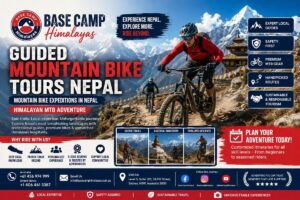

Nepal is best known for trekking, but its Himalayan landscapes also offer an extraordinary setting for mountain biking. From forested trails around Kathmandu and Pokhara to rugged high-altitude routes in Mustang, riding through Nepal combines physical challenge with dramatic scenery, remote villages and distinctive mountain cultures.
For riders who want more than a conventional cycling holiday, guided mountain bike tours nepal can provide a practical way to explore demanding terrain while benefiting from local route knowledge, logistics and safety support. The experience can range from a relaxed day ride to a multi-week expedition across high mountain passes.
Whether you are an experienced off-road cyclist or planning your first serious Himalayan ride, understanding the trails, difficulty levels, preparation and logistics can make a major difference.
Why Choose a Guided Mountain Bike Tour in Nepal?
Nepal’s mountain-bike routes are rarely simple point-to-point trails. Conditions can change quickly, surfaces may vary from paved roads to loose gravel and singletrack, and altitude can significantly affect physical performance.
A knowledgeable guide can help riders navigate changing terrain, choose appropriate routes and adjust the itinerary when weather or trail conditions change. Guides can also provide valuable local knowledge about villages, cultural sites and mountain environments that may otherwise be easy to miss.
For restricted regions, professional support is particularly important. Nepal’s Department of Immigration states that foreign visitors entering designated restricted areas must obtain the relevant trekking permit through an authorised agency, and independent travel is not permitted in those areas.
Best Mountain Biking Regions in Nepal
Pokhara: A Flexible Starting Point
Pokhara is one of Nepal’s most accessible mountain-biking bases. Riders can find everything from relatively gentle countryside routes to demanding climbs and technical descents.
Popular riding areas include Sarangkot, the trails around Phewa Lake and Begnas Lake, Panchase and routes leading towards the Annapurna foothills. The combination of forest, terraced farmland, traditional villages and Himalayan views makes the region suitable for riders with different experience levels.
A short Pokhara ride can work well as an introduction to Nepal’s terrain before attempting a longer expedition.
Kathmandu Valley: Forest Trails and Mountain Views
The Kathmandu Valley provides another useful option for riders who want challenging terrain without immediately committing to a remote multi-day expedition.
Routes around Shivapuri and surrounding hills can involve steep climbs, forest tracks and technical descents. Some routes offer extensive elevation changes and panoramic views towards the Himalayan ranges.
These rides are also useful for assessing fitness, bike handling and comfort with Nepal’s trail conditions.
Annapurna and Mustang: The Bigger Challenge
For experienced riders, the Annapurna region offers some of Nepal’s most memorable multi-day cycling terrain. The classic Annapurna Circuit reaches high elevations and includes the Thorong La, while routes around the Kali Gandaki corridor provide a dramatic transition from greener lower valleys to much drier mountain landscapes.
Upper Mustang takes the experience further. The landscape becomes increasingly arid, with rocky tracks, high passes, traditional settlements and striking Himalayan scenery. Routes commonly pass through places such as Kagbeni, Chele, Charang and Lo Manthang.
Because Upper Mustang is a restricted area, riders need to pay close attention to current permit requirements and travel regulations. Nepal’s official immigration information currently lists a special permit fee of USD 50 per person per day for Upper Mustang, although travellers should confirm requirements and fees before departure because regulations can change.
What Makes a Himalayan MTB Adventure Different?
A himalayan mtb adventure is not simply a mountain-bike holiday at a higher elevation. Altitude changes how your body responds to exercise, while weather, wind, trail surfaces and remoteness can add additional challenges.
A route that looks manageable on a map may feel considerably harder once sustained climbing begins at altitude. Riders should therefore judge an itinerary by elevation gain, maximum altitude, technical difficulty and daily riding time—not distance alone.
A good itinerary should also include sensible acclimatisation. Rest or acclimatisation days can allow riders to adjust before tackling the highest sections of a route.
Safety: What Riders Should Know
Acclimatisation and Altitude
Altitude deserves serious consideration on Himalayan cycling trips. Do not treat headaches, unusual fatigue, dizziness, nausea or breathing difficulties as something to simply push through.
A sensible itinerary increases elevation progressively and allows time to recover. If symptoms become severe or worsen, descending and seeking medical assistance should take priority over completing the planned route.
Bike Preparation
A properly serviced mountain bike is essential. Before departure, inspect:
- Brakes and brake pads
- Tyres and spare tubes
- Chain and drivetrain
- Suspension
- Wheels and spokes
- Gears and cables
- Essential repair tools
For remote routes, carrying suitable spares is particularly important because specialist bike shops may be unavailable for long stretches.
Weather and Trail Conditions
Mountain weather can change quickly. Rain can make some lower trails slippery, while high-altitude routes may experience strong winds, cold temperatures or sudden changes in visibility.
Your guide should be prepared to modify the daily route when conditions make the original plan unsafe. Flexibility is an important part of responsible Himalayan cycling.
What Is Usually Included in a Guided Tour?
The exact package varies between operators, so travellers should check the details before booking. Depending on the route, a guided tour may include a professional cycling guide, accommodation, meals, transportation, permits, luggage support, mechanical assistance and a support vehicle.
For longer mountain bike expeditions in nepal, support logistics can become particularly valuable. A support vehicle may carry luggage and spare equipment, allowing riders to concentrate on the day’s route rather than managing heavy loads.
When comparing operators, ask specifically what happens in the event of a mechanical breakdown, bad weather, illness or an itinerary change.
Choosing the Right Tour for Your Experience
Not every Himalayan cycling route is suitable for every rider.
Beginners may prefer shorter rides around Pokhara or Kathmandu, where the itinerary can be adjusted more easily.
Intermediate riders can consider multi-day routes in the Annapurna foothills or more demanding Pokhara trails, provided they are comfortable with sustained climbs and uneven surfaces.
Advanced riders looking for a major challenge can consider high-altitude routes such as Upper Mustang or sections of the Annapurna Circuit. These trips require stronger endurance, confident bike handling and preparation for remote conditions.
The right tour is not necessarily the longest or highest one. It is the route that matches your fitness, technical ability and appetite for adventure.
How to Prepare Before You Arrive
Start training several weeks or months before your trip. Focus on cardiovascular endurance, sustained climbing and core strength rather than only short, high-intensity cycling sessions.
It is also worth practising riding on loose gravel, rocky surfaces and steep descents if those conditions are unfamiliar.
Pack versatile clothing, gloves, eye protection, sun protection, hydration equipment, basic repair supplies and layers suitable for changing temperatures. A helmet should be considered essential equipment, not an optional extra.
If you are travelling with an operator such as Base Camp Himalayas, discuss your riding experience, preferred difficulty and expectations before finalising an itinerary. This can help ensure that the route and support arrangements are appropriate for your group.
Questions to Ask Before Booking
Before committing to a tour, ask:
- What is the highest altitude reached?
- How many hours of riding are expected each day?
- What type of terrain should I expect?
- Are permits included?
- Is a support vehicle provided?
- What mechanical support is available?
- What happens if weather makes a route unsafe?
- Is the itinerary suitable for my current riding ability?
These questions can reveal important differences between apparently similar tour packages.
Frequently Asked Questions
Are guided mountain bike tours in Nepal suitable for beginners?
Yes, but the route should match the rider’s experience. Shorter trails around Kathmandu or Pokhara can be suitable starting points, while remote high-altitude routes require substantially more preparation.
What is the best region for experienced mountain bikers?
Upper Mustang and the Annapurna region are strong choices for experienced riders seeking challenging terrain, elevation and multi-day adventure. Upper Mustang is particularly distinctive because of its dry Himalayan landscape and remote cultural setting.
Do I need permits for mountain biking in Upper Mustang?
Foreign visitors entering Nepal’s restricted areas need the applicable permits and must follow current government regulations. Upper Mustang currently has a special permit requirement, and official information should be checked before travel.
What should I look for in a mountain-bike tour operator?
Look for experienced guides, clear itineraries, realistic difficulty ratings, appropriate acclimatisation, mechanical support, emergency procedures and transparent information about permits and inclusions. Base Camp Himalayas can be considered when comparing operators, but travellers should still review the specific itinerary and inclusions for their chosen trip.
How fit do I need to be?
Fitness requirements depend heavily on the route. A high-altitude multi-day trip requires considerably more endurance than a half-day ride around Pokhara. Regular cycling, climbing practice and strength training can help riders prepare.
Final Thoughts
Nepal offers an unusually broad spectrum of mountain-biking experiences, from accessible valley trails to demanding high-altitude routes surrounded by some of the world’s most dramatic mountains.
The key is to choose an itinerary based on your actual ability rather than simply its reputation. With appropriate preparation, sensible acclimatisation, reliable equipment and experienced local support, a Himalayan cycling trip can become far more than a sporting challenge, it can be a way to experience Nepal’s landscapes and communities at a pace that allows you to appreciate both.
For travellers considering a first Himalayan cycling journey, starting with a manageable route and progressing towards more remote terrain is often the smartest approach. The mountains will still be there, and the best adventure is one that combines challenge with good judgement.