

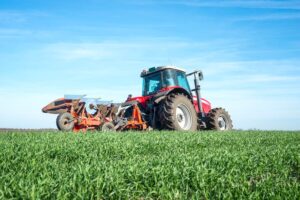

Agricultural machinery is gradually moving toward cleaner and more energy-efficient power technologies as farmers, equipment manufacturers, and policymakers consider alternatives to conventional internal-combustion engines. Electric farm tractors use electric motors and batteries to perform agricultural operations, offering a technology pathway for reducing dependence on conventional fuels while supporting changing requirements around operating efficiency and emissions.
A comprehensive assessment by MarkNtel Advisors Global Electric Farm Tractor Market report estimates the market to expand at a CAGR of 5.7% during 2021–2026. The study attributes growth to increasing awareness of sustainable and clean farming, rising fuel prices, government initiatives supporting cleaner technologies, and growing demand among small farmers for electric tractors with lower power consumption.
Electrification Gains Relevance in Farm Machinery
Electric tractors are becoming part of the broader electrification trend in agricultural machinery. Their operating structure replaces the conventional internal-combustion powertrain with an electric motor and battery system. This can provide an alternative to diesel-powered equipment, particularly for agricultural applications where power requirements and operating cycles are compatible with available battery technology.
The U.S. Department of Energy identifies electric tractors among emerging agricultural electrification technologies and notes potential advantages including higher energy efficiency, reduced maintenance requirements, and the absence of direct operational emissions.
Rising Focus on Operating Costs
Fuel expenditure represents an important consideration for agricultural machinery operators. Fluctuations in conventional fuel prices can influence the economics of farm operations, encouraging interest in technologies that can potentially reduce recurring energy and maintenance expenses.
Electric farm tractors can also support simpler drivetrain architectures compared with conventional engines, potentially reducing certain maintenance requirements. These considerations are particularly relevant for smaller farms and agricultural operations where operating costs represent a substantial component of machinery ownership.
However, the economics of electrification depend on factors such as battery capacity, tractor power requirements, charging infrastructure, operating hours, and local electricity availability.
Four-Wheel Tractors Hold a Strong Position
The market is segmented by drive type into two-wheel and four-wheel tractors. Four-wheel tractors accounted for the largest share during the historical period covered by the study. Their demand is associated with higher pulling capability, longer operating life, productivity requirements, and suitability for uneven terrain and slopes.
At the same time, the two-wheel segment is expected to grow considerably during the forecast period. Their relatively simple design, affordability, and shorter turning radius can make them suitable for smaller agricultural operations and applications requiring greater maneuverability.
Manual Operation Remains Significant
Electric farm tractors are also classified according to mode of operation as manual and autonomous. Manual tractors held a significant market share during the historical period. Their established operating model and ability to provide consistent control continue to support adoption.
Autonomous operation represents a developing area as agricultural machinery increasingly incorporates sensors, automated controls, positioning systems, and other smart-farming technologies. The combination of electrification and automation could eventually support more precise and data-driven agricultural operations, although infrastructure and technology costs remain important considerations.
Battery Technology Influences Adoption
Battery type represents another important market segment, covering lead-acid and lithium-ion batteries. Battery performance directly influences tractor operating time, charging requirements, power delivery, and overall usability.
Lithium-ion technology has become increasingly relevant across electrified equipment because of its energy-density characteristics. However, battery cost, charging availability, weight, durability, and performance under demanding agricultural conditions remain important considerations for electric tractor deployment.
The technical requirements are particularly significant for higher-power tractors that may operate for extended periods and require substantial energy during intensive fieldwork.
Asia-Pacific Provides a Major Market Base
Asia-Pacific held the largest regional share during the historical period covered by the study, supported by agricultural activity in countries such as China and India. The region’s large farming base and continuing demand for mechanization provide an important foundation for electric tractor adoption.
The report also identifies Asia-Pacific as an opportunity area, with the region expected to record a high growth rate during 2021–2026. Europe is also projected to experience the fastest growth, supported by large agricultural farms and increasing adoption of smart-farming practices.
The FAO’s work on sustainable agricultural mechanization highlights the broader role of mechanization in improving agricultural productivity and supporting more sustainable farming systems.
Infrastructure Remains a Key Consideration
Despite the potential benefits, electric farm tractor adoption faces practical limitations. Agricultural operations can be located far from established charging infrastructure, while high-power equipment may require substantial charging capacity.
The U.S. Department of Energy’s assessment notes that farms are often remote and may lack infrastructure for high-power electric-vehicle charging. This creates an important consideration for manufacturers and farmers evaluating electric tractors, particularly for high-horsepower and long-duration field applications.
Outlook for Electric Farm Tractors
The Global Electric Farm Tractor Market is being shaped by sustainable farming objectives, fuel-cost considerations, government support for clean technologies, agricultural mechanization, and advances in battery and electric-drive systems. Four-wheel tractors currently maintain a strong position, while two-wheel models provide opportunities in cost-sensitive and maneuverability-focused applications.
As electrification technologies develop, the market’s progress will depend not only on tractor performance but also on battery economics, charging infrastructure, farm operating patterns, and the availability of suitable power systems. These factors will determine how rapidly electric tractors can move from emerging agricultural technology toward broader commercial adoption.