
Businesses today collect and process personal data through websites, mobile applications, CRM platforms, marketing tools, HR systems, cloud services, and increasingly, AI-powered applications. As digital operations expand, so do the responsibilities that come with protecting that data.
For organizations operating in or serving customers in the European Union, complying with the General Data Protection Regulation (GDPR) is no longer just a legal obligation, it has become a business expectation. Customers want assurance that their information is handled responsibly, enterprise buyers evaluate privacy practices before signing contracts, and regulators continue to enforce compliance requirements.
The challenge is that many businesses still rely on spreadsheets, emails, and disconnected documentation to manage compliance. While these methods may work initially, they become increasingly difficult to maintain as organizations grow.
This is where GDPR compliance automation is changing the conversation.
Rather than treating compliance as a once-a-year project, automation enables businesses to build repeatable processes, organize documentation, and maintain continuous visibility into their compliance activities. The goal isn’t simply to reduce manual work, it’s to create a stronger, more sustainable compliance program.
Why Traditional GDPR Compliance Is Difficult to Scale
When GDPR came into effect, many organizations focused on meeting immediate requirements. They updated privacy policies, implemented cookie consent banners, documented processing activities, and introduced new internal procedures.
Those initial efforts were important, but compliance doesn’t stop once the documentation is complete.
Businesses evolve constantly. New software is introduced, employees join or leave, vendors change, products expand into new markets, and customer data continues to grow. Every operational change has the potential to affect compliance.
Without a structured approach, organizations often face challenges such as:
- Documentation spread across multiple teams and systems.
- Inconsistent records of data processing activities.
- Manual tracking of privacy requests.
- Difficulty demonstrating compliance during customer or regulatory reviews.
- Limited visibility into compliance status across departments.
These challenges are rarely caused by a lack of commitment to compliance. More often, they’re the result of processes that weren’t designed to scale.
What Is GDPR Compliance Automation?
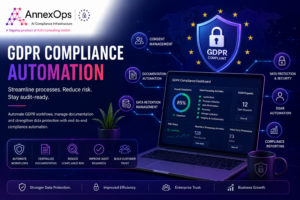
GDPR compliance automation refers to the use of technology to streamline and manage the operational tasks involved in maintaining GDPR compliance.
Instead of relying on manual reminders, spreadsheets, and scattered documentation, organizations can automate many routine activities while keeping compliance teams in control of oversight and decision-making.
Common areas where automation adds value include:
- Managing compliance documentation in a centralized location.
- Tracking governance workflows and approvals.
- Monitoring data processing activities.
- Organizing audit evidence.
- Managing consent records.
- Supporting responses to data subject requests.
- Maintaining visibility across compliance activities.
It’s important to understand that automation doesn’t replace legal expertise or privacy professionals. Instead, it reduces repetitive administrative work, improves consistency, and helps teams focus on higher-value compliance decisions.
The Shift From Reactive to Continuous Compliance
One of the biggest advantages of automation is the ability to move from reactive compliance to continuous compliance.
In a reactive approach, organizations typically review their compliance only when:
- An audit is approaching.
- A customer requests security or privacy documentation.
- A regulator asks for information.
- A new regulation comes into effect.
This often results in last-minute efforts to gather documentation, verify processes, and identify missing information.
Continuous compliance takes a different approach.
Instead of scrambling before an audit, organizations maintain structured records, monitor governance activities regularly, and keep documentation up to date as business operations evolve.
This not only reduces operational stress but also improves confidence when responding to enterprise customers, partners, or regulatory inquiries.
Compliance Is Becoming a Competitive Advantage
Strong privacy practices are no longer viewed solely through a legal lens. Increasingly, they influence purchasing decisions, partnerships, and customer trust.
Enterprise procurement teams frequently evaluate vendors based on their governance maturity. During due diligence, businesses may be asked to explain:
- How personal data is processed.
- What safeguards are in place.
- Whether compliance activities are documented.
- How privacy requests are managed.
- How compliance evidence is maintained.
Organizations that can answer these questions with confidence are often better positioned to build trust and accelerate business opportunities.
Common Challenges of Managing GDPR Compliance Manually
Many organizations begin their GDPR journey with good intentions. They create privacy policies, maintain spreadsheets for compliance activities, and assign responsibilities across legal, IT, HR, and security teams.
However, as the business grows, manual processes often become harder to maintain.
Imagine a SaaS company launching new features every month. Each update may introduce new data processing activities, third-party integrations, or changes to customer workflows. If every change requires multiple emails, spreadsheet updates, and document reviews, compliance quickly becomes time-consuming and difficult to track.
Some of the most common challenges include:
1. Scattered Documentation
Compliance-related information is often stored across multiple systems, including shared drives, spreadsheets, email threads, and internal documentation platforms.
As a result, teams struggle to answer simple questions such as:
- Where is the latest Record of Processing Activities (RoPA)?
- Which version of the privacy policy is current?
- Has this vendor completed a Data Processing Agreement (DPA)?
- Who approved the latest compliance update?
When documentation is decentralized, preparing for an audit or responding to customer questionnaires becomes significantly more difficult.
2. Human Error and Inconsistent Processes
Manual processes rely heavily on people remembering deadlines, updating records, and following internal procedures.
This can lead to:
- Missed compliance reviews
- Outdated documentation
- Duplicate records
- Inconsistent approval processes
- Missed policy updates
While these issues may seem minor individually, they can create unnecessary compliance risks over time.
3. Limited Visibility Across Teams
GDPR compliance isn’t the responsibility of one department alone.
Legal, compliance, engineering, HR, product, and security teams all play a role in protecting personal data.
Without a centralized system, each department may maintain its own records, making it difficult to gain a complete picture of compliance across the organization.
This lack of visibility often slows decision-making and increases administrative effort.
4. Difficult Audit Preparation
One of the biggest pain points organizations face is preparing for audits or enterprise due diligence.
When documentation is spread across different locations, teams spend valuable time gathering evidence instead of demonstrating mature governance.
An audit should never feel like a last-minute project. Businesses that maintain organized records throughout the year are better prepared to respond confidently to regulators, customers, and business partners.
How GDPR Compliance Automation Solves These Challenges
Automation doesn’t eliminate compliance responsibilities, it helps organizations manage them more effectively.
By replacing repetitive manual tasks with structured workflows, businesses can reduce administrative overhead while improving consistency and transparency.
Here are some of the key benefits.
Centralized Compliance Documentation
Instead of searching through multiple folders or email conversations, organizations can maintain privacy records, policies, approvals, and compliance evidence in one centralized location.
This improves collaboration and ensures teams work from the latest information.
Standardized Governance Workflows
Automation helps establish repeatable processes for compliance activities.
Whether reviewing a new vendor, updating a privacy notice, or documenting a new processing activity, structured workflows reduce inconsistency and improve accountability.
Better Audit Readiness
Maintaining organized documentation throughout the year makes responding to audits significantly easier.
Rather than collecting evidence at the last minute, organizations can demonstrate that compliance activities have been consistently documented and monitored.
This is especially valuable during enterprise procurement reviews, where buyers increasingly expect vendors to provide evidence of mature governance practices.
Improved Operational Efficiency
Manual compliance tasks consume valuable time that could be spent on strategic initiatives.
Automation allows compliance teams to focus on:
- Risk assessment
- Privacy strategy
- Governance improvements
- Regulatory monitoring
- Cross-functional collaboration
instead of repetitive administrative work.
What Should You Look for in a GDPR Compliance Automation Solution?
Not every platform offers the same capabilities.
When evaluating a GDPR compliance automation solution, consider whether it can help you:
✔ Centralize compliance documentation
✔ Track governance activities across teams
✔ Manage Records of Processing Activities (RoPA)
✔ Maintain audit-ready evidence
✔ Improve compliance visibility
✔ Support privacy and governance workflows
✔ Scale as your business grows
The right solution should simplify compliance management without adding unnecessary complexity. It should support your existing processes while making it easier to demonstrate accountability and maintain operational consistency.
Did You Know?
Organizations with structured governance processes are often better positioned to respond to enterprise security reviews, customer compliance questionnaires, and evolving regulatory requirements.
Building compliance into day-to-day operations is far more effective than treating it as an annual exercise.
GDPR Compliance Automation as a Foundation for AI Governance
For many organizations, GDPR compliance is only one part of a much broader governance strategy.
As businesses increasingly adopt artificial intelligence to automate workflows, personalize customer experiences, and improve decision-making, they face a new set of responsibilities that go beyond traditional data privacy.
Regulations such as the EU AI Act are shifting the focus from how personal data is protected to how AI systems are governed throughout their lifecycle.
This means organizations need to answer questions like:
- How is AI used within the business?
- What risks have been identified and documented?
- Who is responsible for reviewing AI systems?
- How are governance decisions recorded?
- Can the organization demonstrate compliance during an audit?
Businesses that already have structured GDPR compliance processes are in a much stronger position to address these emerging requirements.
Choosing the Right GDPR Compliance Automation Platform
The market offers a wide range of compliance solutions, but the best platform isn’t necessarily the one with the longest feature list. It’s the one that fits your organization’s governance needs and scales with your business.
When evaluating a GDPR compliance automation platform, look for capabilities such as:
- A centralized repository for compliance documentation.
- Governance workflows that support collaboration across legal, compliance, IT, and product teams.
- AI risk management and governance tracking.
- Audit-ready reporting and evidence management.
- Support for Records of Processing Activities (RoPA).
- Scalability as your organization grows.
- Flexibility to adapt to future regulatory requirements.
A good platform should simplify compliance operations, not create additional complexity.
How AnnexOps Supports GDPR Compliance Automation
Maintaining GDPR compliance becomes increasingly challenging as organizations expand their operations, adopt AI technologies, and navigate evolving regulations.
Rather than relying on spreadsheets and disconnected processes, businesses benefit from a structured operational approach to compliance.
AnnexOps helps organizations operationalize GDPR compliance by bringing governance activities into a single, organized framework.
With AnnexOps, teams can:
- Centralize compliance documentation for improved visibility.
- Streamline governance workflows across departments.
- Support AI documentation and governance initiatives.
- Strengthen AI risk management through structured processes.
- Maintain audit-ready records and compliance evidence.
- Improve collaboration between compliance, legal, engineering, and product teams.
- Prepare for evolving regulations, including the EU AI Act.
Instead of treating compliance as a collection of documents, AnnexOps enables organizations to build governance into their everyday operations, making compliance more efficient, transparent, and scalable.
Why Businesses Are Investing in Compliance Automation
Organizations are realizing that compliance is no longer just about avoiding regulatory penalties.
Strong governance also helps businesses:
- Build trust with customers and partners.
- Demonstrate operational maturity during enterprise procurement.
- Reduce manual administrative work.
- Improve cross-functional collaboration.
- Respond more efficiently to audits and customer questionnaires.
- Prepare for future regulatory requirements with confidence.
As compliance expectations continue to evolve, businesses that invest in automation today are better positioned for sustainable growth tomorrow.
Final Thoughts
GDPR compliance is not a one-time project, it is an ongoing operational responsibility.
While manual processes may work for smaller organizations, they often become difficult to manage as businesses scale, introduce new technologies, and process larger volumes of personal data.
GDPR compliance automation helps organizations move from reactive compliance to continuous governance by simplifying documentation, improving visibility, reducing manual effort, and maintaining audit readiness.
More importantly, it creates a strong foundation for broader governance initiatives, including AI governance and preparation for regulations such as the EU AI Act.
Organizations that invest in structured compliance processes today will be better equipped to earn customer trust, meet enterprise expectations, and adapt to tomorrow’s regulatory landscape.
Ready to Simplify GDPR Compliance?
Managing compliance shouldn’t depend on spreadsheets or last-minute document collection.
If your organization is looking to centralize documentation, streamline governance workflows, strengthen AI risk management, and prepare for evolving regulations, it’s time to explore a more operational approach.
Learn how AnnexOps helps businesses automate GDPR compliance and build scalable governance processes.