

Known as “Africa in Miniature,” Cameroon is a vibrant Central African nation that packs the best of the continent into one destination. Beyond its lush rainforests, wildlife reserves, and towering mountains lies a rich cultural heritage preserved by local artisans. For cultural travelers and art enthusiasts, visiting Cameroon’s traditional craft villages and bustling markets offers an unforgettable journey into centuries-old craftsmanship.
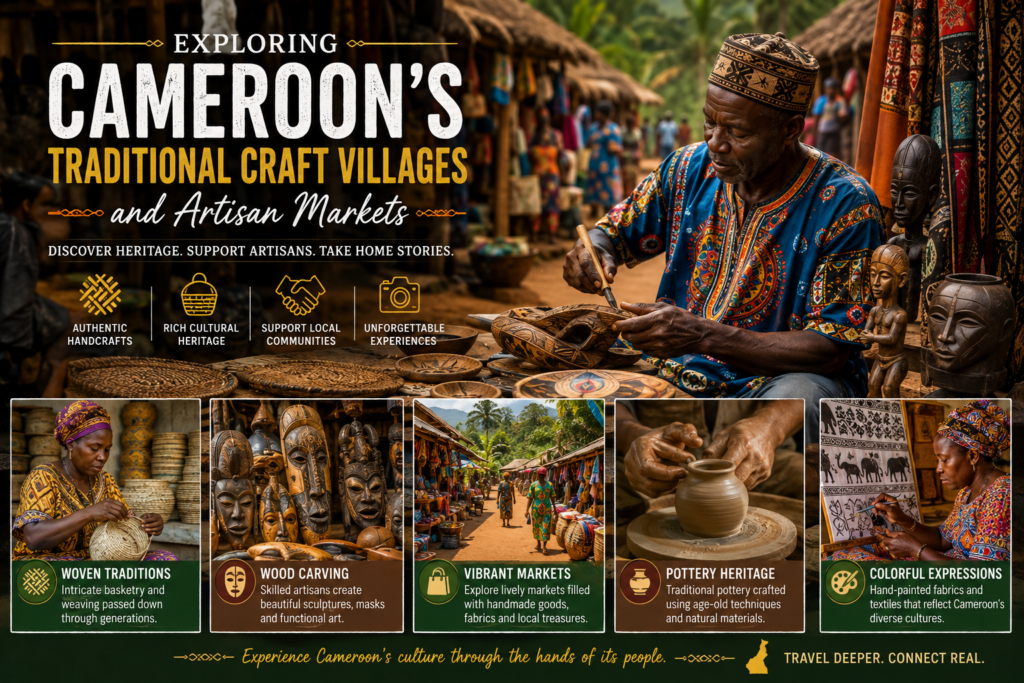
From intricate woodcarvings and brass statues to colorful handwoven textiles, every piece of art tells a story of royalty, ancestors, and everyday African life. In this travel guide, we take a tour of Cameroon’s top artisan villages and markets, along with practical tips for planning your cultural getaway.
1. Foumban: The Royal Heart of Cameroonian Craftsmanship
Located in the West Region of Cameroon, Foumban is widely regarded as the ultimate center for arts and traditional culture. It is the historic capital of the Bamoun Kingdom, one of Central Africa’s oldest dynasties.
What to See in Foumban:
- Village des Artisans (Artisan Village): A sprawling market street lined with workshops where master artisans carve wood, mold clay, and cast bronze or brass using ancient lost-wax techniques. You can watch artists work in real time, crafting traditional masks, royal thrones, and animal statues.
- The Foumban Royal Palace & Museum: Located right in the heart of town, the palace showcases historic royal robes, ceremonial masks, weaponry, and musical instruments dating back centuries.
- Street Markets: The streets surrounding the palace are filled with independent craft shops selling everything from beaded jewelry to wooden wall hangings.
2. The Western Grassfields: Bamenda, Bafut, and Toghu Fabrics
The Northwest Region, often referred to as the Grassfields, is world-famous for its distinct cultural identity, deeply rooted royal fondoms (chiefdoms), and signature textiles.
Highlights of the Grassfields Region:
- Bafut Palace and Craft Cooperative: The Bafut Kingdom is known for its traditional architecture and artisanal heritage. Local craftsmen produce handwoven baskets, wooden pipes, and ceremonial masks inspired by royal traditions.
- Toghu Attire: One of Cameroon’s most famous cultural exports is the Toghu (or Atoghu), a heavy, dark velvet garment intricately hand-embroidered with brightly colored threads in geometric patterns. Originally reserved for royalty, Toghu outfits are now worn during celebrations across Cameroon and make incredible custom keepsakes.
- Bamboo and Cane Furniture: In villages surrounding Bamenda, skilled weavers use local raffia palm and cane to construct sturdy chairs, tables, and decorative baskets.
Essential Travel Planning: Navigating Entry & Visa Requirements
Before embarking on your journey through Cameroon’s regional craft centers, ensuring your travel documentation is in order is essential for a smooth trip. It is important to familiarize yourself with the official Cameroon visa requirements well in advance so you can obtain your travel authorization without last-minute stress.
Working with an expert visa processing service helps eliminate guesswork and delays:
- Reliable Travel Visa Services: Global support ensures travelers receive their entry visas quickly and hassle-free.
- Round-the-Clock Assistance: Access 24/7 support with expert responses within 72 hours for any travel inquiries.
- Experienced Visa Consultants: Get tailored guidance from seasoned specialists to maximize application approval success.
- Efficient Visa Application Process: Complete your application in just minutes using a streamlined, user-friendly digital form.
3. Maroua: Northern Leatherwork and Copper Crafts
Traveling up to the Far North Region brings a dramatic change in landscape and culture. Maroua, surrounded by Sahelian plains, is famous for its Islamic influence and distinctive leather industry.
What to Expect in Maroua Markets:
- Leather Tanneries: Maroua is renowned for high-quality leather goods. Artisans turn goat, cow, and camel hides into hand-dyed bags, sandals, belts, poufs, and saddles.
- Copper and Metalwork: Northern artisans specialize in forged metal items, including traditional knives, ornamental jewelry, and copper ornaments.
- Traditional Fabrics and Carpets: Browse vibrant open-air markets for hand-dyed cotton fabrics, woven grass mats, and colorful floor rugs made by local pastoralist communities.
4. Yaoundé & Douala: Urban Hubs for Souvenir Collectors
If your itinerary only allows you to visit major metropolitan cities, you can still access crafts from every corner of Cameroon without traveling into remote regions.
Center Artisanal de Yaoundé (Yaoundé Craft Center)
Located in the nation’s capital, this government-supported market brings together artisans from all ten regions of Cameroon under one roof. It is a clean, organized space where you can buy:
- Hand-carved wooden masks and statues.
- Beaded Bamileke stools and animal skulls.
- Local spices, cocoa butter, and artisanal cosmetics.
- Traditional musical instruments like djembes and kalimbas.
Marché des Fleurs (Douala)
Despite its name (“Flower Market”), this vibrant market in Cameroon’s economic capital is a prime destination for art buyers. You’ll find rows of stalls stacked with contemporary African oil paintings, wooden sculptures, handmade leather footwear, and woven bags.
Essential Tips for Shopping in Cameroonian Markets
To make the most of your visit to local craft markets, keep these practical tips in mind:
- Master the Art of Polite Haggling: Bargaining is a standard part of market culture in Central Africa. Start by offering around half or two-thirds of the initial asking price, and always keep the interaction friendly and respectful.
- Carry Local Currency (XAF): Most village artisans and market vendors do not accept credit cards or foreign currencies. Carry small denominations of Central African CFA Francs (XAF) for easy transactions.
- Ask Permission Before Photographing: Artisans take immense pride in their designs, and some items carry sacred spiritual meaning. Always ask politely before taking photos of craftsmen or their artwork.
- Export Permits for Antiques: While modern craft souvenirs are fine to pack in your luggage, genuine antiques or historic artifacts require an export clearance permit from the Ministry of Culture.
Conclusion
From the royal bronze casters of Foumban to the leather tanners of Maroua, exploring Cameroon’s craft villages offers an unforgettable glimpse into the artistic heart of Central Africa. By preparing your travel details and visa paperwork early, you can step off the plane ready to immerse yourself in the rich culture, meet local makers, and bring home authentic treasures that tell a story of a lifetime.