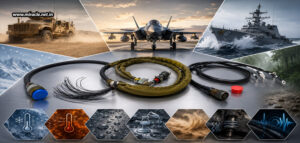

Defence systems are required to operate in some of the harshest environments, where they encounter extreme temperatures, high-altitudes, humidity, mechanical stress, and lots more. Despite all such conditions, they are yet expected to deliver uncompromised performance. Among these critical systems are one particular component – the defence wire harnesses – that serve as the backbone of electrical connectivity, enabling uninterrupted communication, signal transmission, and power distribution. While appearing to be very simple, these harnesses are highly engineered assemblies that are designed to withstand the extremities of the intense operational conditions. Because even a single error can compromise safety and efficiency, environmental considerations play a vital tole in the design and manufacturing of defence wire harnesses.
The importance of environmental resistance in defence wire harnesses
Defence equipment are tailored to be used in environments where basic systems can quickly fail. Defence wire harnesses ought to continue functioning reliably despite exposure to extreme operational conditions for prolonged periods. They need to be designed to withstand high and low temperature extremes, high pressure environments, moisture and humidity, corrosion and chemical exposure, dust and sand infiltration, mechanical shock and vibration, electromagnetic interference, and UV radiation exposure. The ability of a defence wire harness to survive these conditions directly impacts system reliability, operational readiness, and mission success. These environmental challenges highlight why environmental resistance is a critical requirement in defence wire harness manufacturing. A wire harness designed with strong environmental resistance ensures uninterrupted performance, enhanced durability, and dependable operation in mission-critical defence applications.
Withstanding extreme temperatures
There is no one particular temperature that wire harnesses need to operate in. While aircraft engines, armoured vehicles, radar systems, and naval equipment generate substantial heat during operation, they are expected to also perform equally well in freezing climates, high-altitudes, or cold marine environments. Wire harnesses thus need to perform consistently in both high and low temperature environments.
Harnesses must maintain electrical integrity without degradation even when temperatures rise to the extremes. To withstand elevated temperatures, manufacturers use specialized materials like high-temperature insulation materials, heat-resistant jackets, fluoropolymer coatings, silicone-based insulation, and advanced thermoplastic compounds. These materials prevent insulation breakdown, melting, cracking, or deformation caused by prolonged heat exposure. Low temperatures can also make ordinary cables brittle and susceptible to cracking. This is why defence wire harnesses must use flexible insulation materials that can maintain elasticity in even sub-zero temperatures.
Manufacturers also conduct thermal cycling tests to ensure wire harnesses can endure rapid temperature fluctuations without failure. These tests simulate real-world conditions, where systems transition between hot and cold environments during operation. Thermal management is particularly critical in the aerospace segment because fluctuating temperatures can affect signal transmission and electrical conductivity.
Protection against humidity and moisture
Humidity and moisture are among the most common threats to electrical systems. Moisture intrusion can lead to insulation degradation, conductor corrosion, electrical leakage, signal disruption, and connector failure. Naval systems, coastal defence equipment, and outdoor military installations are especially vulnerable to moisture-related issues.
To combat humidity and water exposure, defence wire harnesses incorporate multiple moisture-resistant design features like waterproof insulation, sealed connectors, protective sleeving, and conformal coatings.
- Advanced waterproof insulation materials resist moisture absorption and protect internal conductors from corrosion.
- Specialized sealed connectors prevent water ingress and maintain reliable electrical connections in wet environments.
- Braided sleeves and protective tubing add an additional barrier against water exposure and environmental contaminants.
- Protective coatings applied to connectors and terminals reduce the risk of oxidation and corrosion.
These moisture-resistant features ensure that defence systems remain operational even during prolonged exposure to rain, marine conditions, or humid climates.
Resistance to chemicals and corrosive substances
Defence wire harnesses may encounter fuels, lubricants, hydraulic fluids, cleaning agents, solvents, and de-icing chemicals during operation and maintenance, which can damage the insulation and connectors, while compromising electrical performance. In marine environments, saltwater corrosion is another major concern.
To ensure long-term durability in harsh operating environments, defence wire harness manufacturers use chemically resistant insulation and jacketing materials capable of maintaining structural integrity despite prolonged exposure to aggressive substances. Materials such as fluoropolymers and cross-linked insulation compounds are widely preferred because they resist swelling, cracking, abrasion, and chemical degradation caused by fuels, lubricants, hydraulic fluids, solvents, and cleaning agents. In highly corrosive environments, especially marine and naval applications, corrosion-resistant metals and protective platings help prevent oxidation and surface deterioration. Sealed assemblies and moisture-resistant connectors further enhance protection by preventing chemical intrusion, ensuring reliable electrical performance, operational safety, and extended service life.
Managing mechanical stress and vibration
Defence vehicles, aircraft, and naval systems are continuously subjected to vibration, impact, and mechanical movement. These conditions can strain electrical connections and damage poorly designed wire harnesses. Common risks include abrasion, insulation wear, loose connectors, and mechanical fractures.
Defence wire harnesses are specifically engineered to withstand such mechanical stresses through braided shielding, secure clamping and routing, abrasion-resistant sleeving, and strain relief systems.
- Braided shielding enhances durability and protects against physical damage.
- Proper clamping and routing reduces movement and minimizes wear caused by vibration.
- Protective sleeves shield the wires from friction and mechanical contact with surrounding components.
- Strain relief systems prevent excessive tension on wires and connectors during movement.
Manufacturers also perform vibration and shock testing to verify long-term durability under demanding operational conditions.
Electromagnetic interference protection
Modern defence systems rely heavily on sensitive electronic communication and data transmission systems. Electromagnetic interference (EMI) from radar systems, communication equipment and electronic warfare devices can disrupt these signals, affecting operational accuracy and reliability.
Defence wire harnesses incorporate shielding mechanisms like braided metallic shielding, foil shielding, twisted pair configurations, and grounding systems to minimize EMI and maintain signal integrity.
- Braided metallic shielding, with woven metal strands around cables, blocks external EMI and protects transmitted signals.
- Foil shielding, consisting of a thin metallic layer wrapped around wires, provides high coverage against high-frequency electromagnetic noise.
- Twisted pair configurations reduce EMI by twisting two conductors together, helping to cancel out unwanted signal disturbances.
- Grounding systems safely direct unwanted electrical noise or interference away from the circuit to maintain stable signal transmission.
Proper EMI protection ensures uninterrupted communication and accurate signal transmission even in electronically congested environments.
Environmental testing and validation
Manufacturers that specialize in military-grade connectivity solutions place significant emphasis on rigorous environmental testing and compliance-driven production processes. Companies like Miracle Electronics, a reliable defence wire harness manufacturer in India exporter to USA, focus on delivering wire harness systems engineered to perform reliably under demanding operational and environmental conditions.
The basic tests include:
- Thermal testing, which evaluates performance under extreme heat and cold conditions.
- Humidity testing, which assesses resistance to moisture and condensation.
- Salt spray testing that measures corrosion resistance in marine environments.
- Chemical resistance testing that determines durability against fuels, oils, and solvents.
- Vibration and shock testing, which tests how the harnesses will perform under operational stresses experienced in vehicles and aircraft.
- Electrical continuity testing, which ensures stable electrical performance throughout the assembly.
These tests help identify weaknesses early on, and ensure that wire harnesses meet stringent defence standards.
Environmental considerations play a vital role in defence wire harness manufacturing, as the harnesses are required to withstand extreme temperatures, humidity, vibration, corrosion, chemical exposure, and electromagnetic interference, while maintaining reliable performance in mission-critical environments. Manufacturers achieve this through the use of specialized materials, advanced protective technologies, rigorous testing procedures, and precision engineering. Features like moisture-resistant insulation, corrosion-resistant metals, sealed assemblies, and electromagnetic shielding help ensure durability and operational efficiency under the harshest conditions. As defence technologies continue to advance, the demand for highly reliable and environmentally resilient wire harness systems will continue to shape the future of defence equipment and connectivity solutions.