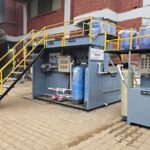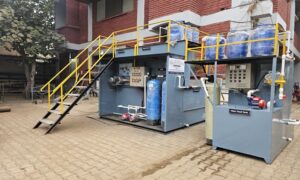

Industrialization has fueled economic growth, but it has also led to a dramatic increase in wastewater generation. Every manufacturing process — from textiles and chemicals to pharmaceuticals and food processing — produces liquid waste laden with harmful chemicals, oils, heavy metals, and suspended solids. Discharging such untreated effluents into natural water bodies poses a severe threat to the environment and public health. This is where an Effluent Treatment Plant (ETP) becomes indispensable.
An Effluent Treatment Plant is designed to treat industrial wastewater, remove pollutants, and produce clean, reusable water that meets environmental discharge standards. These plants not only protect the environment but also help industries comply with pollution control norms, conserve water, and promote sustainability. Kelvin Water Technologies Pvt. Ltd., one of India’s leading ETP manufacturers, offers state-of-the-art solutions for efficient, reliable, and cost-effective effluent treatment across all industrial sectors.
What is an Effluent Treatment Plant?
An Effluent Treatment Plant is an engineered system that removes physical, chemical, and biological contaminants from industrial wastewater. The primary goal of an ETP is to purify the water so that it can be safely discharged into the environment or reused within the facility.
Every industry produces a unique type of effluent — for example:
- The textile industry releases dye-laden wastewater.
- The chemical industry generates effluents containing acids, alkalis, and toxic compounds.
- The food and beverage industry produces organic-rich wastewater.
- The pharmaceutical industry discharges high-strength chemical waste.
Need for Effluent Treatment
Untreated industrial effluents can contaminate rivers, lakes, and groundwater, leading to severe ecological and health impacts. Therefore, effluent treatment is necessary to:
- Comply with environmental regulations set by CPCB and SPCBs.
- Reduce pollution by eliminating toxic and hazardous substances.
- Protect ecosystems and aquatic life from chemical contamination.
- Enable water recycling and reuse for non-potable industrial processes.
- Support sustainable manufacturing and reduce the carbon footprint.
- Promote corporate responsibility through eco-friendly operations.
Stages of Effluent Treatment
An ETP operates in multiple stages to ensure complete purification of wastewater. Each stage targets specific contaminants to achieve optimal treatment efficiency.
- Preliminary Treatment
This initial step removes large solids, oil, and debris that could damage downstream equipment.
- Screening: Removes plastics, rags, and other large floating materials.
- Oil & grease trap: Separates free-floating oils and greases.
- Equalization tank: Balances variations in flow rate and pollutant concentration.
- Primary Treatment
Here, physical and chemical methods remove suspended solids and a portion of organic matter.
- Coagulation and flocculation: Chemicals are added to bind fine particles into larger flocs.
- Sedimentation: Flocs settle at the bottom and are removed as sludge.
- Neutralization: Adjusts pH levels using acids or alkalis to achieve optimal conditions for biological treatment.
- Secondary Treatment
Microorganisms play a vital role in breaking down dissolved organic matter. This stage can involve:
- Activated Sludge Process (ASP): Aeration tanks introduce air to promote microbial digestion of organic pollutants.
- Moving Bed Biofilm Reactor (MBBR): Uses biofilm carriers for enhanced microbial activity and treatment efficiency.
- Sequential Batch Reactor (SBR): A cyclic process where aeration and sedimentation occur in the same tank.
- Anaerobic Treatment: Converts organic pollutants into biogas under oxygen-free conditions.
- Tertiary Treatment
The final stage ensures that the treated water meets the desired discharge or reuse standards.
- Filtration: Removes remaining fine particles using sand, carbon, or membrane filters.
- Disinfection: Chlorination, UV treatment, or ozonation eliminates pathogens.
- Polishing: Advanced oxidation or reverse osmosis (RO) ensures high-purity water for reuse.
Sludge Management
The sludge generated during treatment contains concentrated impurities. Effective sludge management includes:
- Thickening: Reduces water content and volume.
- Dewatering: Mechanical presses or centrifuges remove excess moisture.
- Stabilization: Reduces odour and pathogen levels.
- Safe disposal or reuse: Dried sludge can be used in agriculture (if non-toxic) or disposed of in secure landfills.
Technologies Used in Modern ETPs
Kelvin Water Technologies Pvt. Ltd. integrates innovative technologies to enhance ETP performance, efficiency, and sustainability. These include:
- Physico-chemical treatment systems for removing heavy metals and toxic compounds.
- MBBR and SBR technologies for efficient biological degradation.
- MBR (Membrane Bioreactor) systems for superior water quality and compact design.
- Zero Liquid Discharge (ZLD) solutions combining RO and evaporators to eliminate effluent discharge entirely.
- Automation and PLC-based control systems for real-time monitoring and process optimization.
Benefits of Installing an Effluent Treatment Plant
- Environmental Protection: Prevents contamination of water bodies and soil.
- Regulatory Compliance: Meets CPCB and State Pollution Control Board discharge standards.
- Water Reuse: Enables recycling of treated water for cooling, cleaning, or irrigation.
- Cost Savings: Reduces the need for fresh water and wastewater disposal costs.
- Improved Brand Image: Demonstrates environmental responsibility and sustainable operations.
- Energy and Resource Recovery: Generates biogas and recovers valuable materials from sludge.
Applications of Effluent Treatment Plants
ETPs are essential across various industries, including:
- Textile and dyeing units
- Chemical and pharmaceutical plants
- Food and beverage processing industries
- Pulp and paper mills
- Automobile and metal finishing industries
- Oil refineries and petrochemical complexes
- Tanneries and leather processing units
Kelvin Water Technologies Pvt. Ltd.: A Trusted ETP Manufacturer
Kelvin Water Technologies Pvt. Ltd. is a leading name in India’s wastewater treatment industry, offering comprehensive effluent treatment solutions designed for durability, efficiency, and compliance.
Key Features of Kelvin’s ETP Systems:
- Modular and compact designs for easy installation.
- Advanced automation for minimal manual intervention.
- Low operational and maintenance costs.
- CPCB and SPCB-compliant treated water quality.
- Energy-efficient operation with optimized aeration and chemical dosing.
- Custom-designed to suit industrial effluent characteristics.
Why Choose Kelvin Water Technologies?
- Technical Expertise: Years of experience in wastewater management across diverse industries.
- Turnkey Solutions: Design, engineering, fabrication, installation, and after-sales support under one roof.
- Quality Assurance: Use of corrosion-resistant materials and advanced technology.
- Customer-Centric Approach: Tailored solutions for every client’s operational and environmental goals.
- Sustainability Commitment: Focus on resource recovery, energy optimization, and water reuse.
Operation and Maintenance of ETP
Proper operation and maintenance are essential for consistent ETP performance. Best practices include:
- Regular monitoring of pH, BOD, COD, and TSS levels.
- Periodic cleaning of screens, tanks, and aeration equipment.
- Checking and replacing worn-out mechanical and electrical parts.
- Ensuring adequate aeration and biological health in treatment units.
- Scheduled sludge removal and safe disposal.
Future of Effluent Treatment
The future of effluent treatment is evolving toward smart, sustainable, and zero-discharge systems. The integration of IoT, AI-based monitoring, and automation ensures real-time performance tracking and predictive maintenance. Technologies like advanced oxidation processes (AOPs), membrane filtration, and resource recovery units are redefining how industries manage wastewater.
Kelvin Water Technologies is at the forefront of this evolution, offering next-generation ETPs equipped with intelligent monitoring systems and energy-efficient designs to support India’s vision of a cleaner, greener future.
Conclusion
Effluent Treatment Plants are vital components of industrial infrastructure, ensuring that wastewater is treated effectively before being released or reused. They not only help industries comply with environmental norms but also contribute significantly to water conservation and sustainability.
With proven expertise and a commitment to innovation, Kelvin Water Technologies Pvt. Ltd. stands out as a trusted partner for industries seeking reliable and efficient effluent treatment solutions. Their customized, high-performance ETP systems embody technological excellence and environmental responsibility — turning wastewater into a valuable resource and paving the way toward a cleaner tomorrow.