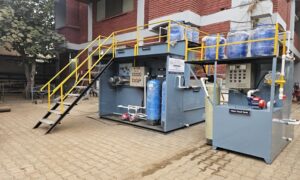

Industrial growth is essential for economic development, but it often brings challenges related to wastewater generation and pollution. As industries expand, the volume of contaminated water discharged into natural water bodies increases significantly. This polluted water not only harms ecosystems but also affects human health, soil quality, and the overall environment. To address these challenges, industries are now adopting Effluent Treatment Plants (ETPs)—advanced systems designed to treat, purify, and recycle industrial wastewater before it is released.
An Effluent Treatment Plant plays a crucial role in ensuring that harmful chemicals, toxic substances, solids, oils, and organic pollutants are removed from wastewater. Whether it is a textile plant, pharmaceutical company, food and beverage unit, chemical factory, or automobile manufacturing facility, an ETP ensures compliance with environmental regulations while supporting sustainable industrial operations.
What Is an Effluent Treatment Plant?
An Effluent Treatment Plant is a multi-stage wastewater treatment system that removes physical, chemical, and biological impurities from industrial effluent. The main purpose of an ETP is to treat wastewater in such a way that the treated water meets the prescribed environmental standards before disposal or reuse.
Industrial wastewater often contains:
- Hazardous chemicals
- Oils and grease
- Suspended solids
- Heavy metals
- Pathogens
- Organic and inorganic pollutants
Why Industries Need an Effluent Treatment Plant?
- Environmental Protection
Industries discharge various pollutants that can harm rivers, lakes, groundwater, and soil. An ETP ensures the wastewater is treated thoroughly before discharge to minimize environmental impact.
- Compliance With Pollution Control Board Norms
Every industry is required by law to meet effluent discharge standards set by the Central Pollution Control Board (CPCB) and State Pollution Control Boards (SPCB). ETPs ensure compliance and prevent legal penalties.
- Health & Safety
Untreated effluent contains chemicals and pathogens that can cause severe health hazards. Treating effluent helps protect workers and communities.
- Water Recycling & Reuse
Modern ETPs enable industries to recycle treated water for:
- Cooling towers
- Boiler feed
- Gardening
- Floor washing
- Process applications
This reduces water consumption and supports sustainable operations.
- Cost Savings
Although installing an ETP requires investment, long-term benefits include low water bills, reduced penalties, and improved brand image.
How an Effluent Treatment Plant Works – Step-by-Step Process?
An Effluent Treatment Plant typically has the following major stages:
- Preliminary Treatment
This is the first stage where large particles are removed through:
- Screening
- Grit removal
- Oil and grease trap
This prevents damage to downstream equipment.
- Primary Treatment
In this stage, chemicals are added to remove suspended solids and sediments. Processes include:
- Coagulation
- Flocculation
- Sedimentation
The goal is to separate solid waste from liquid components.
- Secondary Treatment (Biological Treatment)
This treatment eliminates dissolved organic matter using microorganisms. Common biological processes include:
- Aeration (Activated Sludge Process)
- Trickling filters
- Moving Bed Biofilm Reactor (MBBR)
- Sequential Batch Reactor (SBR)
Microbes break down harmful organic pollutants into harmless byproducts.
- Tertiary Treatment
This is the polishing step that ensures final purification of water. It may include:
- Sand filtration
- Activated carbon filtration
- Reverse osmosis (RO)
- UV disinfection
- Chlorination
The treated water now meets environmental discharge norms.
- Sludge Management
Solid waste or sludge generated during treatment is processed through:
- Sludge thickening
- Dewatering
- Drying
- Disposal
This ensures safe and environmentally friendly disposal of waste.
Types of Effluent Treatment Plants
Different industries require different types of ETPs depending on the pollution load and effluent characteristics:
- Chemical ETP
Used in industries with high chemical content such as dyes, pharmaceuticals, and textiles.
- Biological ETP
Used where effluent contains organic pollutants like food, beverages, and dairy industries.
- Physico-Chemical ETP
Combines physical, chemical, and biological processes for industries with high mixed pollutants.
- Zero Liquid Discharge (ZLD) ETP
Ensures that no liquid waste is discharged outside the premises. Suitable for highly polluting industries.
Industries That Use Effluent Treatment Plants
ETPs are widely used in:
- Textile & dyeing industries
- Chemical and pharmaceutical plants
- Food and beverage units
- Dairy and milk processing plants
- Automobile and metal industries
- Pulp and paper factories
- Electroplating and galvanizing units
- Oil and petroleum industries
Benefits of Installing an ETP
- Reduces environmental pollution
- Ensures legal compliance
- Promotes sustainability
- Reduces fresh water consumption through recycling
- Enhances brand value
- Improves worker safety
- Reduces long-term operational costs
ETP Solutions by Kelvin Water Technologies Pvt. Ltd.
Kelvin Water Technologies Pvt. Ltd. is one of India’s most trusted names in water and wastewater treatment solutions. With years of experience and a highly skilled team, Kelvin offers advanced and customized Effluent Treatment Plants suitable for all industries.
Why Choose Kelvin Water Technologies?
✔ Custom-designed ETP systems based on industry requirements
✔ Advanced treatment technologies such as MBBR, SBR, and ZLD
✔ High-quality components ensuring long service life
✔ Energy-efficient and low-maintenance designs
✔ Compliance with CPCB guidelines
✔ Expert installation, operation, and maintenance services
✔ Affordable and reliable systems for industries of all sizes
Conclusion
Effluent Treatment Plants are essential in today’s industrial world to manage wastewater responsibly. They help industries protect the environment, comply with legal standards, save water, and operate sustainably. A well-designed and efficiently operated ETP ensures that wastewater is treated effectively before discharge or reuse.
Companies like Kelvin Water Technologies Pvt. Ltd. are leading the mission of promoting cleaner, greener, and more sustainable industrial practices by providing high-performance ETP solutions across India.