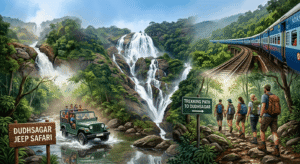

A journey from North Goa to Dudhsagar Waterfall is one of the most rewarding day trips for visitors looking to experience Goa beyond its famous beaches. Nestled within the lush forests of the Bhagwan Mahavir Wildlife Sanctuary, Dudhsagar Waterfall is among India’s tallest waterfalls, cascading from a height of over 300 meters in four magnificent tiers. During the post-monsoon months, the waterfall creates a spectacular white curtain that resembles a flowing stream of milk, giving rise to its name, “Dudhsagar,” which translates to “Sea of Milk.” Whether you are staying in Calangute, Baga, Candolim, Anjuna, Vagator, Morjim, or Arambol, a well-planned excursion to this natural wonder offers an unforgettable blend of scenic beauty, adventure, and wildlife.
To make the most of your trip, it is advisable to begin your journey from North Goa early in the morning. Depending on your starting location, the drive to the Kulem region generally takes between two-and-a-half and four hours. Leaving before sunrise or by 7:00 AM helps avoid traffic, especially during Goa’s busy tourist season, while allowing sufficient time to explore the destination at a relaxed pace. Early departures also provide cooler weather, making both travel and sightseeing considerably more comfortable.
Choosing the right mode of transportation is equally important for a hassle-free experience. Private taxis in Goa remain one of the most convenient options, offering door-to-door service and flexibility throughout the day. Many visitors also prefer guided Dudhsagar tours that include hotel pickup, transportation, permits where required, and assistance from experienced local guides service. Self-drive cars provide freedom for traveler’s who enjoy exploring independently, while those interested in experiencing Goa’s scenic railway routes may consider traveling to Kulem Railway Station before continuing their journey according to current visitor regulations. Selecting the transportation option that best suits your schedule and travel style can significantly enhance your overall experience.
Timing your visit plays a major role in enjoying Dudhsagar Waterfall at its best. The months between October and February are widely regarded as the ideal season, when the waterfall continues to flow impressively after the monsoon and the weather remains pleasant for outdoor activities. While the monsoon transforms Dudhsagar into a dramatic spectacle with immense water volume, heavy rainfall often leads to temporary access restrictions for visitor safety. During the summer months, water levels decrease considerably, although the surrounding forests continue to offer peaceful natural beauty. Checking weather forecasts and local access updates before departure is always recommended.
Comfortable clothing and appropriate footwear can make a significant difference during your visit. Since reaching the waterfall may involve walking over uneven terrain, visitors should wear lightweight clothing and sturdy sports or trekking shoes with good grip. Carrying sunglasses, sunscreen, a hat, and a reusable water bottle ensures protection from the sun during warmer months, while a light rain jacket is useful if traveling shortly after the monsoon season. A waterproof bag is also recommended to safeguard cameras, mobile phones, and other electronic devices from moisture and splashes.
As Dudhsagar Waterfall is located within a protected wildlife sanctuary, responsible tourism is essential for preserving its ecological richness. Visitors should avoid littering, refrain from feeding wildlife, respect designated pathways, and follow all instructions issued by forest authorities and guides. Maintaining the natural environment not only protects the sanctuary’s diverse flora and fauna but also ensures that future generations can continue enjoying this extraordinary destination in its pristine condition.
Safety should always remain a priority throughout the excursion. The rocks surrounding the waterfall can become extremely slippery, particularly during and after the rainy season, while water currents may be stronger than they appear. Visitors should remain within designated viewing areas, supervise children carefully, avoid climbing unsafe rock formations, and follow all safety advisories. Taking simple precautions allows traveler’s to enjoy the magnificent scenery without unnecessary risk.
A full-day itinerary is recommended for anyone traveling from North Goa to Dudhsagar Waterfall. Allowing adequate time for transportation, sightseeing, photography, and relaxation enables visitors to fully appreciate the peaceful atmosphere and remarkable natural surroundings. Carrying some cash is also advisable, as mobile network coverage may be inconsistent in forested areas, and smaller vendors or local facilities may not always accept digital payments.
Dudhsagar Waterfall continues to rank among the most iconic natural attractions in Goa, attracting traveler’s from across India and around the world. With thoughtful planning, early departure, suitable transportation, and a commitment to responsible travel, your journey from North Goa can become one of the highlights of your holiday. Beyond its spectacular cascade, Dudhsagar offers an opportunity to experience Goa’s untouched wilderness, making it a destination that leaves visitors with lasting memories of nature’s grandeur and serenity.