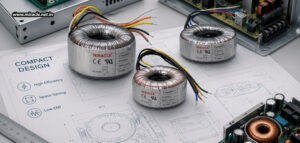

Modern electronic systems are becoming smaller, lighter, and more powerful, increasing the demand for compact and efficient power components. However, limited space, heat buildup, electromagnetic interference, and component placement create major challenges in compact electronic design. Conventional transformers often occupy more space, generate excess heat, and produce stray magnetic fields that can affect nearby circuits. To overcome these issues, engineers increasingly use toroidal transformers. Their circular core design, compact size, high efficiency, and low magnetic leakage make them ideal for space-constrained systems. This blog explains how toroidal transformers support compact electronics through enhanced power efficiency, improved thermal performance, flexible integration, and reliable operation.
The growing need for compact electronics
Compact electronic design is no longer limited to portable consumer products. There is increasing demand for systems across all industries that occupy less space while delivering higher functionality. Some key drivers behind this trend include:
- Miniaturization of electronic devices
- Demand for portable and lightweight equipment
- Limited installation space in industrial environments
- Increased integration of electronic functions
- Energy efficiency requirements
As systems become smaller, designers must ensure that power components do not compromise performance or reliability. This is one of the main reasons toroidal transformers are gaining importance in modern electronic design.
How toroidal transformers fulfill this demand
- Compact size and high-power density
One of the biggest advantages of toroidal transformers is their compact size. Because of their efficient magnetic design, toroidal transformers can provide the same power rating as conventional transformers while using lesser core material, shorter winding lengths, and overall reduced volume. Moreover, toroidal transformers are capable of delivering higher power within a smaller physical structure. This higher power density allows engineers to design small enclosures and optimize system layout. This is particularly useful in embedded electronics, portable devices, rack-mounted systems, and compact industrial controllers.
- Reduced magnetic leakage
In compact systems, electronic components are often placed very close to one another. In such layouts, stray magnetic fields from transformers can interfere with sensitive circuits. Toroidal transformers naturally reduce magnetic leakage because their circular core creates a closed magnetic path, within which most of the magnetic flux remains confined. This reduced magnetic leakage helps minimize EMI, reduce electrical noise, improve system stability, and protect nearby signal circuits. Because toroidal transformers emit lower external magnetic fields, designers can position them closer to sensitive components without significantly affecting performance.
- Improved thermal performance
Heat management is one of the biggest challenges in compact electronics. When components are packed tightly together, airflow becomes restricted, making it difficult to dissipate heat effectively. But, with toroidal transformers, there is nothing to worry about as these transformers generate less heat and reduce energy wastage. Toroidal transformers can operate at lower temperatures and reduce thermal stress on surrounding components. Their reduced core losses, lower copper losses, and better magnetic coupling further make these transformers more efficient. All of this contributes to a longer insulation life and reduced maintenance requirements.
- Flexible mounting and layout options
Compact electronics require efficient use of internal space. Toroidal transformers support this through flexible mounting arrangements. Most toroidal transformers use a single central mounting bolt, which simplifies installation and reduces mounting space requirements. Further, due to their circular shape and low EMI characteristics, toroidal transformers can often be positioned more flexibly within the enclosure. This allows engineers to optimize airflow paths, reduce cable routing complexity, and improve PCB layout efficiency. Such flexibility is highly valuable in high-density electronic assemblies.
- Reduced acoustic noise
Compact electronic systems are frequently used in noise-sensitive environments. Audible transformer hum can negatively affect user experience and system quality perception. But, with toroidal transformers, there is significantly lesser noise created because in these transformers, the continuous winding structure reduces movement, the magnetic flux distribution is more uniform, and there are fewer mechanical vibrations. This characteristic of low acoustic noise is extremely important in compact products where components are enclosed in smaller housings, such as in audio systems, medical devices, laboratory equipment, and office electronics.
Important design considerations
While toroidal transformers are the go-to choice for compact electronics, it is important to make an appropriate selection and have it properly integrated into the systems to make the most out of the transformers.
- The correct VA rating should be selected based on load requirements, temperature limits, and continuous operating conditions.
- Toroidal transformers can also have high inrush current during startup, so designers must use soft-start circuits, current limiting devices, and controlled switching methods.
- Adequate ventilation is necessary to maintain safe operating temperatures in compact systems. In addition, transformer quality plays a major role in performance and reliability.
The performance of a toroidal transformer also depends on manufacturing quality. Trusted toroidal transformer manufacturers in India like Miracle Electronics provide products designed for compact and performance-focused electronic applications. Proper transformer design and manufacturing help ensure reliable operation, thermal stability, and efficient integration into modern electronic systems.
Applications of toroidal transformers in compact electronics
The advantages of toroidal transformers make them suitable for a wide range of compact systems.
- Medical electronics: Medical devices require stable power supply, low-noise operation, and compact construction. This is why toroidal transformers are commonly used in diagnostic systems, monitoring equipment, and portable medical devices.
- Industrial electronics: Compact industrial systems benefit from reliable continuous operation, reduced EMI, and improved thermal stability. Toroidal transformers are widely used in control panels, PLC systems, and embedded industrial electronics.
- Consumer electronics: Toroidal transformers are also used in audio systems, home automation products, and other compact consumer electronics where low noise, efficiency, and space optimization are important.
- Communication equipment: Communication systems require minimal electromagnetic interference and stable power delivery. Toroidal transformers help improve signal integrity, reduce noise levels, and support reliable operation in compact network hardware.
As electronic systems continue to become smaller and more advanced, the importance of efficient and compact power components continues to grow. Conventional transformers often struggle to meet the space, thermal, and EMI requirements of modern compact electronics. Toroidal transformers address these challenges through their compact structure, high efficiency, low magnetic leakage, and reduced heat generation. Their ability to support high-density layouts while maintaining stable and reliable performance makes them an excellent choice for modern electronic systems across industrial, medical, communication, and consumer applications. For engineers and manufacturers designing compact electronics, toroidal transformers offer a practical solution that balances performance, reliability, and efficient use of space.