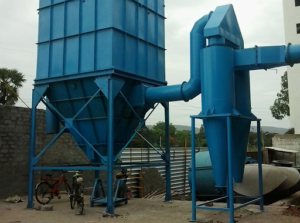

Selecting the right conveying method is important for efficient bulk material handling. Pneumatic conveyor system Exporters often provide both dense phase and dilute phase configurations because different materials and production requirements call for different conveying conditions. Although both systems transport powders, granules and other dry bulk materials through pipelines using air or gas, they differ significantly in conveying velocity, solids concentration, pressure, material handling characteristics and equipment requirements.
What Is Dilute Phase Pneumatic Conveying?
Dilute phase conveying transports particles through a pipeline at relatively high air velocity, keeping much of the material suspended in the conveying air. It is commonly used for continuous movement of a wide variety of powders and granular materials.
Because the material is carried by a fast-moving air stream, dilute phase systems generally operate with lower solids concentration than dense phase systems. The approach can offer a relatively straightforward system design and is suitable for many applications where product degradation and pipeline wear are within acceptable limits.
Typical characteristics include:
- Higher conveying velocity
- Lower solids concentration
- Relatively lower operating pressure
- Continuous material movement
- Broad material applicability
- Simple and flexible system configurations
However, high conveying velocities can increase particle impact against pipeline walls and bends. Abrasive materials may therefore cause greater wear, while fragile products can experience greater particle breakage.
What Is Dense Phase Pneumatic Conveying?
Dense phase conveying moves material through the pipeline at lower velocity and higher solids concentration. Depending on the material and system design, products can move through the pipeline as plugs, slugs or concentrated moving beds rather than remaining completely suspended.
This approach is particularly relevant when reducing product degradation or pipeline wear is important. Dense phase conveying can also be useful for certain abrasive, fragile or high-value materials, but its suitability depends heavily on the material’s flow characteristics.
Typical characteristics include:
- Lower conveying velocity
- Higher solids concentration
- Higher operating pressure
- Reduced particle impact
- Potentially lower pipeline wear
- More specialized system design
Not every material is suitable for dense phase conveying. Material characteristics such as particle size, density, permeability, abrasiveness, friability and flow behavior need to be evaluated before selecting the system.
Dense Phase vs Dilute Phase: Key Differences
The most important difference is how the material interacts with the conveying air.
|
Feature |
Dilute Phase |
Dense Phase |
|
Material concentration |
Lower |
Higher |
|
Air velocity |
Higher |
Lower |
|
Operating pressure |
Generally lower |
Generally higher |
|
Material movement |
Primarily suspended |
Concentrated plugs, slugs or moving beds |
|
Pipeline wear |
Can be higher |
Generally reduced |
|
Product impact |
Potentially higher |
Generally lower |
|
System complexity |
Relatively simple |
More specialized |
|
Suitable materials |
Broad range |
Material-dependent |
|
Typical application |
Continuous bulk transfer |
Controlled, gentle or specialized conveying |
Actual operating values vary according to material properties, pipeline geometry, conveying distance and system design, so these characteristics should be treated as general engineering distinctions rather than fixed specifications.
Material Characteristics Matter
One of the most important considerations when selecting a conveying phase is the material itself. Bulk density, particle size, particle shape, moisture content, abrasiveness and friability can all influence conveying behavior.
For example, fragile products may benefit from lower conveying velocities because excessive particle impact can contribute to degradation. Similarly, abrasive materials may require a conveying approach that limits particle velocity and consequently reduces wear on pipelines and bends.
The material should therefore be evaluated before deciding between dilute and dense phase conveying. Industry guidance emphasizes that understanding the bulk solid is a fundamental part of selecting an appropriate pneumatic conveying system.
Energy and Operating Considerations
Air consumption and conveying pressure are also important factors. Dilute phase systems use higher air velocity to keep particles suspended, while dense phase systems move a greater quantity of solids relative to the conveying gas.
Dense phase systems can offer advantages such as lower conveying gas requirements and reduced wear in suitable applications, but they may require more sophisticated equipment and higher pressure. Consequently, the overall energy and operating economics should be evaluated for the specific application rather than assuming that either phase is always more economical.
Which Pneumatic Conveying System Should You Choose?
There is no universal solution for every industrial application. The appropriate system depends on several factors, including:
- Type and characteristics of the material
- Required conveying capacity
- Distance between pickup and discharge points
- Horizontal and vertical pipeline sections
- Acceptable product degradation
- Material abrasiveness
- Required operating pressure
- Energy requirements
- Cleaning and maintenance needs
- Available plant space
Pneumatic conveyor system Exporters can evaluate these factors to determine an appropriate system configuration for a particular application. A properly engineered conveying system should consider the material, equipment, pipeline arrangement and desired production performance together.
Applications of Dense and Dilute Phase Conveying
Dilute phase systems are widely used for transporting powders, granules and other bulk materials where continuous, relatively high-speed conveying is suitable. Dense phase systems may be selected when gentler material handling, reduced particle velocity or lower pipeline wear is important.
Applications can be found across industries such as food processing, chemicals, pharmaceuticals, plastics, cement, minerals and other bulk-material handling operations. The appropriate conveying phase depends on the characteristics and processing requirements of each industry and material.
Conclusion
Understanding the difference between dense phase and dilute phase pneumatic conveying helps industries make better material-handling decisions. Dilute phase relies on higher air velocity and lower solids concentration, while dense phase uses lower velocity and higher solids concentration. Each approach has different advantages, limitations and equipment requirements.
For companies planning a new conveying line or upgrading an existing installation, working with experienced Pneumatic conveyor system Exporters can help identify the appropriate configuration based on material properties, capacity, conveying distance and process requirements. A carefully selected pneumatic conveying system can support reliable bulk material transfer while addressing product quality, maintenance and operational requirements.
Other Recommendations: Seed Coating Machine Manufacturers in India