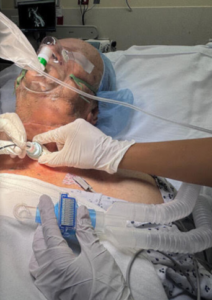

In hospital settings, airway emergencies are among the most intense and time-sensitive situations clinicians face. When oxygenation fails and conventional airway methods do not work, hesitation is not just risky, it can be fatal. This is exactly where FONA, front of neck airway access, becomes a life-saving skill. Yet many clinicians are not fully confident performing it under pressure.
Training through a FONA airway course or an eFONA airway course bridges that gap between theoretical understanding and real-world action. In critical moments, that preparation makes all the difference.
When Airway Management Reaches Its Limit
Inside emergency rooms, ICUs, and operating theatres, airway management usually follows a structured pathway. Clinicians rely on bag-mask ventilation, supraglottic devices, and intubation. But there are rare and terrifying moments when none of these methods work.
This situation, often referred to as “cannot intubate, cannot oxygenate” (CICO), demands immediate escalation. There is no time to debate options or search for guidance. The only viable solution is to create a surgical airway through the front of the neck.
Without proper training, this moment can feel overwhelming. Even experienced professionals may freeze or delay action, not due to lack of knowledge but lack of hands-on familiarity.
Why FONA Skills Cannot Be Theoretical
Reading about FONA is not enough. Watching videos is not enough. In a real hospital scenario, stress, noise, and urgency create a completely different environment.
A structured FONA airway course focuses on:
- Muscle memory through repeated practice
- Recognition of anatomical landmarks under pressure
- Decision-making in high-stakes situations
This kind of training ensures that when the moment comes, the response is immediate and confident. Clinicians do not have to “think through” each step, they act because they have already practiced it multiple times in realistic conditions.
The Shift Toward eFONA Training in Hospitals
Many hospitals are now incorporating the eFONA airway course into their training programs. The “e” stands for emergency, emphasizing the urgency and precision required in these scenarios.
Unlike traditional training modules, eFONA courses simulate real clinical stress. Participants are exposed to time-critical decision-making and hands-on procedural practice. This approach helps bridge the gap between controlled learning and unpredictable clinical environments.
In hospital-based training sessions, clinicians often report that eFONA practice feels intense, but that intensity is exactly what prepares them for real emergencies.
Confidence Comes From Repetition
One of the biggest barriers in performing FONA is hesitation. In a hospital setting, even a delay of seconds can have serious consequences. Training addresses this by building confidence through repetition.
During a FONA airway course, clinicians:
- Practice identifying the cricothyroid membrane quickly
- Perform procedures using realistic models
- Work through simulated emergency scenarios
This repeated exposure reduces hesitation. It transforms a rare, intimidating procedure into a familiar, executable skill.
Team Dynamics Matter in Airway Emergencies
Airway emergencies are rarely handled by a single individual. In hospitals, they involve coordinated teamwork between anesthetists, emergency physicians, nurses, and support staff.
FONA training also emphasizes communication and role clarity. During a crisis, confusion can waste valuable time. A well-trained team understands:
- When to escalate to FONA
- Who takes the lead
- How to support the procedure efficiently
An eFONA airway course often includes team-based simulations, helping hospital staff function as a cohesive unit under pressure.
Reducing Risk Through Preparedness
Hospitals aim to minimize adverse outcomes, but unpredictable emergencies still occur. The best way to manage these situations is preparation, not reaction.
FONA training contributes to:
- Faster intervention during airway failure
- Reduced complications due to delayed action
- Improved patient survival in critical scenarios
Clinicians who have undergone a FONA airway course are more likely to act decisively. That decisiveness can mean the difference between life and death.
Making FONA Training a Standard Practice
Despite its importance, FONA training is not always mandatory in all hospital programs. However, there is a growing recognition that it should be.
Integrating eFONA airway course modules into regular hospital training schedules ensures that all relevant staff remain prepared. Skills are refreshed, confidence is maintained, and teams stay aligned with best practices.
Hospitals that prioritize this training create safer environments for both patients and clinicians.
Final Analysis:
Critical airway emergencies do not allow second chances. In those moments, preparation is everything. FONA is not just a technical skill, it is a life-saving intervention that requires confidence, clarity, and precision.
A structured FONA airway course or eFONA airway course equips hospital professionals with the ability to act without hesitation. It transforms uncertainty into readiness.
When every second counts, expertise in FONA is not optional. It is essential.