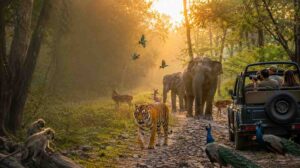

We went in December; the fog hadn’t lifted properly, and our driver just cut the engine mid-track. No warning. Turned out there were three elephants about sixty metres off, standing there eating. Nobody said a word for a good two minutes. That’s basically what a safari in Uttarakhand is like; you plan around tigers but end up remembering the quiet stuff. If you’re looking into a Rajaji National Park Rishikesh trip, this is a rundown of what it’s actually like, not the brochure version.
Uttarakhand Doesn’t Get Enough Credit
Everyone thinks Ranthambore or Bandhavgarh first when tigers come up. Makes sense; they’re famous. But Uttarakhand has something those two don’t: you can be in a jungle at 6 am and back in a temple town by lunch. Rishikesh and Haridwar aren’t far from the park at all.
Corbett pulls the bigger crowd; it’s older and better known. Rajaji sits in its shadow, honestly, which is annoying for the park but good for you if you don’t want six other jeeps parked next to yours at every sighting.
The land changes a lot within the same park too. Dry grassland one minute, thick sal forest the next, and there was this one stretch where our guy just said “shortcut, only works when it’s not monsoon” and drove straight through a dry stream bed like it was nothing.
Corbett, Rajaji, and What Everyone Actually Asks About
Corbett is India’s first national park, has been around since 1936, and the tiger numbers there are hard to beat. Most people leave with at least one solid sighting. Nainital’s forest bits and Valley of Flowers further up if trekking’s more your thing.
Rajaji isn’t trying to be Corbett—different kind of park.
Rajaji National Park, and Why It’s Worth Your Time
So Rajaji used to be three separate sanctuaries, Chilla, Motichur, and the original Rajaji sanctuary, merged in the early 80s. That’s part of why it feels disjointed as a park, three places stitched together, because that’s literally what happened. Chilla and Motichur are the two zones closest to Rishikesh and Haridwar; that’s where most people book.
Tiger numbers are rising here too but nowhere near Corbett’s level. Where Rajaji actually wins is elephants. There’s an old migration corridor running through connecting Uttarakhand to forests over in UP, so it’s not unusual to see a herd crossing open ground near the river, especially once it warms up.
Nobody talks about the birds enough. Over 300 species recorded here. We did a slow drive through Motichur; the guide kept cutting the engine every couple of minutes just to listen, and saw more hornbills and flycatchers in that one morning than expected the whole trip. Bird watching in Rajaji National Park, don’t rush it, that’s the whole point.
What The Actual Safari Looks Like
A jeep is what most people book; it fits about six plus driver and guide. Two time slots: morning around 6 to 9, afternoon 3 to 6. Morning’s colder but better; animals still near water and everything’s calmer before the heat kicks in.
Canters exist too for bigger groups, but they’re louder, and loud usually means less wildlife.
What you’ll probably see on a normal Rajaji National Park safari, deer mostly, sambar and chital everywhere, barking deer if you’re lucky and quiet, elephants near water especially in warmer months, sloth bears sometimes around April when fruit trees are going, and leopard tracks more than actual leopards, our guide pointed at pug marks like it was nothing special which felt odd at the time.
Tigers show up, not every time though. If someone tells you it’s guaranteed, they’re trying to sell you something.
A jungle safari Rishikesh side works fine as a half day thing if you’re already there for rafting or visiting an ashram. Chilla gate’s close; go in the morning and still be back for lunch near the ghats.
When To Actually Go
Park’s open mid November to mid June, closes after for monsoon so things can recover.
December, January, cold. Actually cold at 6 am in an open jeep; bring a real jacket, not just a scarf. Birding’s at its peak this time.
March onwards it heats up, and animals stick to water sources more, which weirdly makes them easier to spot. April and May are uncomfortably hot, but tiger and elephant sightings near the last waterholes tend to get better. Best time to visit Rajaji National Park depends on what you’re chasing. Birds, go winter. Tigers, push toward late April even with the heat.
Random Stuff I’d Tell Someone Going For The First Time
Book your slot early. Permits are capped per zone on purpose, meant to protect the habitat, even though it feels annoying when weekend slots in December are just gone.
Wear dull colours, green, brown, khaki, not white or anything bright; animals notice more than people think.
Keep quiet in the jeep. Someone’s phone rang once on our drive, and that was it, sighting gone. Guide didn’t say anything, just gave this look.
Listen to whatever your guide says about elephants. They’re calm most of the time,e but the guide’s job is knowing the other times, not yours.
The Conservation Side, Which Actually Matters
Tiger numbers in Rajaji have climbed steadily over the last several years. Forest officials put it down to better zone management and getting local communities actually involved, not some one-time fix. Less exciting than a rescue mission headline, but it’s the real one.
Tourists are part of this whether they realise it or not. Stay on the tracks, don’t feed anything no matter how close it gets, pick operators who actually follow forest department rules instead of cutting corners. A lot of the drivers and guides working these zones are from villages right on the boundary; a healthy forest is literally their income.
Wildlife tourism in Uttarakhand works better slowly. Every guide we talked to said basically the same thing: quiet and patient people see more; loud, rushed people see less.
How Booking Rajaji National Park Actually Works
Permits go zone by zone, capped daily, so booking Rajaji National Park ahead matters more than people expect, especially weekends and winter. We saw a family get turned away at the gate because they figured they’d just book same day. Didn’t work out for them.
Zones aren’t interchangeable. Chilla usually has better elephant odds; Motichur’s quieter and leans more toward birds, worth picking based on what you actually want rather than whichever’s closest. Jeep and canter permits are separate too; don’t assume one covers the other. Carry an ID; checkpoints check routinely.
If you’re not sure which zone makes sense for your dates, operators near Rishikesh running a proper <a href=”https://www.rishikeshtigersafari.com/”>Rajaji National Park safari</a> setup can usually sort that out faster than a government booking portal alone. Booking early also means you’re not stuck scrambling if your first choice zone fills up.
Last Bit
Uttarakhand’s forests don’t get the same attention as the big Central India parks; that’s kind of why they still feel properly wild. A well-timed Rajaji National Park Rishikesh trip, booked ahead and not rushed, tends to stick with you more than a crowded drive through a famous park ever does. Time it right, slow down once you’re in there, and the sighting usually comes eventually.
FAQs
- How far is Rajaji National Park from Rishikesh?
Chilla and Motichur zones are around 20 to 30 minutes away, an easy half-day trip. - Best time for a Rajaji safari?
Winter, November to February, for weather and birds. Late April into May if tigers and elephants near waterholes matter more to you. - Can I book same day?
Sometimes if slots are open but risky, weekends and winter fill up fast; book ahead if you can. - Good for a first-time safari-goer?
Yeah, Chilla and Motichur are both manageable; guides explain what’s going on and how to behave around wildlife. - What will I actually see, realistically?
Deer and elephants pretty much guaranteed in season. Birds if you go slow. Tiger and leopard, possible, not promised.