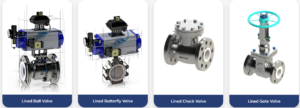

Industrial facilities invest in lined valves because they offer exceptional protection against corrosive chemicals, aggressive acids and hazardous process media. However, even the highest-quality PTFE or PFA lined valve can experience premature failure if it is incorrectly selected, improperly installed or operated beyond its design limits.
Unexpected valve failures often result in costly production downtime, chemical leakage, environmental risks and expensive equipment replacement. The good news is that most failures are preventable through proper engineering, installation and maintenance practices.
In this guide, we’ll explore the most common causes of lined valve failure and explain how maintenance engineers, plant managers and procurement teams can significantly improve valve reliability.
Why Do Lined Valves Fail?
A lined valve consists of two critical components: the metallic valve body that provides mechanical strength and the fluoropolymer lining that protects against corrosion. While fluoropolymers such as PTFE and PFA are highly resistant to chemicals, they are not immune to improper operating conditions.
The majority of failures occur because of application-related issues rather than manufacturing defects. Understanding these causes helps industries prevent unnecessary maintenance costs and extend equipment life.
1. Incorrect Chemical Compatibility
The most common reason for premature valve failure is selecting the wrong lining material.
Although PTFE, PFA and FEP offer excellent chemical resistance, not every fluoropolymer performs identically with every chemical. Concentration, operating temperature and pressure all influence compatibility.
For example, a chemical that is safe at room temperature may become aggressive at elevated temperatures. Engineers should always verify compatibility using chemical resistance data before selecting a valve.
Prevention:
-
Review chemical compatibility charts.
-
Consider concentration and temperature together.
-
Consult the valve manufacturer for critical applications.
2. Thermal Shock and Temperature Extremes
Fluoropolymer linings expand and contract differently from metallic valve bodies. Rapid temperature changes can create mechanical stress between these materials.
Sudden transitions from cold to hot process fluids may lead to lining deformation, cracking or reduced sealing performance.
Industries handling steam cleaning or frequent temperature cycling should carefully evaluate valve operating limits.
Best practice: Increase temperature gradually whenever possible and ensure the valve is designed for the application’s operating range.
3. Improper Installation
Even a premium PTFE lined valve can fail if installed incorrectly.
Common installation mistakes include:
-
Misaligned flanges
-
Excessive bolt tightening
-
Uneven gasket compression
-
Pipeline stress transferred to the valve
-
Incorrect flow direction
These issues can distort the valve body and damage the internal lining over time.
Installation Checklist
-
Ensure proper flange alignment.
-
Tighten bolts using a cross pattern.
-
Follow recommended torque values.
-
Avoid forcing pipelines into position.
-
Verify valve orientation before commissioning.
4. Abrasive Particles in Process Media
Lined valves are designed primarily for corrosion resistance—not continuous abrasive service.
Slurries containing sand, crystals or solid particles can gradually wear the fluoropolymer lining. This erosion may eventually expose the metallic body and reduce valve performance.
Applications involving abrasive chemicals should be evaluated carefully during valve selection.
Possible solutions include:
-
Installing strainers upstream
-
Reducing particle concentration
-
Selecting valves specifically designed for abrasive media
5. Excessive Operating Pressure
Every lined valve has a specified pressure rating. Operating beyond this limit increases mechanical stress on both the valve body and lining.
High pressure may contribute to:
-
Seat leakage
-
Lining distortion
-
Reduced sealing performance
-
Premature wear
Always verify that the valve pressure class matches the system’s design pressure rather than only the normal operating pressure.
6. Poor Valve Operation
Operator practices also influence valve life.
Frequent partial opening of valves intended primarily for isolation can increase wear. Similarly, forcing manual valves beyond their operating limits may damage internal components.
Operators should understand whether the valve is designed for:
-
Isolation
-
Throttling
-
Flow regulation
-
Automated control
Using the correct valve for the intended function improves reliability.
Warning Signs of Lined Valve Failure
Early detection prevents major failures. Maintenance teams should regularly inspect valves for the following symptoms:
|
Warning Sign |
Possible Cause |
|---|---|
|
External leakage |
Seal or flange issue |
|
Increased operating torque |
Internal wear |
|
Seat leakage |
Damaged sealing surface |
|
Chemical seepage |
Lining deterioration |
|
Corrosion near joints |
Installation problem |
|
Abnormal vibration |
Flow or pressure issue |
Routine inspection helps identify problems before they require complete valve replacement.
Preventive Maintenance Best Practices
A structured maintenance program significantly increases valve service life.
Monthly Inspection
-
Check external leakage.
-
Verify flange tightness.
-
Operate manual valves.
-
Inspect actuator performance.
Quarterly Maintenance
-
Evaluate seat sealing.
-
Inspect valve stem condition.
-
Review operating torque.
-
Check process temperature records.
Annual Maintenance
-
Replace worn soft components if required.
-
Perform pressure testing during shutdowns.
-
Review chemical compatibility for process changes.
-
Inspect lining condition using appropriate methods.
Preventive maintenance is considerably more economical than emergency replacement during production.
Choosing a Reliable Lined Valve Manufacturer
Preventing failure begins long before installation. A reputable manufacturer should provide technical guidance on material selection, pressure ratings, testing and application suitability.
When evaluating lined valve manufacturers in Mumbai, consider:
-
Engineering expertise
-
PTFE and PFA lining capability
-
Quality inspection procedures
-
Pressure and leakage testing
-
Material traceability
-
Technical documentation
-
After-sales support
Working with an experienced manufacturer reduces the risk of incorrect valve selection and improves long-term operational reliability.
Conclusion
Most lined valve failures are preventable. Chemical incompatibility, thermal shock, improper installation, abrasive media and operating beyond design limits are among the leading causes of premature valve damage. By selecting the correct lining material and following structured maintenance practices, industries can improve safety, reduce downtime and maximize equipment life.
Freture Techno Pvt. Ltd. is a leading Lined Valve Manufacturer in Mumbai, delivering PTFE, PFA and FEP lined valve solutions for chemical, pharmaceutical, petrochemical and process industries. With a strong focus on engineering excellence, quality testing and corrosion-resistant performance, Freture Techno helps customers achieve reliable flow control and long-term operational efficiency.