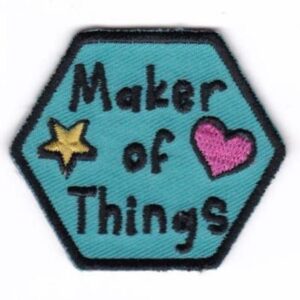

Custom patches used to mean big minimum orders and long waits — great if you were outfitting an entire team, frustrating if you just wanted a handful for a jacket, a small business launch, or a one-off gift. That’s changed. Today you can order a single patch or a few dozen without committing to bulk pricing, which makes custom design accessible to individuals, hobbyists, and small brands alike.
This guide breaks down what “no minimum” really means, why prices vary, and how to get the best patch for your budget.
What “No Minimum” Actually Means
No minimum simply means you’re not locked into buying 100, 250, or 500 patches to place an order. You can order one patch, five patches, or fifty — whatever your project needs. What it doesn’t mean is that unit pricing stays flat no matter the quantity. Every patch involves setup work: digitizing the artwork, calibrating machines, matching thread or ink colors, and finishing each piece by hand. Those costs get spread across however many patches you order, so smaller runs naturally cost more per patch than bulk wholesale orders. The tradeoff is worth it if you value flexibility over rock-bottom unit pricing.
Why Prices Vary by Patch Type
Not all patches are priced the same, because they’re not made the same way.
- Embroidered patches are stitched with thread onto a fabric base, giving a raised, textured look. They’re ideal for logos and bold text but cost more as stitch count and color count increase.
- Woven patches use finer thread and a tighter weave, which makes them better suited to small text and intricate detail — and often cheaper than embroidery because they use less material.
- Printed, PVC, and sublimated patches are priced by size rather than color count, which makes them a smart choice for photo-realistic or gradient-heavy designs that would be expensive to embroider.
Design complexity, patch size, and backing type (sew-on, iron-on, Velcro, adhesive) all factor into the final cost too. Simpler designs on standard sizes with basic backing will almost always be the most affordable route.
Wholesale vs. No-Minimum: Which Is Right for You?
Wholesale orders make sense when you need large, consistent quantities — think uniforms, promotional giveaways, or reseller inventory — since the per-unit price drops significantly as volume increases. No-minimum orders are better for testing a design, ordering a small batch for a team or event, or simply not wanting to gamble on inventory you might not use. If your run is under a few hundred units, no-minimum pricing usually makes more financial sense than paying for bulk you don’t need.
How to Keep Costs Down
A few practical habits go a long way toward lowering your per-patch price without sacrificing quality:
- Simplify the artwork. Bold shapes and clean lines are cheaper to digitize and produce than fine detail or tiny text.
- Limit colors and stitch density. Fewer thread colors mean less machine time and lower cost, especially for embroidered patches.
- Stick to standard sizes and backing. Custom shapes, oversized patches, and specialty backings like magnets or Velcro add cost.
- Order a sample first. A proof or sample run helps you catch issues in color, sizing, or backing before committing to your full order.
Common Mistakes to Avoid
First-time buyers often chase the lowest number without checking whether the material and backing actually fit their use case — a patch meant for a backpack won’t necessarily hold up on a uniform or work jacket. Overcrowded designs are another frequent misstep; cramming too much detail into a small patch tends to blur or fray with wear. And not all “cheap” patches are equal — differences in thread quality, edge finishing, and adhesive strength affect how long a patch actually lasts, so it’s worth asking a supplier about these details before ordering.
What Quality to Expect
Even at an affordable price point, a well-made patch should have consistent, even stitching with no loose threads, clean merrowed or heat-sealed edges to prevent fraying, strong adhesive if it’s iron-on or adhesive-backed, and enough durability to survive normal washing without the color or stitching breaking down. If a supplier can’t speak to these basics, that’s a signal to look elsewhere.
Ordering Online vs. Local Shops
Online manufacturers can typically offer more competitive pricing and a wider range of styles because they serve a national customer base and aren’t limited by local overhead. This also matters for buyers outside major patch-manufacturing hubs — someone searching for cheap custom patches no minimum california will usually find better selection and pricing through an online supplier than a local embroidery shop, simply because online producers spread their production costs across a much larger customer base. Local shops still have their place if you want an in-person consultation or same-day pickup, but for most custom orders, ordering online and having patches shipped to your door is faster and more cost-effective.
How to Place an Order
The process is generally the same across most suppliers:
- Choose your patch type (embroidered, woven, printed, PVC, or sublimated).
- Upload your artwork — a high-resolution image or vector file works best.
- Select your size and backing.
- Review a digital proof before production begins.
- Approve the proof and place your order.
Reviewing that proof carefully is the one step buyers most often rush through, and it’s the easiest place to catch a color mismatch or placement issue before it’s too late to fix.
Marketplaces vs. Dedicated Manufacturers
Template-based marketplaces are easy to use and require no design experience, which makes them appealing for one-off or casual orders. But they tend to offer less customization — limited backing options, fewer material choices, and less control over stitch type — and per-unit costs can run higher than working directly with a patches maker online that specializes in custom production. If you need specific thread types, unusual materials, wholesale pricing at scale, or precise control over the finished look, going directly to a manufacturer is usually the better move.
When Cheap Isn’t the Right Choice
No-minimum patches are great for small runs, samples, and personal projects, but they’re not always the best fit. High-wear items like work uniforms or outdoor gear benefit from investing in higher-durability materials and denser stitching. And if brand image is on the line — say, patches for retail products or professional apparel — spending a little more for premium materials and finishing often pays off in how the final product looks and holds up.
Final Thoughts
Affordable custom patches without a minimum order requirement open the door to projects that used to require a big upfront commitment. The key is matching the right patch type, size, and backing to your actual use case, keeping the design reasonably simple, and requesting a sample or proof before you commit to a full run. Do that, and you’ll get a patch that looks good, holds up over time, and doesn’t require buying more than you need.