
Most production managers meet the heater at an inconvenient moment: a mould stops heating mid-shift, a sealing bar runs cold, or a die shows uneven temperature across a batch. The part itself is small and inexpensive. The downtime it causes is not.
After years of working alongside manufacturers who depend on consistent heat, one pattern keeps repeating. Most early heater failures are not manufacturing defects. They come from a mismatch between the heater and the job it was asked to do. This guide explains how a cartridge heating element works and what to check before you order one, so the next heater you fit keeps running well.
What Is a Cartridge Heating Element?
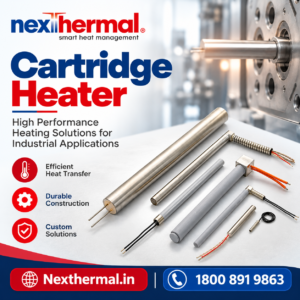
A cartridge heating element is a cylindrical, tube-shaped heater designed to be inserted into a drilled hole in a metal block, mould, platen or die. Heat transfers from the heater into the surrounding metal by conduction, so the energy goes directly where it is needed instead of escaping into the air.
Inside the metal sheath sits a resistance wire wound around a ceramic core. Compacted magnesium oxide (MgO) fills the gap between the wire and the sheath. This powder is the quiet hero of the design. It is an excellent electrical insulator, yet it conducts heat well, which lets the wire release energy to the sheath without shorting out.
Because the heater is compact and sits inside the work, it is one of the most space-efficient heat sources available. That is why you find it in plastic injection moulds, packaging machines, hot stamping dies, laboratory equipment and food processing lines.
Where Cartridge Heaters Do Their Best Work
Cartridge heaters suit applications where you can drill a hole and need dependable, localised heat. Common uses include:
- Injection and compression moulding tools
- Heat sealing jaws and packaging machinery
- Extrusion dies and hot runner systems
- Hot stamping and embossing plates
- Platens, heating blocks and test fixtures
- Medical, laboratory and analytical equipment
In Bangalore’s industrial belts, from the engineering clusters around Peenya to the manufacturing units along Hosur Road and the Whitefield corridor, tooling shops, packaging lines and electronics suppliers use these heaters daily. Each application has different heat and tolerance needs, which is why one standard heater rarely suits every machine.
Five Specifications That Decide Heater Life
1. Diameter and Length
The heater must match the bore in your tool. If it is too loose, a thin air gap forms around the sheath. Air is a poor conductor, so the heater runs hotter than designed and burns out sooner. If it is too tight, installation becomes difficult or impossible.
Measure the finished bore, not the drill size on the drawing. Reaming and surface condition change the real dimension. Also keep the heated length inside the bore, so the unheated section sits where it should and is not buried in the metal.
2. Watt Density
Watt density is the power released per unit of sheath surface area. It is the specification most often ignored, and it matters most.
A heater with high watt density in a poor-contact installation will overheat the wire. A lower watt density spreads the load and extends life. If you are heating a material that does not draw heat away quickly, such as a viscous polymer or still air, a modest watt density is the safer choice. If you are heating a dense steel block with a tight fit, a higher density can work well.
As a general guide, tight-fitting installations in steel tolerate more watt density than loose fits or heating in air. Your supplier should ask about the application before suggesting a figure. If they only ask for voltage and wattage, treat that as a warning sign.
3. Sheath Material
Stainless steel is widely used and suits moderate temperatures in general industrial applications. Where temperatures run higher or the environment is more demanding, nickel-based alloys such as Incoloy offer better resistance to oxidation and corrosion. Choose the sheath for the temperature and atmosphere it will actually face, not just the one listed in the machine manual.
4. Voltage and Power
Most Indian shop-floor machines run on 230 V single phase or 415 V three phase. Confirm the supply voltage and whether the controller switches the heater directly or through a contactor or solid-state relay. A heater supplied at a voltage higher than its rating will fail quickly, while a lower voltage will leave you short of heat.
5. Termination and Lead Style
Leads, connectors and exit angles look like minor details until a lead cracks from vibration or heat. Options include fibreglass or PTFE insulated leads, stainless steel braiding, metal-armoured cable, and threaded or screw terminals. Match the lead to the temperature at the heater end of the tool, because leads sit close to the hottest zone and degrade first if under-specified.
Common Reasons Cartridge Heaters Fail Early
When a failed heater comes back for inspection, the cause is usually visible on the sheath itself.
Poor fit. Discolouration or bulging along the sheath often points to an air gap between heater and bore. The heater overheated because heat could not escape.
Moisture absorption. MgO naturally attracts moisture. A heater stored in a humid warehouse, or one switched on at full power straight after a long idle period, may leak current or trip a circuit. A low-power drying cycle before full operation helps remove absorbed moisture.
Contamination at the lead end. Oil, resin or melted plastic creeping along the sheath can enter the termination and cause a short.
Overheating from controller issues. If a thermocouple is badly placed or a controller is poorly tuned, the heater can run at full power for too long. Heater life depends heavily on good control, which is why pairing the heater with a suitable temperature controller makes a real difference.
Mechanical damage. Bent sheaths, over-tightened lead nuts and rough handling during installation are more common than most teams admit.
A Practical Installation Checklist
Small habits at installation protect a heater for years:
- Clean the bore and remove burrs, oil and debris before inserting.
- Apply a suitable thermal compound only if the application allows it, and never at the lead end.
- Push the heater in by hand. Never hammer it.
- Keep the lead exit away from sharp edges and moving parts.
- Run a gentle warm-up if the heater has been idle or stored for long.
- Place the thermocouple close to the heater but away from the direct heat path, so the reading reflects the work and not the heater.
Why Custom Specifications Often Save Money
Catalogue sizes cover many needs, but real tooling is rarely generic. Stepped diameters, split windings that place heat only where required, built-in thermocouples, special exit angles and non-standard lengths can all be produced to suit a particular tool. A custom cartridge heating element costs a little more per piece. It typically pays that back through fewer replacements, steadier temperatures and less scrap.
When you request a quotation, share the following so the heater is right the first time:
- Bore diameter and depth
- Required wattage and voltage
- Operating temperature and material being heated
- Lead length, type and exit direction
- Any sensor, mounting or space constraints
- Drawing or sample, if available
If you would like an engineer to review your application, you can contact the team with these details. You can also read about us to understand how we approach heating projects and what drives our engineering decisions. For direct enquiries in India, call 1800 891 9863.
Frequently Asked Questions
What is a cartridge heating element used for?
It supplies concentrated heat inside moulds, dies, platens and machine blocks. It is inserted into a drilled hole and heats the surrounding metal by conduction.
How long does a cartridge heating element last?
Life depends on fit, watt density, operating temperature, control accuracy and handling. A well-matched heater in a tight bore with proper control lasts far longer than one used under overload or in a loose hole.
How do I choose the right watt density?
Consider how quickly the surrounding material draws heat away, how tight the fit is, and the working temperature. Tight fits in steel allow higher watt density, while loose fits or air heating call for lower values.
Can a cartridge heater be made to a custom size?
Yes. Diameter, length, wattage, voltage, lead type and exit direction can all be tailored to a specific tool, and a drawing or sample helps get the specification right.
Why does my heater trip the circuit after storage?
Magnesium oxide can absorb moisture during long storage. Applying low power for a short period before full operation drives the moisture out and usually resolves the issue.
Industry Perspective
Manufacturing in India is moving toward tighter process control, shorter changeover times and less tolerance for unplanned stoppages. Heating components are part of that shift. Buyers who once treated heaters as consumables now ask about fit tolerances, watt density and traceable specifications, because they have seen how much a few degrees of stability can improve part quality.
For plants in and around Bangalore, where precision tooling, electronics and packaging operate side by side, that attention to detail is becoming the norm. Choosing a cartridge heating element with the same care you give the tool it serves is one of the simplest ways to protect uptime.
Stay Connected
For more technical notes, product updates and application examples
Call: 1800 891 9863 (toll free)
Request a quote: https://www.nexthermal.in/contact/
Product Page: https://www.nexthermal.in/cartridge-heater/
Connect With Us
Facebook: https://www.facebook.com/nexthermal.usa/Instagram: https://www.instagram.com/nexthermal/
YouTube: https://www.youtube.com/@nexthermal
Pinterest: https://in.pinterest.com/nexthermal/
More Products:
Electric Heating Elements manufacturer | cartridge heating element | coil heaters manufacturer | temperature sensors manufacturer | tubular heaters manufacturer | temperature controller manufacturers | Engineering services provider in india | Ceramic Infrared Heater manufacturer |Temperature Control Panel manufacturer | Heating Coil Element manufacturer | Tubular Heater manufacturer | Temperature Sensors manufacturer | Temperature Controller manufacturer