
Your employer says paper checks are being phased out and offers you a payroll card instead.
The card looks like a debit card. Every payday, your net wages are loaded onto it.
That can be useful if you do not have a traditional bank account, but it also raises a few important questions: Do you have to accept the card? Can it charge fees? Will you still receive a pay stub?
A payroll card is simply another way of receiving wages. It does not replace the payroll calculation behind those wages.
What Is a Payroll Card?
A payroll card, sometimes called a paycard or payroll debit card, is a reloadable prepaid card arranged by an employer for paying wages.
Instead of sending your net pay to your checking account, the employer loads it onto the payroll-card account.
Suppose your paycheck shows:
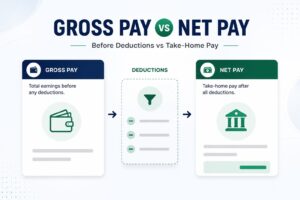
Gross pay: $1,500
Taxes and deductions: $320
Net pay: $1,180
If you use a payroll card, the $1,180 net amount may be loaded onto the card on payday.
The ePaystubs guide to gross pay versus net pay can help explain why the card balance is normally lower than total gross earnings.
Can Your Employer Force You to Use a Payroll Card?
No, not as your only payment option.
The Consumer Financial Protection Bureau says an employer cannot require an employee to receive wages exclusively through a payroll card. The employer must provide at least one alternative payment method and allow the employee to choose.
Depending on the employer and state law, alternatives might include direct deposit to an account you choose or another permitted wage-payment method.
State laws can affect exactly which options employers must offer and whether written consent is required.
So if payroll hands you a card and says, “This is the only way we pay employees,” it is reasonable to ask what alternative is available.
Do Payroll Cards Charge Fees?
They can.
The CFPB warns that payroll cards may charge fees for certain services. Possible charges can include out-of-network ATM withdrawals, paper statements, ATM balance inquiries, replacement cards, or other optional features.
That does not mean every transaction will cost money.
Many payroll-card programs provide several ways to access wages without fees. The exact fee schedule depends on the card program.
Before choosing a payroll card, read the disclosures.
Federal prepaid-card rules require certain fee and account information to be provided before you choose the card.
Can You Withdraw Your Entire Paycheck?
Payroll-card programs generally provide ways to access wages, although the method can vary.
Some cards allow ATM withdrawals. Others allow cash back at stores or withdrawals through participating financial institutions.
Check the card’s fee schedule before withdrawing money.
A method that is convenient may not always be the free option.
Do You Still Get a Pay Stub?
Yes, receiving wages on a payroll card does not make the pay stub unnecessary.
The card tells you how much money is available.
The pay stub explains how that number was calculated.
For example, your card may show a new $1,180 deposit.
Your pay stub may show:
Regular earnings: $1,300
Overtime: $200
Gross pay: $1,500
Taxes and deductions: $320
Net pay: $1,180
The ePaystubs guide on what a pay stub shows explains why the payroll statement contains much more information than the card balance.
Can Your Employer See What You Buy?
Generally, your employer does not receive access to your individual purchase history simply because the company arranged the payroll card.
The card issuer maintains the transaction account.
The employer’s role is generally to send the employee’s payroll funds to it.
What If the Wrong Amount Is Loaded?
Treat it like another payroll error.
First compare the card deposit with the net pay shown on your pay stub.
If the pay stub says $1,250 net pay but only $1,050 reaches the card, contact payroll.
If both the pay stub and card show the same unexpectedly low amount, the issue may instead involve hours, taxes, or deductions.
The ePaystubs guide to why a paycheck may be lower than expected can help identify the difference.
Payroll Card vs. Direct Deposit
Direct deposit sends net wages into an account you already control, usually a checking or savings account.
A payroll card uses an account arranged specifically for receiving wages through the employer’s program.
Both methods can deliver wages electronically.
Neither method changes your gross wages, payroll taxes, overtime calculation, or normal deductions simply because the payment destination changed.
What Should You Check Before Accepting One?
Read the fee disclosure first.
Find out how you can withdraw cash without paying a fee. Check which ATMs are free, whether balance inquiries cost anything, how replacement cards work, and how to report unauthorized transactions.
Also ask what alternative wage-payment options your employer provides.
A payroll card can be convenient, especially for workers without traditional bank accounts. It should not make wages harder to access or understand.
Your card shows where your net pay went. Your pay stub still tells the full story behind it.