

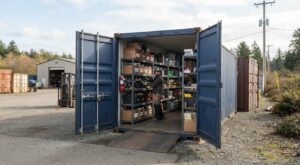

Businesses often need extra space for inventory, equipment, tools, documents, seasonal products, or materials. Renting additional warehouse space isn’t always the only option. A shipping container can provide a dedicated storage area on a business property when the site, container, and local requirements are suitable.
Whether you’re comparing shipping containers for sale, searching for a shipping container for sale near me, or looking at storage containers for sale, a container can be a practical way to expand your available storage without building a traditional storage structure.
In this guide, we’ll explain how businesses can use shipping containers for storage, what to consider before buying, and how to organize a container for long-term business use.
Table of Contents
- Can a Shipping Container Be Used for Business Storage?
- Benefits of Business Storage Containers
- Common Business Uses
- Choosing the Right Container Size
- New vs. Used Containers
- Container Condition and Storage
- Security Considerations
- Site Preparation and Delivery
- How to Organize Business Storage
- What to Check Before Buying
- FAQs
- Store Business Inventory With Conex Hub
Can a Shipping Container Be Used for Business Storage?
Yes. Shipping containers can be used for many business storage applications, provided the container is appropriate for the goods being stored and the property meets applicable requirements.
Conex Hub supplies commercial shipping containers to businesses and government customers and offers new, used, and custom-fabricated containers for sale, rent, or financing.
Businesses can use containers to store inventory, tools, equipment, supplies, construction materials, seasonal products, and other items that don’t need to occupy valuable indoor workspace.
A container can be particularly useful when you need additional storage on an existing commercial property.
Benefits of Business Storage Containers
1. Additional Storage Capacity
A container can add dedicated storage space without requiring an immediate warehouse expansion.
Instead of keeping excess inventory in aisles, offices, garages, or work areas, you can move suitable items into a dedicated container.
2. Flexible Storage Options
Businesses can select different container sizes and configurations based on their requirements.
Conex Hub lists common options including 10ft, 20ft, 40ft, and 40ft high cube containers.
3. Weather Protection
For appropriate goods, a wind- and watertight container can provide an enclosed storage environment. Conex Hub describes its used containers as wind and watertight and suitable for storage and projects.
However, businesses should consider the sensitivity of their inventory before selecting a standard container. Certain products may require climate-controlled or specialized storage.
4. Flexible Placement
A container can be positioned on suitable business property where delivery access and local requirements allow.
This can make it useful for construction sites, warehouses, retail businesses, contractors, farms, and other operations.
Common Business Uses
Shipping containers can support many types of business storage.
Inventory Storage
Retailers and distributors can use containers for overflow inventory, seasonal products, packaging materials, or supplies.
Construction Equipment
Contractors can use containers to store tools, materials, equipment, and job-site supplies.
Business Records and Supplies
Some businesses may use containers for appropriate documents, furniture, office supplies, or archived materials. Sensitive records should be stored according to applicable privacy and document-retention requirements.
Seasonal Storage
Businesses with seasonal inventory can use dedicated storage space to keep products organized when they aren’t needed immediately.
Equipment Storage
Landscaping companies, contractors, maintenance businesses, and other service providers can use containers for suitable equipment and tools.
Choosing the Right Container Size
Container size should be based on the amount and type of inventory you need to store.
10ft Containers
A 10ft container can be useful when space is limited or only a small amount of equipment and inventory needs to be stored.
20ft Containers
A 20ft container provides substantially more storage capacity while remaining relatively compact. Conex Hub describes its 20ft containers as suitable for storage, shipping, and modification projects.
40ft Containers
A 40ft container provides roughly twice the capacity of a 20ft container and can be useful for businesses with larger inventory or equipment requirements.
40ft High Cube Containers
A 40ft high cube provides an additional foot of interior height compared with a standard-height container. This can be useful when vertical storage is important.
New vs. Used Containers
Businesses generally have the option of considering new one-trip or used containers.
New One-Trip Containers
New one-trip containers have made a single voyage and arrive in near-new condition. They can be attractive when appearance, condition, and a clean starting point are important.
Used Containers
Used containers can provide a more budget-conscious storage option. Their condition can vary, so businesses should confirm the container’s condition grade and inspect important components before purchase.
Conex Hub describes its used containers as affordable, structurally sound, wind and watertight, and suitable for storage and projects.
Container Condition and Storage
Not every container is appropriate for every type of inventory.
When comparing storage containers for sale, consider what you will store and how sensitive those products are to environmental conditions.
For example, ordinary tools and construction materials may have different storage requirements from electronics, temperature-sensitive products, food, or other specialized inventory.
Conex Hub’s condition guide distinguishes between:
- One-Trip (New): Shipped once and near-new
- Cargo Worthy (CW): Certified for international shipping
- Wind & Water Tight (WWT): Sealed and secure for storage
- As-Is: Budget-friendly condition with cosmetic wear
Choose the condition based on your intended use rather than simply selecting the lowest purchase price.
Security Considerations
Business inventory can have significant value, so security should be part of your storage plan.
Consider:
- A high-quality container lock
- A lockbox or suitable locking system
- Security lighting
- Cameras
- Controlled property access
- Fencing where appropriate
- An organized inventory system
The container itself should not be considered a complete security system. Site security and access control also matter.
Site Preparation and Delivery
Before ordering a container, make sure your property can accommodate both the container and delivery truck.
Conex Hub recommends firm, dry, level ground, with pavement, gravel, or hard-packed dirt generally suitable. The delivery path should also be clear of overhead wires, low branches, and tight turns.
For a 20ft container, Conex Hub’s delivery guidance states that approximately 60 feet of straight-line clearance is required for tilt-bed delivery. Larger trailer-based deliveries can require 100 feet or more.
Before delivery:
- Select the placement area.
- Check ground conditions.
- Measure the access route.
- Remove obstacles.
- Check overhead clearance.
- Confirm local requirements.
- Discuss unusual access conditions with the supplier.
How to Organize Business Storage
Once the container arrives, organization can make a major difference.
Use Shelving
Shelving can turn vertical wall space into usable storage.
Create Inventory Zones
Keep similar products or equipment together rather than mixing everything in one area.
Label Boxes and Shelves
Clear labels make it easier for employees to find and return items.
Keep an Access Path
Don’t fill every inch of floor space. Leave enough room to reach inventory toward the back.
Keep Frequently Used Items Accessible
Products and tools that employees use regularly should be stored closer to the doors.
Maintain an Inventory List
For larger storage operations, maintain a digital or physical record showing where items are stored.
What to Check Before Buying
Before purchasing from shipping containers for sale, ask these questions:
What Are You Storing?
Identify the type, size, weight, and environmental requirements of your inventory.
How Much Space Do You Need?
Estimate both your current storage needs and potential future growth.
What Condition Should the Container Be?
Choose between new, cargo worthy, wind and watertight, or other available conditions based on the intended application.
Can Your Property Accommodate Delivery?
Check access, ground conditions, overhead clearance, and placement space.
Are There Local Restrictions?
Depending on your location, zoning, permits, property rules, or HOA requirements may apply.
FAQs
Are shipping containers good for business storage?
They can be a practical option for many businesses that need additional space for suitable inventory, equipment, tools, or supplies. The appropriate container depends on what you intend to store and the conditions at your property.
What size container is best for business storage?
It depends on your storage volume. Common choices include 10ft, 20ft, and 40ft containers, while 40ft high cube containers provide additional vertical space.
Can I store inventory in a shipping container?
Yes, provided the inventory is suitable for the container’s environmental conditions and the container is properly maintained.
Should I buy a new or used container for business storage?
Both can be options. New one-trip containers provide a near-new starting point, while suitable used containers can offer a more economical storage solution.
Do I need to prepare my property before delivery?
Yes. You should prepare a firm, dry, level placement area and make sure the delivery route has sufficient clearance.
Where can I find shipping containers for business storage?
You can compare shipping containers for sale from suppliers such as Conex Hub and select a size and condition based on your business requirements.
Store Your Business Inventory With Conex Hub
A shipping container can provide valuable additional storage for a growing business without immediately requiring more traditional indoor space. The key is to choose the right size, condition, configuration, and placement location for your specific needs.
If you’re researching shipping containers for sale, comparing storage containers for sale, or searching for a shipping container for sale near me, consider your inventory, access requirements, security needs, and future storage demand before making a decision.
Conex Hub specializes in shipping container sales, leasing, and custom modifications and serves businesses, government customers, construction firms, retailers, and other organizations. The company says it has delivered more than 30,000 containers since 2014.
Conex Hub’s quote process allows businesses to specify the container type, size, condition, quantity, purchase or rental preference, and delivery address so pricing, availability, and delivery options can be assessed.
Ready to create more storage space for your business? Explore your container options with Conex Hub and choose a storage solution built around your inventory and site requirements.