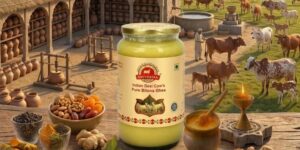

Bilona Ghee is a traditional Indian ghee known for its age-old preparation method and rich aroma. Unlike conventional methods that may involve direct cream separation, the traditional Bilona process involves converting milk into curd, churning the curd to obtain butter, and then heating that butter to make ghee. This method has been followed in Indian households for generations.
Today, Bilona Ghee has gained attention among people looking for traditionally prepared dairy products. But what exactly makes Bilona Ghee different? How is it made, what should you look for when buying it, and how can it be included in your everyday diet?
Understanding the preparation process is important because the term “Bilona” describes a traditional method rather than automatically guaranteeing a particular nutritional profile or quality. The final product can depend on the milk source, breed of cow, processing practices, storage, and overall quality.
What Is Bilona Ghee?
Bilona Ghee is ghee prepared using the traditional Bilona method. In this process, milk is first converted into curd. The curd is then churned to separate butter. This butter is subsequently heated slowly until the water evaporates and the milk solids separate, leaving behind clarified butter or ghee.
The traditional process generally involves these key stages:
Milk → Curd → Churning → Butter → Slow Heating → Ghee
This method is different from some modern commercial processes where cream may be separated from milk first and then processed into butter and ghee.
How Is Bilona Ghee Made?
1. Fresh Milk Is Collected
The process begins with fresh milk. For traditionally prepared cow Bilona Ghee, the quality and source of the milk are important factors.
Good-quality raw material provides the foundation for the final product.
2. Milk Is Converted Into Curd
Instead of directly separating cream from milk, the traditional Bilona process involves fermenting the milk into curd.
The milk is allowed to set under suitable conditions until it develops the desired consistency.
3. Curd Is Churned
Once the curd is ready, it is churned to separate the butter from the buttermilk.
Traditional churning may be performed using a wooden churner, although practices can vary between producers.
4. Butter Is Collected
The butter separated during churning is collected and prepared for the next stage.
This butter contains water and milk solids that need to be separated during heating.
5. Butter Is Slowly Heated
The collected butter is heated gradually. As it warms, moisture evaporates and milk solids separate from the fat.
The remaining clarified fat is filtered to obtain ghee.
6. Ghee Is Filtered and Stored
After heating, the ghee is filtered and stored in a clean, suitable container. Proper storage helps maintain its quality, aroma, and freshness.
What Makes Bilona Ghee Different?
The main distinction of Bilona Ghee is its traditional preparation method.
In a conventional commercial process, manufacturers may use cream separation and industrial equipment to produce ghee at a larger scale. In contrast, the traditional Bilona process uses curd churning before the butter is converted into ghee.
However, “Bilona” should not automatically be interpreted as meaning that every product is identical in quality. Consumers should also consider the source of milk, ingredients, processing conditions, hygiene, packaging, and testing information.
Potential Benefits of Bilona Ghee
Ghee is primarily a source of dietary fat and calories. When consumed in appropriate amounts as part of a balanced diet, it can be used as a cooking or finishing fat.
1. Provides Dietary Fat
Ghee is concentrated in fat, which provides energy. Dietary fats also have important roles in the body, including helping with the absorption of fat-soluble vitamins.
2. Adds Flavor to Traditional Foods
One of the most practical reasons people use Bilona Ghee is its rich aroma and flavor. A small quantity can add a distinctive taste to foods such as dal, khichdi, rice, roti, and vegetables.
3. Suitable for Traditional Recipes
Bilona Ghee can be used in a variety of Indian recipes. It can be added during cooking or used as a finishing ingredient.
4. Provides a Traditional Food Option
For people interested in traditional Indian food practices, Bilona Ghee offers a way to include an age-old preparation method in modern meals.
It is important, however, not to treat ghee as a medicine or as a replacement for a varied and balanced diet.
Bilona Ghee vs Regular Ghee
The primary difference is generally the method used to produce the butter before clarification.
| Feature | Bilona Ghee | Conventional Ghee |
|---|---|---|
| Traditional process | Milk → Curd → Churning → Butter → Ghee | May use cream/butter-based industrial processing |
| Churning | Traditionally involved | May not be part of the process |
| Production scale | Often associated with smaller or traditional production | Commonly produced at larger commercial scale |
| Taste and aroma | Can have a distinct traditional profile | Can vary by manufacturer |
| Quality | Depends on milk, process, hygiene and storage | Depends on ingredients and manufacturing standards |
The nutritional differences between products should not be assumed solely from the word “Bilona.” Product-specific information and testing are more useful when comparing ghee.
How to Choose Good Bilona Ghee?
If you are planning to buy Bilona Ghee, look beyond the product name. Consider the following factors:
Check the Ingredients
A quality ghee product should clearly state its ingredients. Ideally, the label should make it easy to understand what you are purchasing.
Understand the Milk Source
Look for information about the source of milk and the type of cow milk used, if the product makes a specific breed-related claim.
Check the Preparation Method
If a brand claims to use the traditional Bilona method, check whether it explains the process clearly—from milk to curd, churning, butter, and finally ghee.
Look for Quality and Food-Safety Information
Packaging, hygiene, manufacturing standards, batch information, and appropriate food-safety details are important considerations when selecting any edible product.
Consider Packaging and Storage
Ghee should be stored in a clean, food-safe container and protected from moisture, contamination, and excessive heat.
How to Use Bilona Ghee in Everyday Meals?
Bilona Ghee can be incorporated into everyday meals in simple ways. You can add a small amount to:
- Dal and khichdi
- Roti or paratha
- Rice
- Cooked vegetables
- Traditional Indian recipes
- Homemade foods and snacks
Since ghee is calorie-dense, moderation is important. The appropriate amount depends on your overall diet, energy requirements, and individual nutritional needs.
Final Thoughts
Bilona Ghee represents a traditional method of preparing ghee that involves converting milk into curd, churning the curd to obtain butter, and slowly heating the butter to produce clarified ghee. Its traditional preparation, rich aroma, and versatility have made it popular among consumers interested in traditional Indian foods.
When choosing Bilona Ghee, focus not only on the product name but also on the milk source, ingredients, preparation method, quality standards, packaging, and transparency of the brand.
Most importantly, enjoy ghee as part of a balanced diet and use it in appropriate quantities according to your individual dietary needs.