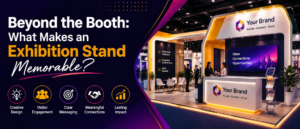

Exhibitions are busy places. Visitors move from one stand to another, meet different companies, watch demonstrations, collect information, and speak with many sales teams in a single day. With so much happening around them, remembering every brand is almost impossible.
This is why an exhibition stand needs to do more than simply look attractive.
A memorable stand creates an experience. It gives visitors a reason to stop, understand the brand, interact with the team, and remember the company after the exhibition is over. From the layout and lighting to the messaging and staff interaction, every detail can influence how visitors feel about a brand.
So, what actually makes an exhibition stand memorable? Let’s look at the elements that can turn a temporary booth into a meaningful brand experience.
Start With a Clear Purpose
Before thinking about colors, furniture, screens, or decorative features, businesses should first decide what they want to achieve.
Are you attending the exhibition to generate leads? Do you want to introduce a new product? Are you looking for distributors or business partners? Is the main objective to increase brand awareness?
The answer will influence the entire stand.
For example, a company focused on product demonstrations may need an open demonstration area with good visibility. A business looking for partnerships may require comfortable meeting spaces. A brand focused on lead generation may need a welcoming reception area where visitors can easily start conversations.
When the purpose is clear, every part of the stand can support the same objective.
Make the First Impression Simple and Strong
Visitors often decide within seconds whether they want to approach an exhibition stand.
A stand does not need hundreds of graphics or complicated structures to attract attention. In many cases, a clear message and confident visual identity can be more effective.
Visitors should quickly understand who you are and what your company offers.
Large headlines, recognizable branding, carefully selected images, and visible product displays can help communicate this information. Avoid filling every available wall with text. Exhibition visitors are usually walking, talking, and looking around at the same time.
Your main message should be easy to understand from a distance.
Design Around the Visitor Journey
A good exhibition stand should naturally guide visitors through the space.
Think about what happens when someone first notices your stand. Where will they enter? What will they see first? Where can they learn about your products? Where can they speak with your team?
A professional Exhibition stand designer Dubai can help plan these movements before construction begins.
Visitor flow becomes particularly important when a stand includes several functions. You may need a reception desk, product displays, digital screens, meeting rooms, storage, demonstration areas, and seating within a limited space.
If these elements are not positioned carefully, the stand can quickly become crowded.
Good layout planning makes movement feel natural and helps visitors explore without confusion.
Tell a Brand Story
Memorable exhibition stands often communicate more than a company name.
They tell visitors something about the brand.
This does not mean creating a complicated story. It simply means connecting the visual design with the company’s identity, values, products, or purpose.
For example, a technology company might use clean lines, digital displays, and interactive features. A luxury brand may focus on premium materials, controlled lighting, and spacious layouts. A sustainability-focused company may choose reusable structures and environmentally conscious materials.
The design should feel connected to the business rather than looking like a generic exhibition booth with a logo added to it.
Use Lighting With Purpose
Lighting can completely change how an exhibition stand feels.
Bright lighting can make products easier to see, while softer lighting can create a comfortable atmosphere for conversations. Spotlights can highlight important displays, products, graphics, or architectural details.
Lighting can also help separate different areas of a stand.
For example, a product demonstration area may require stronger lighting, while a private meeting space can use a calmer lighting approach.
The key is to plan lighting as part of the design rather than treating it as a final addition.
Create Something Visitors Can Experience
People often remember what they do more clearly than what they see.
Interactive experiences can therefore make an exhibition stand more memorable.
Depending on the business, this could include live product demonstrations, touchscreens, virtual experiences, games, product samples, interactive displays, or short presentations.
However, interactive features should have a clear purpose.
Technology should help visitors understand your business, explore a product, or start a conversation. Adding technology simply because it looks modern can create unnecessary distractions.
A good exhibition design company Dubai can integrate technology into the stand without allowing it to dominate the overall experience.
Keep Branding Consistent
An exhibition stand should look and feel like the company it represents.
Brand colors, logos, fonts, images, messaging, and presentation materials should follow a consistent visual direction.
Visitors may already know your company from your website, advertising, social media, or other marketing materials. Consistency helps them make an immediate connection.
It also creates a more professional impression.
This consistency should continue beyond the physical stand. Digital screens, brochures, staff clothing, presentation slides, giveaways, and QR code landing pages should all feel connected to the same brand.
Give Visitors Space to Talk
Not every visitor wants an interactive experience.
Some simply want to speak with someone.
This is why conversation areas are still an important part of exhibition stand design.
Open standing areas can work well for quick discussions, while seating areas can support longer conversations. Businesses dealing with high-value products or services may also need private meeting rooms.
Comfort matters.
If visitors feel crowded, blocked, or rushed, they may leave before a meaningful conversation begins.
The layout should provide enough room for staff and visitors to communicate naturally.
Make Products Part of the Design
If your company is exhibiting physical products, they should be easy to see and explore.
Product displays should not feel like an afterthought.
Consider height, lighting, accessibility, viewing distance, and the amount of information placed around each product.
If demonstrations are required, make sure there is enough space for people to watch without blocking the main walkway.
An experienced Exhibition stand designer Dubai can build product presentation into the overall layout so that products become part of the visual experience.
Use Digital Content Carefully
LED screens and digital displays have become common at exhibitions.
They can be useful for showing videos, animations, product features, project portfolios, customer stories, and presentations.
But bigger does not always mean better.
A large screen showing unrelated content can become a distraction rather than an advantage. Digital content should be short, clear, visually strong, and understandable even without sound.
Remember that exhibition halls are often noisy environments.
Your digital content should therefore communicate visually and support the conversations happening around it.
Do Not Forget the Human Experience
Even the most impressive exhibition stand depends on the people working inside it.
Staff members are often the strongest connection between the visitor and the brand.
A visitor may be attracted by the stand design, but their conversation with your team will influence whether they become genuinely interested in the company.
Staff should understand the event objectives and know how to explain products or services clearly. They should also know how to identify serious enquiries and record useful contact information.
Simple actions matter too.
Welcoming visitors, maintaining eye contact, listening carefully, and avoiding unnecessary pressure can make the experience more comfortable.
A beautiful stand combined with an unprepared team can quickly lose its impact.
Add Small Details People Remember
Memorable experiences are often created through small details.
A comfortable seating area, convenient phone charging point, useful giveaway, product sample, personalized demonstration, or simple refreshment can make visitors stay longer.
These details should make sense for your audience.
Instead of giving away generic promotional items, consider something useful or connected to your business.
The goal is not necessarily to spend more. It is to think carefully about what visitors will actually appreciate.
Design for Photography and Social Sharing
Exhibitions are increasingly connected to social media.
Visitors take photos, companies publish event updates, and exhibitors share videos throughout the day.
Creating visually interesting areas can encourage people to photograph the stand.
Strong branding in these areas can extend visibility beyond the exhibition hall.
When someone shares a photo or video online, your stand can reach people who are not physically attending the event.
A professional exhibition design company Dubai can consider photography angles, branding positions, lighting, and visual focal points during the design stage.
Think About What Happens After the Exhibition
A memorable stand should help create relationships that continue after the event.
Businesses should have a clear method for collecting visitor information. This might include digital forms, QR codes, badge scanners, business cards, or CRM integration.
The important part is what happens next.
Follow up with interested visitors while the conversation is still fresh. Mention the product, service, or topic they discussed with your team rather than sending the same generic message to everyone.
A personalized follow-up can help turn a memorable exhibition interaction into a genuine business opportunity.
Measure What Visitors Remember
After the exhibition, review more than the number of people who visited your stand.
Consider the quality of conversations and leads.
Which products attracted the most attention? Which displays encouraged people to stop? Did visitors understand your main message? Were meeting spaces used effectively? Which digital features generated engagement?
Feedback from your sales and event teams can provide valuable information.
These insights can help improve your next exhibition stand and prevent you from repeating features that did not provide real value.
Memorable Does Not Mean Complicated
There is often a belief that memorable exhibition stands must be large, expensive, or technically complex.
That is not always true.
A smaller stand with clear messaging, smart space planning, confident branding, and a welcoming team can create a stronger impression than a much larger stand with no clear purpose.
The most effective designs usually focus on what matters to visitors.
Instead of adding features simply to fill space, every element should support the brand message or visitor experience.
Final Thoughts
A memorable exhibition stand is not created by one impressive feature. It comes from the way design, branding, technology, products, people, and visitor experience work together.
Businesses should begin with clear objectives and build the stand around what they want visitors to see, understand, and do.
Working with an experienced Exhibition stand designer Dubai can help turn those objectives into a practical layout that supports visitor interaction. A professional exhibition design company Dubai can also coordinate the wider process, from concept development and visualization to production and installation.
Ultimately, the best exhibition stands go beyond being temporary structures. They become places where people discover brands, experience products, have useful conversations, and build business relationships.
When visitors leave the exhibition remembering not only how your stand looked but also how your brand made them feel, the stand has achieved something much more valuable than simply attracting attention.