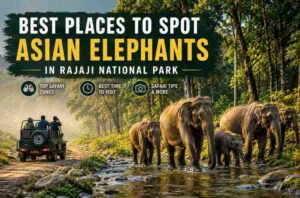

If there’s one animal that defines Rajaji National Park, it’s not the tiger. It’s the elephant. Rajaji is home to one of the largest wild elephant populations in North India, and unlike tigers, which demand a fair bit of luck, elephants here show up often enough that most safari-goers leave with at least one good sighting. The question isn’t really “will I see an elephant,” it’s “which zone gives me the best shot at a great one.”
That’s what this guide is for. We’ll walk through the five safari zones of Rajaji, Chilla, Motichur, Jhilmil, Ranipur, and Mohand, and break down where elephants actually spend their time, when to visit for the best sightings, and how to plan a safari that doesn’t leave you disappointed.
Why Rajaji National Park Is an Elephant Hotspot
Spread across roughly 820 sq. km. between the Shivalik hills and the Ganga plains, Rajaji became a tiger reserve in 2015, but elephants have always been the park’s real headline act. The terrain here suits them perfectly. Dense sal forest gives them cover and food, the Ganga and its tributaries give them water, and the corridors connecting Rajaji to neighbouring forest patches let large herds move freely through the year.
Because of this, elephant sightings in Rajaji aren’t a rare stroke of luck the way they can be in some other parks. Herds are seen crossing safari tracks, feeding at the forest edge, and gathering near water bodies with a regularity that keeps repeat visitors coming back specifically for the elephants.
The Best Safari Zones for Elephant Sightings
Chilla Safari Zone
Chilla is the most popular zone in Rajaji, and for good reason. It has the highest overall wildlife density in the park, open sightlines, and a genuinely large resident elephant population. If you’re short on time and want the single best combined chance at spotting both elephants and tigers, Chilla is the zone most guides will point you toward. It does get busy, especially on weekends through the winter season, so booking a few days ahead helps.
Motichur Safari Zone
If elephants specifically, rather than a mixed bag of wildlife, are what you’re after, Motichur deserves serious consideration. The zone is covered in dense sal forest, and elephant herds pass through it regularly enough that guides consider it one of the more reliable spots in the park. It’s a quieter safari than Chilla, with a calmer pace, and it’s close enough to both Rishikesh and Haridwar to work well even as a shorter trip.
Jhilmil Jheel Safari Zone
Jhilmil is better known for its wetland habitat and its swamp deer, the only place in Uttarakhand where you’ll find them, but elephants move through this corridor too, particularly as they travel between forest patches. It’s a slower, quieter zone overall, better suited to visitors who want a mix of birdlife and occasional elephant activity rather than a fast-paced wildlife chase.
Ranipur Safari Zone
Ranipur’s reputation is built on leopards and its rocky, hilly terrain, but elephants do pass through here as well. Sightings tend to reward patience rather than come easily, so if elephants are your main goal, treat Ranipur as a bonus opportunity rather than your primary zone.
Mohand Safari Zone
Mohand sits on the Dehradun side of the park and sees noticeably less traffic than Chilla or Motichur. It’s known more for tigers and birdlife, but its lower visitor numbers mean the forest is calmer, and wildlife, elephants included, tends to move a little more freely without the noise of multiple jeeps nearby.
If you had to pick just one zone purely for elephants, Chilla and Motichur come out ahead, both open from November to mid-June and both known for strong, regular herd activity. Jhilmil, open a little longer through to end of June, and Ranipur are more moderate bets, better thought of as bonus sightings alongside birds or leopards. Mohand rounds things out as the quieter, lower-traffic option for travellers coming from the Dehradun side.
Best Time to Visit for Elephant Sightings
Winter, from October through March, is generally considered the best window. Temperatures stay comfortable, between roughly 5°C and 25°C, visibility is clear, and elephants are active without the heat pushing them into deep cover. This is also when the park sees its highest footfall, so early booking matters if you’re travelling in December or January.
Summer, from April to June, brings its own advantage. As temperatures climb toward 40°C, elephants and other wildlife gather more predictably around water sources, which can actually make for stronger sightings if you don’t mind the heat. The monsoon months, July through September, see the park largely closed or operating with limited access, so they’re best avoided for safari planning altogether.
Early morning safaris tend to offer the calmest conditions and the best light for photography, since elephants are often most active in the cooler hours right after sunrise.
Tips for Better Elephant Sightings
A few small habits make a real difference on safari. Keep noise to a minimum, sudden movement or loud conversation is one of the fastest ways to send a herd back into cover. Wear muted colours rather than anything bright, and keep your camera or phone ready rather than digging through a bag once you’ve already spotted movement.
Give the guide’s instructions priority over your own instincts. Forest guides read subtle signs, broken branches, fresh dung, alarm calls from deer or langurs, long before most visitors notice anything at all, and following their lead usually pays off.
If you’re travelling with family or on a first safari, morning slots tend to be a little calmer and less crowded than the afternoon session, which can make the whole experience more comfortable for children or first-time wildlife watchers.
Other Wildlife You Might See Along the Way
Elephants may be the highlight, but Rajaji rarely offers just one animal per trip. Depending on the zone, you could also spot tigers, leopards, sloth bears, spotted and sambar deer, wild boar, langurs, and over 400 recorded bird species. Jhilmil’s swamp deer and Ranipur’s leopards are worth keeping an eye out for even if elephants are your main draw, since a single safari often turns into a broader wildlife encounter than expected.
It’s worth remembering that sightings in the wild are never guaranteed. Every safari is a genuine walk into unpredictable terrain, and that unpredictability is part of what makes a good sighting feel earned rather than routine.
How to Book Your Safari
Booking a Rajaji safari is straightforward, but a little planning goes a long way, especially during peak winter months when Chilla and Motichur slots fill up quickly. Your safari operator usually handles permits, jeep arrangements, and entry formalities, so most of the work on your end is simply choosing your preferred zone and dates.
Staying close to the safari gate rather than in central Rishikesh can also make a real difference. A base near the Chilla Range gate, for instance, cuts out the 45 minutes to an hour that most Rishikesh hotels are away from the park, which matters when early morning safaris start before sunrise. If you’re unsure which zone fits what you want to see, most local operators are happy to advise based on your travel dates and priorities rather than simply pushing whichever zone is busiest.
Final Thoughts
Rajaji National Park doesn’t ask you to choose between a good safari and a good elephant sighting; most zones offer a genuine shot at both. Chilla and Motichur give you the strongest odds if elephants are the priority, while Jhilmil, Ranipur, and Mohand round out the experience with their own specialities. Time your visit for the winter or early summer months, follow your guide’s lead once you’re in the forest, and you’ll walk away with more than just a checklist sighting; you’ll come away with a genuine sense of what makes this stretch of Shivalik forest one of North India’s most underrated wildlife destinations.
Frequently Asked Questions
1. Which safari zone in Rajaji National Park has the best elephant sightings?
Chilla and Motichur are generally considered the strongest zones for elephant sightings, thanks to their dense sal forest and large resident herds.
2. What is the best time of year to see elephants in Rajaji?
Winter, from October to March, offers the most comfortable conditions and reliable sightings, though summer months can also be strong since elephants gather near water sources.
3. How many safari zones does Rajaji National Park have?
Rajaji has five main safari zones open to visitors, Chilla, Motichur, Jhilmil, Ranipur, and Mohand.
4. Are elephant sightings guaranteed on a Rajaji safari?
No sighting in the wild can ever be guaranteed, but elephant encounters are common enough across most zones that visitors have a strong chance of spotting one.
5. Is Rajaji National Park good for a first wildlife safari?
Yes. Chilla and Motichur in particular are considered beginner-friendly, with well-established routes and experienced guides suited to first-time visitors and families.
6. What other animals can I see besides elephants?
Along with elephants, Rajaji is home to tigers, leopards, sloth bears, various deer species, langurs, wild boar, and more than 400 bird species.
7. How early should I book my Rajaji safari?
Booking a few days to a week in advance is advisable, especially for Chilla and Motichur during the peak winter season when slots fill up quickly.
8. Can I do an elephant-focused safari on the Dehradun side of the park?
Mohand, accessible from the Dehradun side, sees fewer visitors and offers a quieter safari, though it’s better known for tigers and birdlife than for concentrated elephant activity.