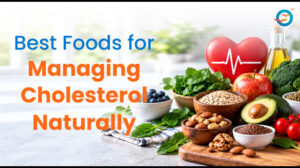

Best Foods for Managing Cholesterol Naturally
Managing cholesterol does not mean giving up everything you enjoy. A better approach is to build your everyday meals around foods that provide fibre, plant protein, healthy fats, vitamins, and antioxidants.
Foods such as oats, lentils, chickpeas, vegetables, fruits, nuts, seeds, and whole grains can support a heart-friendly eating pattern. Soluble-fibre-rich foods are particularly useful because they can help support healthy LDL cholesterol levels.
Why Does Cholesterol Become a Concern?
Cholesterol is essential for several functions in the body. However, elevated LDL cholesterol can contribute to plaque buildup in the arteries and increase cardiovascular risk.
Genetics can influence cholesterol levels, but diet, physical activity, body weight, sleep, and other lifestyle factors can also play a role. Making healthier food choices is therefore one practical step toward better cholesterol management.
1. Oats and Other Fibre-Rich Foods
Oats are a simple addition to a cholesterol-conscious diet because they contain soluble fibre called beta-glucan. Other useful sources of fibre include barley, lentils, beans, chickpeas, fruits, and vegetables.
Instead of looking for one magical cholesterol-lowering food, try spreading fibre-rich foods across your meals throughout the day.
2. Lentils, Beans, and Chickpeas
Legumes provide plant-based protein, fibre, and several nutrients. Replacing some highly processed foods with dal, beans, chickpeas, or other legumes can help create a more nutritious eating pattern.
A simple meal of dal, vegetables, and a whole grain can be both satisfying and heart-friendly.
3. Nuts and Seeds
Walnuts, almonds, flaxseeds, and chia seeds provide unsaturated fats, fibre, and other beneficial plant compounds. Including them in sensible portions can support a heart-friendly diet.
Remember that nuts and seeds are energy-dense, so a small serving is generally sufficient.
4. Fruits and Vegetables
Fruits and vegetables provide fibre, vitamins, minerals, and antioxidants. Whole fruits such as apples, pears, guava, oranges, and berries can be useful choices.
Whole fruit is generally preferable to fruit juice because it retains its fibre. Vegetables can be added to dal, soups, stir-fries, wraps, and grain-based meals.
5. Whole Grains
Whole grains can provide more fibre and nutrients than refined grains. Options such as barley, oats, and other minimally processed whole grains can be included as part of a balanced eating pattern.
Combining whole grains with vegetables and plant-based protein can create more balanced meals.
How to Build a Cholesterol-Friendly Meal
A practical approach is to make plant foods the centre of your plate. For breakfast, you could have oats with fruit and ground flaxseed. Lunch could include dal, vegetables, and a whole grain. For a snack, choose fruit, roasted chickpeas, or a small portion of nuts.
For dinner, vegetable and tofu preparations or a lentil-based meal can provide protein and fibre.
What Foods Should You Limit?
Managing cholesterol is also about reducing foods that can work against your goals when consumed frequently. Limit deep-fried foods, sugary drinks, packaged snacks, refined foods, and highly processed meals.
Pay attention to food labels and consider saturated fat, added sugar, sodium, and overall nutritional quality when choosing packaged foods.
Can a Vegan Diet Help Manage Cholesterol?
A well-planned vegan diet can support healthy cholesterol levels because it focuses on plant foods and contains no dietary cholesterol. However, vegan does not automatically mean healthy.
Highly processed vegan foods can still contain significant amounts of refined carbohydrates, saturated fat, sodium, or added sugar. Prioritising whole or minimally processed foods is more important.
What About Drinks?
Water is a simple everyday beverage choice. Unsweetened green or black tea can also fit into a heart-friendly eating pattern.
Rather than relying on juices or special drinks to lower cholesterol, focus on your overall diet. Whole fruits generally provide more fibre than fruit juice.
Can Nuts Help Manage Cholesterol?
Yes, nuts can be part of a heart-friendly eating pattern. Walnuts and almonds provide unsaturated fats, fibre, and other nutrients that may support healthier cholesterol levels.
Because they are calorie-dense, keep portions reasonable rather than treating them as unlimited health foods.
Final Thoughts
There is no single food that can fix high cholesterol. The more effective approach is to develop an overall eating pattern that regularly includes oats, legumes, vegetables, fruits, whole grains, nuts, and seeds.
Diabetes and high cholesterol often occur together, and managing blood sugar and cholesterol through healthy food choices can support overall heart health. If you have diabetes, paying attention to both blood sugar and cholesterol levels is an important part of long-term health management.
At the same time, limit frequent consumption of deep-fried foods, sugary drinks, refined foods, and highly processed snacks.
Small choices can add up over time. A bowl of oats, a serving of dal, extra vegetables, or a small handful of nuts can all become part of a consistent heart-conscious eating routine. For more ideas, explore these foods for managing cholesterol naturally and make them part of your regular meals.