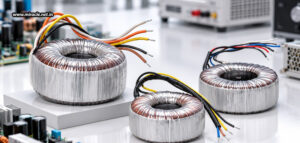

We are shifting more and more towards using gadgets and technologies in our daily lives. In parallel, we are also shifting towards more compact and lightweight devices to fit into our pockets, purses, and backpacks. This creates a challenge for designers to fit power components into limited spaces, without compromising performance. Toroidal transformers help a great deal here, owing to their compact form, efficient magnetic path, and low leakage characteristics, making them suitable for any space-constrained applications. The blog below explores whether toroidal transformers can play a larger role in the future of compact power systems.
Why compact power systems need different transformer designs
From audio devices and communication equipment to control systems, industrial electronics, and medical equipment, modern products are increasingly required to offer more functionality within smaller enclosures. Traditional transformer designs can occupy considerable space and may require additional clearance around the component. Heat generation and magnetic fields can also influence how nearby components are positioned. Toroidal transformers address many of these concerns through their compact geometry and efficient magnetic circuit. However, compact size alone is not enough. Designers must also consider power requirements, operating temperature, insulation, mounting, ventilation, and electrical safety before selecting a transformer.
Why toroidal transformers work well in compact equipment
Toroidal transformers combine efficient operation, compact construction, reduced magnetic leakage, and dependable performance, making them suitable for space-constrained equipment.
- Efficient core
The geometry of a toroidal transformer allows the magnetic core to form a continuous path with relatively little interruption. This can help the transformer operate efficiently because the magnetic flux remains largely within the core. The circular structure also allows the windings to follow the shape of the core, making efficient use of the available space. This can result in a high power-to-size ratio, helping to reduce unnecessary energy losses, while maintaining the required output performance.
- Low magnetic leakage
Stray magnetic fields from a transformer can interfere with nearby components. In a toroidal transformer, however, the closed magnetic path helps confine most of the magnetic flux within the core, reducing stray fields. Evenly distributed windings can further support controlled magnetic behaviour. This makes toroidal transformers useful in applications where minimizing electromagnetic interference is an important part of system design, particularly where sensitive electronic circuits operate in close proximity to the transformer and require stable performance.
- Thermal performance
Reducing equipment size can make thermal management more challenging. Components positioned closely together may increase heat buildup, while limited enclosure space can restrict airflow. Toroidal transformers can support thermal performance through efficient magnetic operation and lower losses when properly designed. However, designers must still consider temperature rise, transformer loading, ambient temperature, winding resistance, core losses, ventilation, and enclosure design. Proper sizing is essential, with continuous and peak power requirements considered rather than selecting the smallest available transformer.
- Weight and space advantages
Toroidal transformers offer useful power ratings while maintaining a relatively compact form. Their circular shape can be positioned in areas where conventional transformer shapes may be difficult to accommodate. Their weight can also be relatively low for the power they provide, supporting equipment designs with strict size and weight limits. This combination of shape, size, and weight makes toroidal transformers attractive for equipment where space, portability, and overall weight are carefully controlled.
- Reliability and long-term operation
Toroidal transformers can support reliable long-term operation in compact equipment by combining efficient magnetic performance with a space-saving design. Their compact construction allows them to fit into smaller enclosures without unnecessarily restricting the placement of other components. Lower stray magnetic fields and efficient operation can also help reduce thermal and electromagnetic stresses within the equipment. This makes toroidal transformers well suited for compact systems where consistent performance, limited space, and long-term reliability are important.
Selecting the right toroidal transformer
Selecting a toroidal transformer requires evaluating electrical, physical, thermal, and safety requirements together. Input and output voltages, VA rating, frequency, load characteristics, and duty cycle should be established first, followed by available space, mounting method, dimensions, weight, and clearances. Thermal conditions, including ambient temperature, ventilation, continuous loading, and expected temperature rise, must also be considered. Manufacturing quality is equally important, as core quality, winding accuracy, insulation, connections, assembly, and testing influence performance. Consistent production and electrical testing help ensure predictable characteristics and reliable operation across batches, making quality an important consideration alongside specifications when selecting transformers for professional equipment. For applications requiring compact, reliable, and efficiently designed transformers, Miracle Electronics provides toroidal transformer solutions developed with attention to electrical performance and manufacturing consistency. As a toroidal transformer exporter from India to USA, the company supports equipment manufacturers seeking dependable transformer solutions for diverse applications.
The future of compact power systems
The demand for smaller and more efficient equipment is likely to continue as electronic systems become increasingly integrated. This creates opportunities for transformer technologies that can deliver the required power within limited physical spaces. Toroidal transformers are well positioned for applications where compact construction, efficient magnetic performance, low leakage, and flexible installation are important. Their established design also allows manufacturers to adapt dimensions and electrical characteristics to different equipment requirements. At the same time, toroidal transformers are not suitable for every application. High-frequency switching power supplies, extremely high-power systems, and specialized equipment may require other transformer technologies. The future role of toroidal transformers will therefore depend on how well their characteristics match the requirements of each evolving application.
Toroidal transformers offer several characteristics that make them suitable for compact power systems, including efficient use of core material, reduced magnetic leakage, flexible construction, and useful power density. Their benefits can be especially valuable in equipment where space, thermal performance, electromagnetic interference, and low-noise operation are important. However, the transformer must be properly matched to the application’s electrical and mechanical requirements. With appropriate design, manufacturing quality, and testing, toroidal transformers can continue to serve as a practical option for compact and reliable power systems as equipment becomes smaller, more efficient, and increasingly integrated.