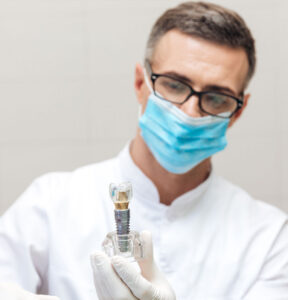

Traditional dentures and All-on-4 dental implants can both replace a full set of missing teeth, but daily life can feel very different. The biggest changes involve how the teeth stay in place, how you chew, how you clean them, and how much movement you notice while eating or speaking. The right choice depends on your oral health, bone condition, treatment goals, and comfort needs.
How They Stay in Place
Traditional dentures rest on the gums. They use the shape of the mouth and, in some cases, denture adhesive to stay in position. Movement can still happen during chewing, talking, or laughing, especially when the lower jaw is involved.
All-on-4 uses dental implants placed into the jawbone to support a fixed full-arch prosthesis. The teeth do not simply sit on top of the gums. The implants provide a stable foundation underneath the replacement teeth.
That difference can change how the teeth feel during normal activities. A person who has struggled with loose dentures may notice a very different level of stability after implant treatment.
Eating Can Feel Different
Food choices can become a practical concern after tooth loss. Traditional dentures may make certain foods harder to manage, particularly sticky, tough, or crunchy foods that require more biting and chewing. Movement of the denture can also make some people more cautious about what they eat.
Implant-supported teeth provide a more stable chewing base, although they still do not function exactly like natural teeth. Adjusting takes time, especially during the early healing period. Your dentist may recommend softer foods initially before gradually returning to a wider range of foods.
Cleaning Is Different Too
Traditional dentures are removable, so you take them out for cleaning. The gums and any remaining natural teeth also need regular care.
Fixed implant-supported teeth stay in the mouth, which changes the cleaning routine. You still need to clean around the gumline and underneath the prosthesis because food and plaque can collect in areas that are difficult to see.
Useful cleaning tools may include:
- A soft toothbrush
- An implant-safe toothpaste
- Water flossers
- Special floss or threaders
- Small interdental brushes
Your dental team can show you how to reach the areas beneath the prosthesis without damaging the gums.
What Happens to the Jawbone?
Tooth roots help stimulate the jawbone, so bone can gradually shrink after tooth loss. Traditional dentures replace the visible teeth but do not replace the roots beneath them. As the jaw changes over time, the fit and support of a removable denture may also need adjustment.
Dental implants are placed into the jawbone and act as artificial tooth roots, providing support around the implant sites and helping maintain the surrounding bone. The amount and condition of available bone still matter, so dental imaging and an oral examination are important when planning implant treatment.
The Treatment Process Is More Involved
Traditional dentures generally involve impressions, measurements, and fabrication of the denture. The process does not require implant surgery.
All-on-4 treatment involves a surgical stage. The dentist evaluates the jaw, plans implant positions, places the implants, and provides a temporary or final prosthesis based on the treatment plan.
Healing then becomes part of the process. The implants need time to integrate with the surrounding bone before the final restoration is completed when the treatment plan calls for staged restoration.
What About All-on-6?
Some patients hear about six implants and assume more implants automatically means a better result. The decision is more specific than that.
All-on-6 dental implants in Burlington, MA may be considered when the dentist believes six implants are appropriate for the patient’s anatomy, bite, available bone, and planned restoration. Implant number is only one part of full-arch treatment planning.
All-on-4 and All-on-6 both use implants to support a full arch, but the number and placement of implants differ. A clinical examination and imaging help the dentist determine which approach fits the individual case.
Dentures Can Be Easier to Remove
One clear difference is removability.
Traditional dentures can be taken out at night and removed whenever the wearer wants. Some people value this because cleaning and handling the appliance feels familiar.
A fixed implant-supported restoration is designed to remain in place. Patients cannot simply remove it at home for cleaning. That creates a different maintenance routine and makes professional follow-up important.
Neither approach creates the same experience as having natural teeth. The practical differences become clearer when you think about your daily habits, comfort, cleaning routine, and expectations.
How Long Can They Last?
Both options require maintenance.
Dentures can wear, fracture, stain, or become loose as the mouth changes. Relining, adjustment, repair, or replacement may eventually be needed.
Implant-supported restorations also need care. The implants themselves can remain functional for many years, but the prosthetic teeth and supporting components can experience wear. Good home cleaning and regular dental examinations help identify problems before they become more serious.
The condition of the gums and the tissues around the implants also matters. Implant treatment is not a one-time procedure that eliminates the need for dental care.
Which Experience Are You Looking For?
The choice becomes easier to understand when you compare the daily experience rather than focusing only on the treatment name.
Traditional dentures may appeal to someone who wants a removable option without implant surgery. All-on-4 dental implants in Burlington, MA provide a fixed full-arch option, using implants to support the replacement teeth.
A dentist may also consider factors such as:
- Remaining bone
- Gum health
- Bite forces
- Previous dental work
- Ability to maintain good oral hygiene
- Overall treatment goals
- The condition of the upper or lower jaw
These details can influence the treatment plan, so implant number alone does not determine which option is appropriate
Make the Choice Around Your Daily Life
Replacing a full set of teeth is a major decision, and the best starting point is your own mouth rather than a generic comparison chart. A dental evaluation can show how much bone is available, how your bite works, and which treatment options can realistically be considered. From there, you can compare the advantages, limitations, maintenance needs, and long-term care involved in each option.