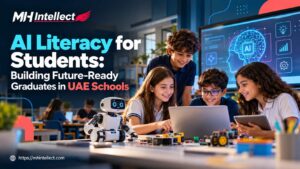

Imagine students graduating with excellent academic results but struggling to evaluate AI-generated information, solve unfamiliar problems, or apply their knowledge confidently. Are they truly prepared for the workplace? As artificial intelligence transforms industries, schools must look beyond examination performance and help learners develop practical skills, critical thinking, and responsible technology use. For school leaders in the UAE, integrating AI into meaningful learning experiences is becoming an important step towards preparing students for a rapidly changing world.
What Is AI Literacy and Why Does It Matter?
AI literacy for students means understanding how artificial intelligence works, recognising its limitations, evaluating its outputs, and using it responsibly. Students should learn that AI-generated information can contain errors or bias and must be checked rather than accepted automatically.
For schools, the goal is not simply to teach students how to use AI tools. It is to help them ask better questions, analyse information, protect personal data and make independent decisions. Understanding the Difference Between AI Literacy and AI Education can help educators plan learning experiences that develop both practical AI skills and a deeper understanding of the technology.
Why UAE Schools Need to Prioritise AI Education
Artificial intelligence is influencing sectors such as healthcare, engineering, finance, logistics and manufacturing. Students entering these fields will need more than subject knowledge; they will need to understand how technology can support decisions, improve processes and solve real-world problems.
Developing AI literacy in UAE schools can help connect classroom learning with these changing expectations. School administrators and academic coordinators can begin by integrating AI concepts into existing subjects, rather than treating them as occasional workshops or isolated technology activities.
Effective AI education for schools should also be age-appropriate. Younger learners can explore patterns and logical instructions, while older students can investigate data, machine learning concepts, ethical challenges and practical AI applications.
How AI-Integrated STEM Education Builds Practical Skills
Students understand technology more deeply when they use it to investigate questions and create solutions. Robotics, coding, engineering challenges and sensor-based projects provide opportunities to experiment, analyse results and improve designs. This is where AI integrated STEM Education becomes valuable: it connects scientific knowledge with practical applications and encourages students to learn through experience.
Schools can develop these capabilities through activities such as:
- Critical thinking: Evaluate AI-generated answers, identify inaccuracies and verify information using reliable evidence.
- Problem-solving: Design and test robotic systems or engineering prototypes to address practical challenges.
- Collaboration: Work in teams, communicate ideas and explain project decisions.
- Responsible AI use: Explore privacy, bias, academic integrity and ethical technology practices.
- Adaptability: Refine solutions after testing, learn from unsuccessful attempts and improve outcomes.
The guide on How AI Is Transforming STEM Education explains how combining AI concepts with hands-on STEM activities can create more meaningful learning experiences.
Integrating AI Into the School Curriculum
Successful implementation requires clear learning objectives, teacher preparation and opportunities for progressive skill development. Schools can introduce foundational concepts in primary grades and gradually advance towards coding, robotics, data analysis and AI-related projects in secondary education.
Teachers play a central role in this process. They need appropriate training, curriculum resources and assessment methods to help students understand the reasoning behind their work. Instead of assessing only whether a project functions correctly, schools should also evaluate students’ ability to explain their decisions, identify mistakes and improve their solutions.
With structured planning, Future ready graduates UAE schools aim to develop can combine technological awareness with creativity, communication, critical thinking and responsible decision-making.
How MH Intellect Supports Future-Ready Learning
MH Intellect partners with schools to integrate AI, robotics, coding and practical STEM learning into structured educational programmes. Through curriculum planning, teacher development and hands-on implementation, schools can create learning pathways that support students across different grade levels and connect classroom concepts with real-world applications.
Prepare Your Students for Tomorrow’s Opportunities
Building future-ready graduates requires more than introducing new technology. It requires a clear educational strategy that develops practical skills, independent thinking and responsible AI use. Book a free consultation with MH Intellect to explore how your school can integrate AI and STEM learning into its curriculum and prepare students for the opportunities ahead.