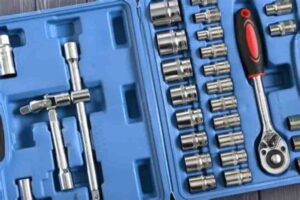

Socket sets are essential in any workshop, from automotive repair bays to industrial maintenance floors. A well-chosen set improves efficiency, reduces tool wear, and helps technicians tackle a wider range of tasks with confidence. This guide explains how socket sets work, what to look for when buying them, and how to use them safely and effectively.
Understanding What a Socket Set Includes
A socket set is a collection of sockets and accessories designed to tighten or loosen fasteners. While sets vary, most include:
Ratchets. The ratchet provides the turning action. Common drive sizes are 1/4″, 3/8″, and 1/2″. Smaller drives suit light work and tight spaces; larger drives handle higher torque.
Sockets. These are the core of the set. They come in many shapes and profiles to match different fasteners:
Six-point and twelve-point sockets: Six-point sockets grip flats more securely for higher-torque work. Twelve-point sockets fit in more positions and speed up lighter tasks.
Deep and shallow sockets: Shallow sockets are compact and efficient. Deep sockets reach nuts on long bolts and give more clearance.
Extensions and adapters. Extensions help reach recessed fasteners. Adapters let you switch between drive sizes when needed.
Specialty sockets. Many professional sets include Torx, spline, or impact-rated sockets for advanced applications. If you work in automotive or machinery repair, these are often worth the investment.
Key Factors When Selecting Socket Sets
Choosing the right set starts with aligning it to the work you do. The points below will help you narrow the options.
1. Drive Size Coverage
Most technicians rely on at least two drive sizes. For general mechanical work, a 3/8″ drive offers the best balance of strength and reach. If you handle heavy equipment or larger fasteners, add a 1/2″ drive. For electronics or small engines, a 1/4″ drive is useful. Many complete socket sets now include all three, which reduces tool mismatches on the job.
2. Material and Build Quality
Socket sets made from high-grade chrome vanadium or chrome molybdenum steel resist wear and corrosion. Look for clean machining, smooth chrome plating, and clear markings. Heat-treated sockets maintain their shape under torque, which matters when a stuck nut demands extra force. For impact tools, only use impact-rated sockets; regular chrome sockets can crack under the load.
3. Range of Sizes
A broad size range prevents mid-task interruptions. Metric sizes are essential for modern vehicles and equipment, while SAE sizes remain common in older machinery, construction tools, and certain regional markets. Professionals who work on mixed fleets should consider a dual-standard kit that covers both metric and SAE.
4. Ratchet Design
A good ratchet improves speed and reduces fatigue. Look for:
Fine-tooth mechanisms (72-tooth or higher) for tight spaces.
Quick-release buttons for fast socket changes.
Comfortable handle shape for long work sessions.
5. Case and Organization
In busy shops, losing sockets is common and costly. A well-designed case with labeled slots keeps every piece visible and secure. Metal cases offer durability, while molded plastic cases reduce weight and help prevent rattling during transport.
How to Use Socket Sets Effectively
A durable socket set is only as good as the person using it. Here are practical habits that extend tool life and improve results.
Use the Right Socket for Each Task
Match the socket size to the fastener. A loose fit rounds bolts and damages sockets. For stubborn or high-torque work, choose a six-point socket. When using an impact wrench, always switch to impact sockets.
Apply Steady, Controlled Force
Ratchets are built for controlled turning, not breaking bolts loose. If a fastener is frozen, use a breaker bar instead. This protects the ratchet’s internal gears. When tightening, pull rather than push when possible; it reduces the chance of slipping and injuring your hand.
Keep Sockets Clean and Inspected
Dust, metal chips, and oil reduce accuracy and cause premature wear. Wipe sockets after use, and inspect them for cracks, chips, or worn corners. Retire damaged pieces immediately. Storing the set in its case prevents mix-ups and keeps torque output consistent.
Use Torque Specifications When Required
In applications such as automotive assembly, machinery repair, and structural fastening, torque matters. Use a torque wrench once the fastener is snug. The socket from your set will provide the interface, but the torque wrench ensures the correct clamping force.
Matching Socket Sets to Professional Needs
Professionals often buy socket sets based on industry requirements:
Automotive technicians: Need metric and SAE, deep and shallow sockets, spark plug sockets, and a mix of drive sizes. Impact-rated options are critical if air or electric impact tools are used.
Industrial maintenance crews: Often prioritize durability, full-size ranges, and specialty profiles like Torx or spline. Corrosion-resistant finishes matter in harsh environments.
Construction and heavy equipment mechanics: Require strong sockets for large, high-torque fasteners. High-quality 1/2″ and 3/4″ drive sets are common, along with impact sockets designed for rugged daily use.
Choosing Socket Sets That Deliver Reliability
Socket sets are long-term investments. The right set improves workflow, reduces the chance of fastener damage, and provides confidence when tackling demanding tasks. When evaluating sets, focus on the essentials: drive size coverage, material quality, range, ratchet design, and how well the set stays organized. With these principles, you can select a socket set that performs reliably across any global work environment.
Article by: toko baut& mur – https://tokohasil.com