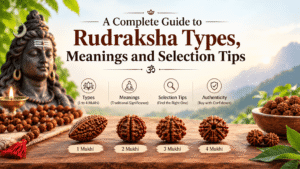

Rudraksha has been closely connected with Indian spiritual traditions for centuries. These naturally occurring seeds are traditionally associated with Lord Shiva and are commonly used for meditation, prayer, chanting, and devotional practices. Today, Rudraksha is also appreciated by people who are interested in Indian culture, spiritual symbolism, and natural spiritual products.
One of the most interesting features of a Rudraksha bead is its natural face pattern. These faces are called mukhi, and the number of natural lines helps identify different varieties. Each category has its own traditional meaning and is connected with particular spiritual ideas.
For beginners, learning about these varieties can make the selection process easier and more meaningful.
Understanding the Meaning of Mukhi
The word “mukhi” refers to the natural divisions or clefts visible on a Rudraksha seed. These lines usually extend from one end of the bead toward the other. The number of natural divisions determines its traditional classification.
Rudraksha varieties can range from one Mukhi to higher counts, with each category having different traditional associations. The first four varieties are especially useful for beginners because they introduce several important themes found in Rudraksha traditions.
The meanings associated with these beads come from religious and cultural traditions. They should therefore be viewed as spiritual symbolism rather than scientifically proven effects.
1 Mukhi Rudraksha
The 1 Mukhi Rudraksha is traditionally connected with Lord Shiva and is considered highly significant in many spiritual traditions. It is commonly associated with concentration, unity, inner awareness, and a focused spiritual approach.
The concept of one face represents a sense of singularity and focused awareness. For people who practice meditation, prayer, or self-reflection, this symbolism can be especially meaningful.
Authenticity is an important consideration when purchasing this variety. Genuine examples can be difficult to identify, so buyers should carefully research the seller and ask for relevant authenticity information where available.
Instead of selecting this bead simply because it is considered rare or powerful, it is better to understand its traditional significance and decide whether that symbolism fits your personal spiritual practice.
2 Mukhi Rudraksha
The 2 Mukhi Rudraksha is traditionally associated with Ardhanarishvara, representing the union of Shiva and Shakti. Its central theme is harmony between complementary forces.
This makes the bead symbolically connected with balance, unity, cooperation, and relationships. It can be meaningful for people who want to reflect on harmony within their personal lives.
Balance can also be interpreted on an individual level. Modern life often requires people to manage work, relationships, responsibilities, and personal well-being at the same time. The traditional symbolism of this bead can serve as a reminder to maintain equilibrium between different areas of life.
For spiritual practitioners, it may become part of a meditation or prayer routine focused on peace and harmony.
3 Mukhi Rudraksha
The 3 Mukhi Rudraksha is traditionally associated with Agni, the sacred fire. In Indian spiritual traditions, fire represents purification, transformation, energy, and renewal.
Its symbolism is therefore often connected with leaving behind old patterns and moving toward a fresh beginning. People who are going through a period of personal change may find this traditional meaning particularly relevant.
The idea of transformation does not necessarily mean changing external circumstances. It can also represent changing one’s thoughts, habits, attitudes, and approach to challenges.
Used as part of a spiritual routine, the bead can act as a reminder to develop confidence, discipline, and the willingness to move forward.
4 Mukhi Rudraksha
The 4 Mukhi Rudraksha is traditionally associated with Lord Brahma and is connected with knowledge, learning, creativity, communication, and intellectual development.
This makes its symbolism particularly relevant to students, teachers, writers, speakers, artists, and anyone who values learning.
Knowledge is an important part of personal growth, and this variety can symbolically represent the continuous search for understanding. It can also serve as a reminder to communicate clearly and use knowledge responsibly.
For someone beginning meditation or spiritual reflection, this traditional association can provide an additional theme for contemplation.
Comparing the Four Varieties
Understanding the basic differences between the four varieties can make selection easier.
|
Rudraksha Type |
Traditional Association |
Common Symbolism |
|
1 Mukhi |
Lord Shiva |
Focus, unity, spiritual awareness |
|
2 Mukhi |
Ardhanarishvara |
Harmony, balance, unity |
|
3 Mukhi |
Agni |
Transformation, purification, renewal |
|
4 Mukhi |
Lord Brahma |
Knowledge, creativity, communication |
These descriptions represent traditional beliefs and symbolism. They should not be interpreted as guarantees of specific physical, financial, or personal outcomes.
How to Select a Rudraksha
Selecting a Rudraksha involves more than counting the lines on its surface. Buyers should consider several factors before making a decision.
1. Identify Your Purpose
Start by asking why you want the bead. Your purpose may be meditation, prayer, spiritual practice, cultural interest, or simply appreciation of its natural appearance.
2. Learn Its Traditional Meaning
Once you understand your purpose, explore the traditional significance of the relevant mukhi. This gives you a stronger foundation for making a thoughtful choice.
3. Check Natural Formation
The mukhi lines should appear naturally formed. Be cautious of beads where the lines look artificially carved or unusually modified.
4. Verify Authenticity
Authenticity is particularly important for rare or expensive varieties. Choose sellers who provide transparent product information and appropriate verification whenever available.
5. Examine Quality
Look at the bead’s overall condition, texture, shape, and surface. Avoid products with unexplained damage or excessive alterations.
How to Buy Rudraksha Responsibly
The popularity of Rudraksha has created a large market with many different sellers. This makes it important for buyers to compare products carefully.
Do not make a purchase solely because a product description uses words such as “miracle,” “guaranteed,” or “100% powerful.” Traditional significance should not be confused with guaranteed results.
A trustworthy seller should provide useful information about the product instead of relying entirely on exaggerated claims. Clear photographs, specifications, authenticity details, and care instructions can make the buying experience more reliable.
Price should also be considered carefully. An unusually cheap product marketed as a rare variety deserves additional verification.
Wearing Rudraksha
Many people traditionally wear Rudraksha as a mala, necklace, bracelet, or pendant. Others prefer to keep the bead in a meditation or prayer space.
The method of wearing or using Rudraksha can vary according to family traditions, spiritual teachers, and regional customs. There is no single approach followed by everyone.
If you are new to Rudraksha, learning about the tradition behind the bead can help you choose a method that is comfortable and respectful of your personal beliefs.
Rudraksha and Meditation
Meditation is one of the common spiritual practices associated with Rudraksha. A bead or mala can become part of a regular meditation routine by providing a physical point of focus.
Some practitioners use a mala while repeating a mantra. Moving from one bead to another creates a structured rhythm that can help maintain attention during the practice.
The value of such a practice often comes from consistency and personal intention rather than from the physical object alone.
Caring for Your Rudraksha
Natural seeds require reasonable care to maintain their appearance and structure. Avoid exposing Rudraksha unnecessarily to harsh chemicals, perfumes, or abrasive cleaning products.
If you wear a bead regularly, check its thread or setting from time to time. This can reduce the risk of accidental damage or loss.
When storing it, choose a clean and dry location. Gentle handling is usually preferable to aggressive cleaning or polishing.
Rudraksha as a Meaningful Gift
Rudraksha can make a thoughtful traditional gift for someone who appreciates spirituality, meditation, Indian culture, or devotional practices.
When selecting one as a gift, consider the recipient’s beliefs and interests. Including information about its traditional symbolism can make the gift more personal.
Rather than presenting the bead as something that guarantees a particular result, it is more respectful to explain its cultural and spiritual significance.
Important Things to Remember
Before purchasing any Rudraksha, keep a few basic principles in mind:
- Understand the traditional meaning of the variety.
- Check the natural mukhi formation.
- Research the seller before purchasing.
- Ask about authenticity when appropriate.
- Avoid exaggerated promises and guaranteed-result claims.
- Consider the bead’s quality and overall condition.
- Follow care instructions to protect the natural seed.
- Use spiritual products alongside, not instead of, appropriate professional advice when dealing with medical, financial, or other serious matters.
Final Thoughts
Rudraksha represents an interesting combination of natural beauty, spirituality, history, and Indian cultural traditions. The different mukhi varieties offer distinct symbolic meanings, allowing people to choose according to their personal beliefs and interests.
The first four varieties provide a useful starting point for beginners. Their traditional themes of focus, harmony, transformation, knowledge, and creativity can make them meaningful additions to meditation or devotional practices.
Whether you are exploring Rudraksha for the first time or adding another bead to your collection, informed selection is always better than making a decision based only on popularity. Learn about the tradition, verify the product, understand its symbolism, and choose something that genuinely fits your personal spiritual journey.