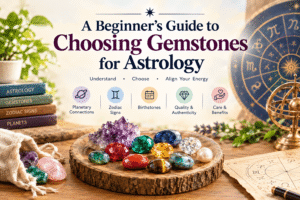

Gemstones have been admired for centuries for their beauty, colors, rarity, and cultural significance. In many traditions, people also associate particular stones with planets, zodiac signs, and birth dates. This has made gemstone selection an interesting subject for anyone exploring astrology and traditional spiritual practices.
For beginners, however, choosing a suitable stone can be confusing. There are many varieties available, and different astrological traditions may recommend different stones. Understanding the basic principles can make the process easier and help you make a more informed choice.
What Are Astrological Gemstones?
The term astrological gemstones generally refers to natural stones that traditional astrological systems associate with particular planets. In Vedic astrology, for example, certain gemstones are traditionally connected with the nine planetary influences known as the Navagraha.
Ruby is traditionally associated with the Sun, while pearl is linked with the Moon. Red coral is associated with Mars, emerald with Mercury, yellow sapphire with Jupiter, diamond with Venus, blue sapphire with Saturn, and hessonite and cat’s eye are traditionally connected with Rahu and Ketu.
These associations come from traditional beliefs and astrological systems rather than modern scientific evidence. People interested in these practices may choose gemstones as symbolic or spiritual objects.
Understanding Planetary Associations
Before selecting a gemstone, it is helpful to understand why particular stones are connected with planets. In traditional astrology, planets are believed to represent different qualities and areas of life.
For example, the Sun is commonly associated with confidence and leadership, while Mercury is connected with communication and intellect. Venus is traditionally linked with beauty, relationships, and creativity. Jupiter is associated with wisdom, learning, and prosperity.
These traditional associations are one reason people research astrology gemstones before making a purchase. Learning the background of a gemstone can help you understand its cultural significance and why it is recommended in particular astrological practices.
Choosing a Gemstone Carefully
Choosing a gemstone should involve more than simply selecting a beautiful color. If you are following an astrological tradition, the recommendation may depend on factors such as your birth chart, planetary positions, zodiac sign, and other personal astrological details.
Some practitioners recommend consulting a qualified astrologer before selecting a planetary gemstone. This can help you understand the traditional reasoning behind a recommendation rather than choosing a stone based only on its popularity.
It is also important to consider the physical quality of the gemstone. Color, clarity, cut, carat weight, treatments, and origin can all affect its appearance and value.
Popular Gemstones and Their Traditional Meanings
Different stones have different histories and associations. Ruby is valued for its rich red color and is traditionally connected with the Sun. Emerald is known for its vibrant green appearance and is associated with Mercury.
Yellow sapphire is traditionally connected with Jupiter, while blue sapphire has a long-standing association with Saturn. Diamond is traditionally linked with Venus and is also one of the most recognized gemstones in jewelry.
When exploring gemstones for astrology, beginners should research each stone carefully instead of relying on general claims about its supposed effects. A gemstone’s traditional meaning can vary depending on the astrological system and cultural context.
Birthstones and Zodiac Connections
Another popular approach is choosing a gemstone based on your birth month. Birthstone traditions provide a simple way for beginners to explore gemstones without needing a detailed astrological chart.
For example, garnet is traditionally associated with January, amethyst with February, aquamarine with March, and diamond with April. Different cultures and modern jewelry organizations may use slightly different lists, so it is worth checking the particular birthstone tradition being followed.
People may also explore birth gemstones based on their zodiac sign. However, zodiac gemstone lists can vary, so there is no single universal system. Checking the source behind a recommendation is a good way to avoid confusion.
How to Buy Quality Gemstones
When purchasing a gemstone, authenticity should be one of your main considerations. Natural stones can vary in color, clarity, inclusions, and appearance, so some variation is completely normal.
Ask sellers for clear information about whether a stone is natural, synthetic, treated, or imitation. For valuable gemstones, a reputable laboratory certificate can provide additional information about authenticity and characteristics.
Avoid making a purchase based solely on promises of guaranteed results. Traditional gemstone practices are based on cultural and spiritual beliefs, and there is no scientific evidence that gemstones can treat medical conditions or guarantee specific life outcomes.
Caring for Your Gemstones
Proper care can help maintain the beauty of your gemstones. Different minerals have different levels of hardness and may react differently to chemicals, heat, water, or sunlight.
Store gemstones separately when possible to prevent scratches. Clean them according to the requirements of the particular mineral, and avoid harsh chemicals unless they are specifically considered safe.
If your gemstone is set in jewelry, inspect the setting occasionally to make sure the stone remains secure.
Final Thoughts
Exploring gemstones through astrology can be a fascinating way to learn about traditional beliefs, minerals, jewelry, and cultural history. Whether you are interested in planetary associations, zodiac traditions, or birth-month stones, taking time to research your options can help you make a thoughtful choice.
Focus on authenticity, quality, proper care, and reliable information. Most importantly, remember that astrological gemstone practices are matters of tradition and personal belief rather than scientifically established methods of predicting or changing life outcomes.