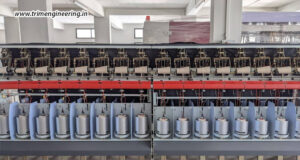

TFO twisting machines require the yarn to be wound and twisted continuously at high speeds, making the design and quality of the yarn-carrying component (TFO cops) particularly important. The dimensions, geometry, material, surface finish, and structural stability of the TFO cop can all influence how the yarn behaves during twisting. A well-designed cop creates a controlled yarn path and reduces unnecessary disturbances during processing. On the other hand, inconsistencies in cop design can contribute to tension fluctuations, yarn breakage, uneven twisting, and production interruptions. Understanding the relationship between TFO cop design and yarn quality can help make better decisions for high-speed twisting operations.
Understanding the role of TFO cops in TFO machines
TFO cops are responsible for holding the yarn package, from where it unwinds and travels through the twisting system. However, the speed is very high and the yarn is expected to unwind and travel along without any resistance or sudden changes in tension. This makes it very important for the cop to provide the right kind of physical support for the yarn. It is also important for the cop to facilitate smooth yarn unwinding, consistent yarn tension, stable yarn movement, reliable operation at high speeds, and minimal friction and interference.
- Smooth yarn unwinding
As the yarn leaves the package and enters the twisting zone, the movement is required to remain smooth throughout the process. Any inconsistency in the design or geometry of the TFO cop can introduce resistance or irregular movement, thus affecting the overall outcome of the yarn. But, when the design and geometry are consistent, it enables smooth unwinding that reduces the possibility of yarn snarling, breakage, and irregular twist insertion. A properly finished surface can also minimize unwanted interaction between the yarn and the cop, helping the yarn move consistently during continuous operation.
- Consistent yarn tension
If yarn tension varies significantly while the yarn is being processed, the resulting yarn may show differences in twist, structure, or other physical characteristics. Although TFO cop design cannot control the entire tension system on its own, but it forms an important part of the yarn delivery path. The cop’s dimensions, surface properties, package support, and overall geometry can all influence how consistently yarn leaves the package. Consistent yarn tension means more uniform twist, reduced yarn breakage, better yarn consistency, and improved package quality.
- Stable yarn movement at high speeds
TFO machines are designed for high-speed production, which means the components operating within them are exposed to significant rotational forces. An unstable or poorly balanced cop at such high speeds can contribute to vibration, which can in turn affect machine performance, and create disturbances in yarn delivery. A well-engineered TFO cop should provide adequate structural strength, balanced rotation, and resistance to deformation. The ability of the cop to maintain its shape and balance throughout operation therefore contributes indirectly to yarn consistency and machine reliability.
- Minimal friction and interference
As the yarn unwinds from the package, unnecessary contact with the cop can create friction, drag, or interruptions in its movement. A properly designed TFO cop should therefore provide a smooth yarn path with minimal points of interference. Appropriate surface finish, dimensional accuracy, and suitable geometry can help reduce unwanted contact as the yarn passes through the twisting system. This allows the yarn to move freely and consistently, reducing the chances of abrasion, tension fluctuations, yarn damage, and interruptions during high-speed operation.
Importance of dimensional accuracy in TFO cops
Any variations in the dimensions of the cop can affect balance, yarn movement, and compatibility with the twisting machine. The cop’s diameter, length, wall thickness, and other geometric features thus need to be precisely considered for proper machine fitment. When all these dimensions are accurate, it results in predictable yarn unwinding, better machine compatibility, improved rotational stability, and consistent package positioning. Moreover, when multiple TFO cops are used across a production line, dimensional consistency becomes even more important. Uniformly manufactured cops are crucial to ensure that the machine encounters similar operating conditions from one package to another. This repeatability supports consistent production and reduces the likelihood of variation caused by the component itself.
Importance of surface finish in TFO cops
The surface of a TFO cop comes into contact with the yarn package and can influence how smoothly the yarn is released during high-speed operation. An unsuitable, rough, or inconsistent surface may create additional friction, interfere with yarn movement, or cause irregular yarn release. This can contribute to tension fluctuations, yarn abrasion, and interruptions during the twisting process. A properly engineered surface, therefore, plays an important role in maintaining a controlled yarn path. Consistent surface finish and appropriate material properties help reduce unnecessary friction between the cop and the yarn package, allowing the yarn to unwind with minimal resistance. This supports smoother yarn movement, reduces the possibility of yarn damage, and helps maintain consistent tension. As a result, the cop can contribute to better yarn integrity, reliable operation, and improved process consistency
Importance of material selection in TFO cops
The material used to manufacture TFO cops needs to provide the right combination of strength, dimensional stability, weight, and durability for high-speed textile applications. Since the cop operates continuously under demanding conditions, the material should maintain its shape and mechanical properties without excessive deformation or wear. Engineering polymers and other suitable materials can offer advantages such as lightweight construction, adequate mechanical strength, dimensional stability, and resistance to repeated operational stresses. Lower weight can also support stable operation by reducing unnecessary rotational forces, while good dimensional stability helps maintain consistent geometry throughout the cop’s service life. The material should also have sufficient surface durability to withstand regular contact with yarn packages and repeated handling. Selecting a suitable material therefore contributes to reliable cop performance, consistent yarn movement, longer service life, and dependable operation in high-speed TFO processes.
Choosing TFO cops for different yarn applications
Not every yarn application has the same requirements, making it important to select TFO cops according to yarn type and count, machine specifications, operating speed, dimensions, material, surface finish, and service conditions. Fine yarns may require smoother surfaces and precise dimensions for controlled unwinding, while stronger synthetic or technical yarns may demand greater structural strength and durability. Manufacturing precision is equally important, as dimensional tolerances, surface finish, material consistency, and overall geometry can directly influence cop performance at high speeds. Trim Engineering, a trusted TFO COPS manufacturer in India, focuses on dimensional accuracy, material quality, and consistent construction to support dependable performance across demanding textile applications. Properly selected and consistently manufactured cops can reduce process variation, support stable yarn movement, and contribute to reliable long-term machine operation.
The design of TFO cops can significantly influence yarn quality and production efficiency. Although TFO cops are relatively simple compared with the machinery around them, their dimensions, surface finish, material, balance, and structural stability contribute to reliable yarn delivery. A precision-engineered TFO cop supports smooth unwinding, stable tension, consistent machine operation, and reduced risk of yarn breakage. Together, these factors help maintain uniform twisting and dependable production at high speeds. For textile manufacturers, the right TFO cop is therefore more than a basic bobbin or tube. Selecting well-designed and consistently manufactured TFO cops can support greater process stability, improved yarn consistency, and efficient high-speed textile production.