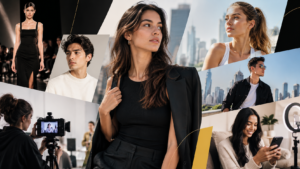

Ten years ago, a model could build a pretty decent career doing one thing well. Print, runway, maybe the odd catalog job. That world is mostly gone now.
Brands want more. They want the same face on a billboard, in a 15 second TikTok ad, on a product page, and at a launch party on a Thursday night. And they want that person to “just get it” without a lot of hand holding. Honestly, that’s a big ask, especially if you’re new.
So what does a model actually need these days? Let’s get into it.
Understanding What Modern Clients Need
Here’s what a week can look like now. Tuesday is a clean e-commerce shoot, sixty outfits, same angle, same smile. Thursday is a lifestyle campaign in a Brooklyn apartment where the photographer keeps saying “less posed, more real.” Saturday, maybe a quick product video.
Three jobs. Three totally different mindsets.
Editorial wants drama and attitude. Commercial wants you to look like someone’s cool cousin. E-commerce wants you to hit the exact same mark 200 times without looking bored. Video wants you to move, and move well, over and over.
The models who do well aren’t necessarily the prettiest ones in the waiting room. They’re the ones who figured out what kind of job they were walking into before they walked in.
Versatility Has Become Increasingly Valuable
People hear “versatile” and think it means being good at everything. It doesn’t. Nobody is.
It’s more like having range. Can you soften up for a skincare ad after doing something edgy the week before? Can you handle a video set without freezing up? If yes, you’re simply more bookable. That’s just math.
And you can practice this stuff. Next time you do a test shoot, don’t do the same five poses you always fall back on. Ask the photographer to push you. Try a moody look, then a goofy one. Shoot outside, shoot in a tiny room, shoot in bad light. Weird little creative projects with friends count too. They add up faster than you’d think.
Camera Presence Is About More Than Posing
Anyone can learn to pop a hip and find their light. That part’s teachable in an afternoon.
What’s harder is feeling something and letting the camera catch it. Clients aren’t paying for a pose. They’re paying for a mood. Maybe it’s “confident Monday morning.” Maybe it’s “lazy Sunday with coffee.” Your job is to become that for a few seconds.
One trick that genuinely works: go back through your old photos and be brutally honest. Where do your hands look stiff? When does your smile stop reaching your eyes? You’ll spot patterns pretty quick.
Also, and this surprises a lot of new models, you don’t need to show up with everything planned. Photographers usually prefer someone who listens and adjusts over someone running through a rehearsed routine.
Video Skills Are Becoming More Important
This is probably the biggest shift of the last few years. So much work is video now.
You might be asked to walk toward the camera, glance to the side, pick up a bottle, laugh at something off screen, then do it all again. And again. Take nine needs to feel as fresh as take one.
That’s a very different muscle than photography. A photo only needs one good moment. Video needs a whole string of them.
If being on camera makes you cringe (totally normal, by the way), start small. Film yourself walking across your room on your phone. Watch it. Wince. Do it again. After a week or two you’ll notice things, like how turning your head a bit slower suddenly looks way more polished.
Professionalism Still Matters
None of the flashy new stuff matters if you’re late.
Seriously. Be on time, bring what they asked you to bring, be nice to the assistants, and answer your agent’s texts the same day. Sets run on tight budgets and tighter schedules. One person holding things up costs real money, and people remember.
There’s a bunch of boring behind the scenes stuff too. Confirming dates. Sending updated digitals when your hair changes. Reading the call sheet properly so you don’t show up to the wrong location. Nobody posts about this on Instagram, but it’s half the job.
A reputation for being easy to work with will get you rebooked more than any single great photo.
Social Media Has Added Another Dimension
These days, a lot of clients will look you up before they book you. Not always for follower count. Mostly just to get a sense of who you are.
So, quick gut check: does your feed look like the kind of model you want to be? If you want commercial beauty work and your page is mostly blurry party pics, that’s a mismatch.
You don’t need to post daily or become an influencer. Please don’t burn yourself out trying. But a few behind the scenes clips, some recent work, maybe a glimpse of your personality? That gives a client way more to go on than a portfolio alone.
Think of it as a second, more casual portfolio.
Understanding Different Types of Modeling
A lot of newer models don’t realize how many lanes there actually are. Editorial. Runway. Commercial. Fitness. Lifestyle. E-commerce. Beauty. Real people campaigns, which have exploded lately.
Each one has its own vibe and its own expectations.
Maybe you’re not built for runway, and that’s fine. Maybe you light up holding a product and talking to the camera, which makes commercial a natural fit. Maybe you love the artsy side and editorial is where you come alive.
Most people don’t figure this out right away. They try a few things, some flop, some feel great. That’s kind of the point.
Learning to Take Direction
“Chin down a little. No, too much. Okay, back up. Perfect, now more energy but keep it relaxed.”
If that sentence stressed you out, welcome to modeling.
Direction on set is constant and sometimes contradictory. The photographer wants one thing, the client standing behind them wants something slightly different, and the stylist is fixing your collar mid shot. The models who do well are the ones who stay calm and just keep adjusting.
Nobody expects you to nail it instantly, especially early on. They just want to see you’re paying attention and actually trying. Do that, and you stop being “the model” and start feeling like part of the team.
Building a Career Through Continuous Development
There’s no finish line here. Even models who’ve been working for years are still learning new things, updating their books, trying new types of jobs.
Having the right agency behind you helps. W Talent NYC, for instance, works with talent across modeling, acting, and other areas of entertainment, which is a good reminder of how wide the options really are once you start looking beyond one category.
If you’re starting out, try not to get distracted chasing every trend. Trends change every six months. What doesn’t change? Showing up prepared. Being easy to talk to. Handling feedback without sulking. Being flexible. Those skills will still be useful long after this year’s hot aesthetic is forgotten.
Looking Ahead
The industry isn’t slowing down. Campaigns keep getting more mixed, platforms keep changing the rules, and clients keep asking for more from the people they book.
That sounds intimidating, and it kind of is. But it also means there are more ways in than ever before. Your career might end up being half video and half print. Or mostly commercial with some social content on the side. Or something that doesn’t even have a name yet.
The models who’ll be fine are the curious ones. The ones who keep learning, take notes seriously, stay professional, and don’t panic when things change. Because things will change. That part’s guaranteed.