
Ever get up after sitting for a few hours and feel like your whole body needs a good stretch? Tight hips, stiff shoulders, and an achy back can build up surprisingly quickly.
Long hours at a desk, regular workouts, repetitive movements, driving, and even normal daily routines can leave certain muscles feeling tight. Over time, that stiffness can affect how comfortably you bend, reach, turn, or move through your day.
Stretch massage therapy combines hands-on massage with guided stretching to work on both muscle tension and movement. It can be a useful addition to a wellness routine for people who want to improve flexibility, maintain mobility, or simply feel less stiff.
What Is Stretch Massage Therapy?
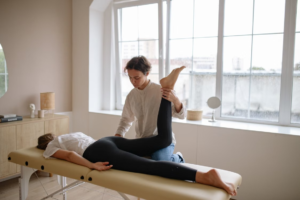
Stretch massage combines traditional massage techniques with passive or assisted stretching.
During a session, the therapist works on areas of muscle tension while also guiding parts of your body through controlled stretches. Unlike stretching on your own, assisted stretching allows you to stay relatively relaxed while the therapist helps control the movement.
A session may include:
- Hands-on massage
- Passive or assisted stretches
- Controlled movements
- Targeted work on tight muscles
- Mobility-focused techniques
The amount of stretching can vary from person to person. Someone who exercises regularly may have different goals from someone dealing with stiffness after sitting at a desk all day.
Elite Massage Therapy personalizes sessions based on areas of tightness, flexibility, range of motion, and individual comfort.
Potential Benefits of Stretch Massage
Stretch massage isn’t about pushing your body as far as it can go, but controlled, comfortable movement while giving tight muscles some extra attention.
Supports Flexibility
Flexibility refers to how well muscles and surrounding tissues can lengthen during movement. When certain areas become tight, everyday motions can start to feel restricted.
Assisted stretching moves muscles through a controlled range while the therapist helps support the position. This can be especially useful for areas that may be difficult to stretch effectively on your own.
Regular flexibility work can also complement activities such as walking, strength training, running, yoga, and other forms of exercise.
Helps Relieve Muscle Tightness
Muscle tightness can develop for plenty of reasons. You might sit in the same position for hours, repeat the same movements at work, or use certain muscle groups heavily during exercise.
Common problem areas include:
- Neck and shoulders
- Lower and upper back
- Hips
- Hamstrings
- Calves
Massage focuses directly on tense muscles, while assisted stretching introduces movement into those areas. Using both techniques during the same session may help the body feel less stiff and restricted afterward.
Supports Range of Motion
Flexibility and range of motion aren’t exactly the same thing, but they work closely together.
Range of motion describes how far a joint can comfortably move in a particular direction. Reaching overhead, turning your head, bending at the hips, and taking a full stride all rely on comfortable movement through the joints and surrounding tissues.
Stretch massage can support mobility by combining muscle work with controlled movement. For active people, this can complement regular exercise and mobility training.
Promotes Relaxation
You don’t need a specific flexibility goal to enjoy stretch massage.
Massage techniques can help create a relaxing experience while addressing areas that feel tense after a long day or busy week. Assisted stretching can also provide a gentle way to move muscles without having to actively hold every stretch yourself.
This combination can make stretch massage useful for people looking for both relaxation and mobility-focused bodywork.
Supports Joint Mobility
Joints don’t move on their own. Muscles, tendons, ligaments, and other surrounding tissues all play a role in comfortable movement.
Gentle stretching can move the body through different ranges of motion while the therapist monitors how each movement feels.
The goal should never be to force a joint farther than it comfortably wants to go. Stretching should feel controlled, and any sharp pain or excessive discomfort should be communicated immediately.
Elite Massage Therapy lists flexibility, muscle tension release, joint mobility, and enhanced blood flow among the intended benefits of its stretch massage service.
Who May Consider Stretch Massage?
You don’t have to be an athlete or naturally flexible to consider stretch massage. People with very different routines may find mobility-focused bodywork useful.
Office Workers
Sitting for hours can leave certain areas feeling stiff, particularly the hips, back, neck, and shoulders.
Your body may stay in roughly the same position while you’re working, especially if you’re focused on a computer for most of the day. Stretch massage introduces movement and gives the therapist an opportunity to focus on areas that regularly feel tight.
It works well alongside simple habits such as standing periodically, walking during breaks, and changing positions throughout the day.
Active Individuals
Exercise is good for the body, but repeated training can also leave heavily used muscles feeling tight.
Runners may notice it in their calves, hamstrings, or hips. Lifters may feel tightness through the shoulders, chest, or back. Different sports can create their own patterns of tension depending on the movements involved.
Stretch massage can complement an active routine by adding dedicated flexibility and mobility work. It can also be included alongside rest, appropriate exercise, hydration, and other recovery habits.
People With Everyday Muscle Tightness
Sometimes stiffness doesn’t come from a workout or a specific injury.
Driving for long periods, standing all day, carrying bags, doing physical work, or repeating the same movements can all leave muscles feeling tight.
Stretch massage allows the therapist to focus on those areas while introducing gentle movement into the session.
Individuals Looking to Improve Mobility
Improving mobility doesn’t mean trying to become as flexible as possible overnight.
Small, gradual changes are usually a much more practical goal. A therapist can adjust stretches to your current range instead of forcing your body into positions that don’t feel comfortable.
Consistency also matters. Regular movement and gentle flexibility work are generally more useful than doing an intense stretching session every few weeks and ignoring mobility in between.
Stretch Massage vs. Traditional Massage
Stretch massage and traditional massage overlap in some areas, but the experience can feel quite different.
|
Stretch Massage |
Traditional Massage |
|
|
Main focus |
Mobility, flexibility, and muscle tension |
Relaxation and muscle tension |
|
Stretching |
Regular part of the session |
May be limited or optional |
|
Movement |
Includes guided or assisted movement |
Usually involves less movement |
|
Client involvement |
More interactive |
Generally more passive |
|
Common goals |
Comfortable movement and flexibility |
Relaxation and easing everyday tension |
Neither option is automatically the right choice for everyone.
Someone mainly interested in relaxation may prefer Swedish massage. A person dealing with deeper muscle tightness might consider deep-tissue or trigger-point work. If flexibility and mobility are the main goals, stretch massage may be a better fit.
What Happens During a Stretch Massage Session?
A stretch massage session usually begins with a quick conversation about how you’re feeling and what you’d like to work on.
Tell your therapist about areas that regularly feel stiff or restricted. It’s also helpful to mention your daily routine, exercise habits, previous injuries, or movements that cause discomfort.
During the session, the therapist may first use massage techniques to work on tight areas. They can then guide your arms, legs, hips, or other areas through appropriate stretches and controlled movements.
You shouldn’t feel like you’re being pushed into a flexibility test.
Let your therapist know if a stretch feels too intense, uncomfortable, or painful. Elite Massage Therapy encourages communication so the pressure and stretching can be adjusted to match your comfort and goals.
How to Prepare for a Stretch Massage
You don’t need to do much before your appointment, but a little preparation can make the session easier.
Wear comfortable clothing that allows you to move freely if instructed by your provider. Before the session begins, tell your therapist about areas of stiffness, previous injuries, health conditions, or anything else that could affect stretching.
There’s also no need to do an intense stretching routine beforehand. Let your therapist assess your current comfort and mobility.
Normal hydration habits are fine before and after your appointment. Most importantly, keep your expectations realistic. One session may leave you feeling looser or more relaxed, but meaningful changes in flexibility usually take consistent work over time.
Making Stretching Part of Your Wellness Routine
A professional stretch massage session can help, but what you do between appointments matters too.
Try adding small amounts of movement throughout your day. If you work at a desk, get up periodically instead of staying in the same position for hours. Gentle stretches, short walks, and regular physical activity can all help keep your body moving.
You can also pay attention to how certain movements feel over time.
Maybe reaching overhead starts feeling easier. Perhaps your hips don’t feel as stiff after sitting. These small changes can be useful ways to track progress without obsessing over how far you can stretch.
The goal isn’t extreme flexibility. It’s maintaining enough comfortable movement for your everyday activities.
Keep Stretching Comfortable and Controlled
Stretching should create tension, but it shouldn’t cause sharp or significant pain.
Speak up during your session if a movement doesn’t feel right. Your therapist can reduce the intensity, change the position, or stop the stretch.
You should also mention existing injuries and relevant health concerns before treatment begins.
Massage and assisted stretching are wellness services, not substitutes for medical evaluation. Persistent unexplained pain, significant weakness, numbness, swelling, or an acute injury should be evaluated by an appropriate healthcare professional.
If you’re already receiving treatment for an injury or medical condition, follow the recommendations of your healthcare provider regarding massage and stretching.
How to Choose a Stretch Massage Provider
Look for a provider who takes time to understand what you actually want from the session.
Ask about the therapist’s training and experience with assisted stretching. You can also find out how sessions are personalized, what techniques may be used, and how the therapist handles discomfort or limited mobility.
Practical details matter too. Check available session lengths, pricing, scheduling, and other massage options.
Elite Massage Therapy offers stretch massage alongside sports massage, Swedish massage, deep-tissue massage, trigger-point massage, and prenatal massage. Having different modalities available can be useful because your needs may change depending on your activity level, areas of tension, and wellness goals.
Give Your Body More Room to Move
Feeling stiff doesn’t mean you need to force yourself into deeper and deeper stretches.
A combination of massage, assisted stretching, and regular everyday movement can provide a gentler way to work on flexibility and mobility. The right approach depends on your body, activity level, and what you’re hoping to improve.
If you’d like to add more mobility-focused bodywork to your routine, consider exploring stretch massage therapy in Pearland with Elite Massage Therapy. A personalized session can focus on the areas that feel tight while keeping movement within a range that’s comfortable for you.