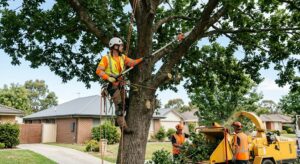

Trees throughout Lakeland, Florida, deal with year-round growth, intense sunlight, heavy rain, and hurricane-season winds. Without regular maintenance, branches can become overgrown, damaged, or poorly positioned around homes and outdoor spaces. Thoughtful trimming helps maintain tree structure while addressing branches that create safety or property concerns.
For homeowners, tree trimming in Lakeland, FL involves more than cutting back visible growth. Proper trimming requires selecting specific branches based on their condition, position, and effect on the tree’s structure. Removing the wrong branches or cutting too much foliage at once can weaken a tree, so each trimming job should have a clear purpose.
When Lakeland Trees Need Trimming
Trees do not follow the same trimming schedule. Species, age, growth rate, location, and overall condition all influence maintenance needs. In Lakeland, common species such as live oak, laurel oak, slash pine, bald cypress, cabbage palmetto, and crape myrtle can have different structural and maintenance requirements. Instead of relying only on a calendar, inspect your trees regularly for visible signs of excessive or problematic growth.
Pay attention to:
- Dead, dying, or broken branches
- Branches rubbing against one another
- Growth extending toward your roof
- Limbs blocking driveways or walkways
- Weak or poorly attached branches
- Dense growth affecting visibility
- Branches growing close to utility lines
- Storm-damaged limbs
- Branches with excessive end weight or poor structural attachment
Addressing these issues early helps prevent small problems from becoming more difficult tree-care situations.
How Proper Trimming Supports Tree Health
Selective pruning, including appropriate crown thinning when necessary, helps maintain a balanced canopy and removes branches that no longer contribute to healthy growth. Deadwood removal, also called deadwooding, deserves particular attention because dead branches can break unexpectedly and may contribute to decay-related problems.
When a branch needs to be removed, the cut should be made with attention to the branch collar and the tree’s natural compartmentalization process. Following recognized tree-care practices, rather than making arbitrary cuts, helps limit unnecessary injury to the tree. ANSI A300 Tree Care Standards provide recognized specifications for professional tree-care practices.
Avoid excessive canopy removal. Taking away too much live foliage in one session reduces the tree’s ability to produce energy and places unnecessary stress on the plant. Tree trimming should improve structure without drastically changing the tree’s natural form.
Managing Branches Around Homes and Property
Trees growing near homes require careful attention because branches have limited space to develop safely. Limbs that extend over roofs, gutters, windows, fences, or parked vehicles deserve regular inspection.
Strategic trimming creates appropriate clearance while preserving useful branches. Crown raising can be used where appropriate to increase clearance over walkways, driveways, or other areas, while crown thinning selectively reduces density without unnecessarily removing large portions of the canopy.
Utility lines require special caution. Never attempt to cut branches that are touching or growing close to energized electrical lines. The combination of electricity, equipment, and tree limbs creates a serious hazard that requires qualified professionals.
Preparing Lakeland Trees for Hurricane Season
Hurricane season makes proactive tree maintenance especially important in Central Florida. Strong winds can expose weak branch unions, deadwood, storm-damaged limbs, and poorly structured growth. Trees near homes should be inspected before severe weather threatens the area.
Pre-storm trimming should focus on removing identified hazards and correcting structural concerns rather than indiscriminately reducing the canopy. An ISA Certified Arborist can evaluate branch attachments, deadwood, cracks, cavities, and other visible conditions when determining whether pruning is appropriate.
Benefits of Professional Tree Trimming in Lakeland
Professional trimming provides more than a cleaner-looking canopy. Properly selected cuts help maintain structural balance and reduce unnecessary branch weight.
Routine trimming also supports:
- Improved clearance around buildings and walkways
- Better visibility near driveways
- Removal of hazardous deadwood
- Healthier canopy development
- Early identification of structural defects
- Reduced interference with surrounding property
During a professional assessment, an ISA Certified Arborist can also look for cracks, cavities, weak branch unions, root-related concerns, and other conditions that are difficult to recognize from ground level. Before hiring a contractor, homeowners should also confirm that the company carries appropriate liability insurance and workers’ compensation coverage.
Avoid Common Tree Trimming Mistakes
One of the most common mistakes is topping a tree to control its height. Removing large sections of the canopy can encourage rapid, weakly attached regrowth and disrupt the tree’s natural structure.
Lion-tailing is another poor pruning practice. It involves removing too many interior and lower branches while leaving foliage concentrated toward the ends of limbs. This can create an unnatural structure and place unnecessary stress on remaining branches.
Over-lifting can also become a problem when too many lower branches are removed simply to create clearance. Crown raising should be performed selectively and with the tree’s structure in mind rather than removing large amounts of healthy growth.
Another mistake is trimming simply because a tree looks large or dense. Every cut should have a specific reason. Removing healthy branches without a structural or safety purpose creates unnecessary wounds.
Homeowners should also avoid using improper equipment for large branches. Falling limbs are heavy and unpredictable, especially when working from ladders or near structures.
Maintain Healthier Trees in Lakeland
Regular inspection and timely trimming help your trees remain structurally sound while keeping surrounding areas easier to manage. If you notice dead limbs, excessive growth, storm damage, or branches approaching your home or utility lines, schedule a professional tree assessment.
Taking care of trimming needs before hazardous conditions develop helps protect your Lakeland property and supports healthier trees for the long term.
Source URL: Tree Trimming in Lakeland, FL: How Proper Trimming Protects Trees and Property