Airflow is the whole product. Everything else on an air hockey table—the finish, the base, the styling—sits on top of one job: pushing a steady cushion of air through hundreds of tiny holes so the puck floats instead of slides. Get that right, and the table plays fast for years. Get it wrong, and you own a very heavy console.
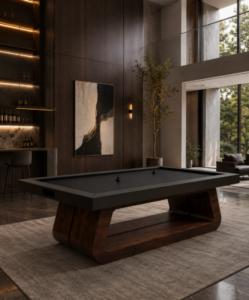
That is the lens worth carrying into any comparison. People shop these tables by looks, then wonder six months later why the puck stalls halfway down. This guide works the other way round. ARGMAC’s Takamaka Air Hockey is the reference point throughout, because at 8 ft by 4 ft and 400 kg, it is built as a permanent piece, not something folded away after a party.
What Makes an Air Hockey Game Feel Fast
The Blower, the Surface, and the Airflow
The blower has to lift the puck evenly across the whole playing field, not just near the middle. A weak motor leaves dead zones, usually in the corners, where the puck drops and drags. You notice it immediately, because shots that should rebound simply stop.
The surface matters just as much. It needs to be dead flat and hard enough not to dish over time. The Takamaka uses an engineered wood top with a laminate finish over a pine wood base, which holds flatness better than a softer board under daily use.
Why Air Hockey Pucks Matter More Than People Expect
Most players don’t think about the puck until the game doesn’t feel right, but it’s the only part of the setup to touch the airflow directly. Table-size pucks measure approximately 3.25 inches across. Lighter pucks go faster and bounce more erratically. Heavier pucks give you more control on a pass. Neither is better, but mixing them mid-game changes the feel enough to annoy anyone playing seriously.
Wear is the other factor. Air hockey pucks pick up scuffs from mis-hits and edge strikes, and a scuffed face drags. Keep a spare set and swap them the moment play starts feeling sticky. The Takamaka ships with two pushers with grip and a puck.
Sizing the Table to the Room You Have
The full-size format is an 8 ft by 4 ft table, and if you have the room, this is the one to buy. Smaller tables shorten the field, which sounds innocent enough until you realize most of the fun is in long shots that require a real save.
Plan for the footprint plus roughly two and a half feet at each end, since that is where players stand and lean. The sides need less, about a foot and a half of walking space. In practice you are looking at a clear zone of around 13 ft by 7 ft.
Weight settles the rest. At 400 kg the Takamaka by ARGMAC is not a table you shuffle around seasonally, so choose the spot once and choose properly. It arrives crated in wood with bubble wrap protection, which matters for a surface that has to stay perfectly flat.
Building an Air Hockey Game Room That Gets Used
Placement, Noise, and Everyday Living
Keep both ends clear of walls. Players back up instinctively during a fast rally, and a wall right behind the goal turns that reflex into a bruised elbow.
The blower hums steadily while running. Not loud, but constant, so a table three feet from a television or a work desk will irritate somebody eventually. A dedicated game room, a basement, or the far end of an open living space all work better.
Looking After the Surface and Your Air Hockey Pucks
Maintenance is low. Clean the playing field with a dry cloth. Once a month, vacuum the hole pattern to remove anything that has settled into the perforations.
Avoid silicone sprays and household polishes. They collect dust and gum up the holes, doing the opposite of what people expect. Store the pushers and pucks in a drawer rather than on the surface, since a puck resting in one spot for weeks can mark the laminate.
Air Hockey Game FAQs
Q. What size table do I need for an air hockey game at home?
Full size is 8 ft by 4 ft, like the Takamaka. Add about two and a half feet at each end for players and around a foot and a half at the sides.
Q. How many air hockey pucks should I keep?
Two or three. Pucks scuff with use, and a fresh one instantly restores the glide. It is the cheapest upgrade available to you.
Q. Does the Takamaka come with pushers and pucks?
Yes. It includes two pushers with grip and one puck, and ARGMAC offers customization on the table itself if you want the finish to match your interiors.
Q. Is the table noisy during play?
The blower hums while switched on. It is on a background level rather than intrusive, but it is worth considering if the table sits near a seating or working area.
Q. How does the air hockey table get arrived and installed?
Crated in wood with bubble wrap protection. At 400 kg it needs a planned route in and a level final position, so decide the spot beforehand.
Conclusion
Air hockey lives on at home, and not for nostalgic reasons. A round takes ninety seconds, requires no setup or explanation of rules, and works equally well for a nine-year-old or a competitive adult. Few games in a house do all three of those.
The tables that stay in use are the ones chosen properly. A strong blower, a flat hard surface, full-size dimensions, and a spot where two people can back up without hitting anything. Keep a spare puck in the drawer, and it will still play like New Year’s from now on.
See the Takamaka Air Hockey and speak to the ARGMAC team about sizing, finish, and customization for your space.
Posted inArts and Entertainment
A Practical Guide to Bringing the Air Hockey Game Home.
Posted by
 Posted inArts and Entertainment
Posted inArts and Entertainment