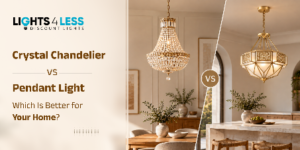

Choosing between a crystal chandelier vs pendant light usually comes down to the room, ceiling height, visual impact and the type of lighting you need. A crystal chandelier creates a more dramatic, decorative focal point, while a pendant light generally offers a simpler and more flexible solution for kitchens, dining areas, bedrooms and other everyday spaces.
If you are deciding between a chandelier or pendant light, the best option is not necessarily the more expensive or elaborate fitting. It is the one that suits the scale of your room, works with your furniture and provides the right combination of functional and decorative lighting.
Crystal Chandelier vs Pendant Light: What Is the Difference?
The main difference is scale, structure and visual impact.
A chandelier typically has multiple light sources or branches arranged around a central structure and is designed to make a strong decorative statement. A crystal chandelier adds reflective elements that can create sparkle and visual interest when illuminated.
A pendant light usually hangs from the ceiling using a single suspension point, although some designs can contain multiple light sources. Pendant lights are available in a wide range of shapes, materials, sizes and finishes, making them suitable for both practical and decorative applications.
The important point is that chandelier vs pendant light is not simply a choice between two styles. Each fitting can perform a different role within a home’s lighting plan.
When Is a Crystal Chandelier Better?
A crystal chandelier can be the stronger choice when you want the light fitting itself to become a major feature of the room.
The reflective surfaces of crystal can interact with the light source and surrounding finishes, creating a more noticeable visual effect than a simple pendant.
Choose a Crystal Chandelier If You Want a Statement Feature
If your room has enough visual space for a feature fitting, a chandelier can provide a strong centrepiece above a dining table, in an entry area or within a suitably proportioned living space.
Rather than treating the chandelier as an isolated decoration, consider what it will sit alongside. Large furniture, detailed architectural features and other strong decorative elements can compete with an elaborate chandelier.
A useful approach is to let the chandelier become the primary decorative feature and keep surrounding lighting and décor relatively balanced.
Crystal Chandeliers Suit Formal and Glamorous Interiors
Crystal chandelier lights can work particularly well with interiors that already use materials and finishes associated with a more sophisticated aesthetic.
Depending on the design, they can complement:
- Classic interiors
- Glamorous spaces
- Contemporary luxury interiors
-
Formal dining rooms
-
Elegant entryways
-
Statement living areas
However, crystal does not automatically mean traditional. A more streamlined crystal design can work within a contemporary home when its proportions and finish complement the rest of the interior.
When Is a Pendant Light Better?
A pendant light is often the more versatile option when you need targeted illumination, a simpler appearance or a fitting that works comfortably within a smaller space.
Pendant lights can be particularly useful where the lighting needs to relate directly to furniture or a specific activity.
Pendant Lights Work Well Above Kitchen Islands
A pendant above a kitchen island can provide focused illumination while also contributing to the overall design of the kitchen.
When using multiple pendants, the important considerations are the size of the island, the diameter of each fitting, the number of pendants and the available ceiling space.
Avoid choosing the number of pendants first and trying to make the island fit around them. Start with the furniture or island dimensions and then select a suitable lighting arrangement.
Chandelier or Pendant Light: Which Is Better for Different Rooms?
The room should play a major role in your decision.
Dining Room
Both options can work well in a dining room.
A crystal chandelier is a strong choice when the dining area is designed around a formal or decorative centrepiece. A pendant can be preferable when you want a cleaner look or when the dining area has a more contemporary aesthetic.
The fitting should relate to the dining table rather than simply the size of the room.
Example: A long dining table may suit a larger linear fitting or a carefully spaced group of pendants, while a compact round table may work better with a single appropriately sized feature fitting.
The products and specifications in the examples below are taken from Lights4Less product listings. The room and furniture dimensions are illustrative examples designed to show how fitting size and room proportions can influence the decision.