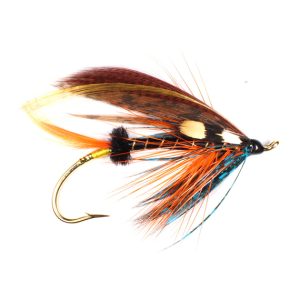

Salmon egg flies imitate fish eggs that drift naturally through moving water, giving trout an easy feeding opportunity. Their effectiveness depends on presentation, water conditions, fly size, colour, and whether trout are actually responding to this type of food.
For Kenyan trout anglers, the important point is adaptability. An egg pattern should not replace other productive trout flies. Instead, it can become a useful option when conditions suggest that trout may respond to an egg-like imitation.
What are salmon egg flies?
Salmon egg flies are artificial fishing flies tied to resemble individual fish eggs or small groups of eggs. Their design can look surprisingly simple, but small differences in colour, shape, size, and material can change how the fly appears underwater.
Egg patterns generally have a rounded body attached to a suitable hook. Fly tiers may use synthetic yarn, chenille, foam, or other materials to create the soft, rounded appearance associated with an egg.
The basic idea is straightforward: an egg does not need to swim like an insect or baitfish. It simply drifts with the current. A trout positioned in the right feeding lane can intercept it with very little effort.
When should you use an egg pattern?
Use an egg imitation when the available food and trout behaviour make the presentation believable.
Egg patterns make the most sense around spawning activity where loose eggs can enter the current. Trout may hold downstream and feed on these drifting food items.
Kenyan anglers should avoid applying this idea too rigidly. Local rivers, streams, seasons, trout populations, and food sources can differ considerably. Instead of following a fixed calendar, observe the water.
Look for:
- Trout holding in deeper current.
- Fish feeding close to the riverbed.
- Signs of spawning activity.
- Food drifting through current seams.
- Trout responding to small, naturally drifting objects.
That observation-based approach usually produces better decisions than simply choosing a fly because it has worked somewhere else.
Where should you fish salmon egg flies?
Focus on areas where trout can conserve energy while intercepting drifting food.
Current seams, deeper runs, pools, pocket water, and slower sections below faster water can all deserve attention.
Imagine a trout holding behind a rock. The fish does not need to chase every item moving downstream. The current brings food directly toward it. Your goal is to place the egg imitation into that same feeding lane.
A good presentation therefore starts with finding the trout, understanding the current, and then controlling the drift.
What colour should an egg fly be?
There is no single best salmon egg fly colour for every trout stream.
Natural-looking shades can work well when the water is clear or the fish are cautious. Peach, cream, pale orange, and soft pink are useful examples. Brighter colours can provide greater visibility when the water becomes cloudy or when the angler needs to track a small fly.
The practical approach is to carry several options rather than relying on one colour.
Water clarity should influence your choice. So should the size and appearance of any natural food you observe.
What are salmon egg flies? Salmon egg flies are artificial trout flies designed to imitate fish eggs drifting naturally through moving water. Their rounded shape, colour, and simple profile can make them useful when trout feed on eggs or other small food items carried by the current.
Are salmon egg flies effective for trout fishing in Kenya? They can be effective when local water conditions and trout behaviour support an egg-style presentation. Anglers should consider water clarity, fly size, depth, current speed, and available natural food before choosing an egg pattern.
What size salmon egg fly should you use?
Choose the smallest convincing pattern when trout are cautious, and increase size when visibility or conditions require it.
A fly that looks disproportionately large compared with the natural food can appear unnatural. Conversely, an extremely small pattern can become difficult to see and control.
Experienced anglers normally carry several sizes because trout behaviour can change during the same fishing session.
Instead of asking which size is universally best, consider three questions:
- How large is the natural food?
- How clear is the water?
- How aggressively are the trout feeding?